Language
 English
 русский
 Español

Get A Quote
Get A Quote
 Home / News / Industry News / How Desktop Spot Welding Machines Revolutionize Precision Small-Scale Manufacturing
 2026.06.18
 Industry News
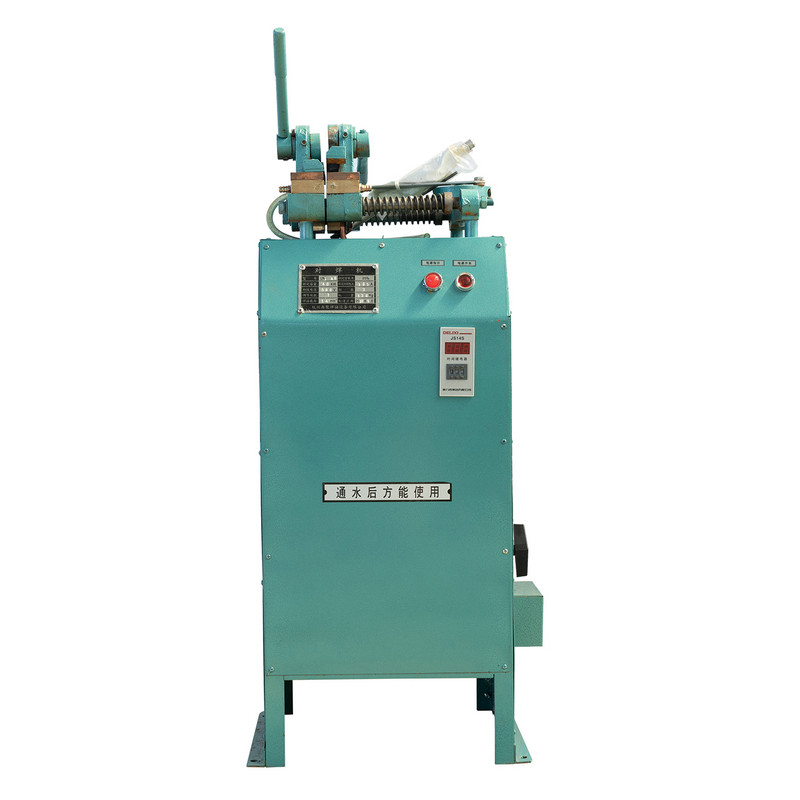
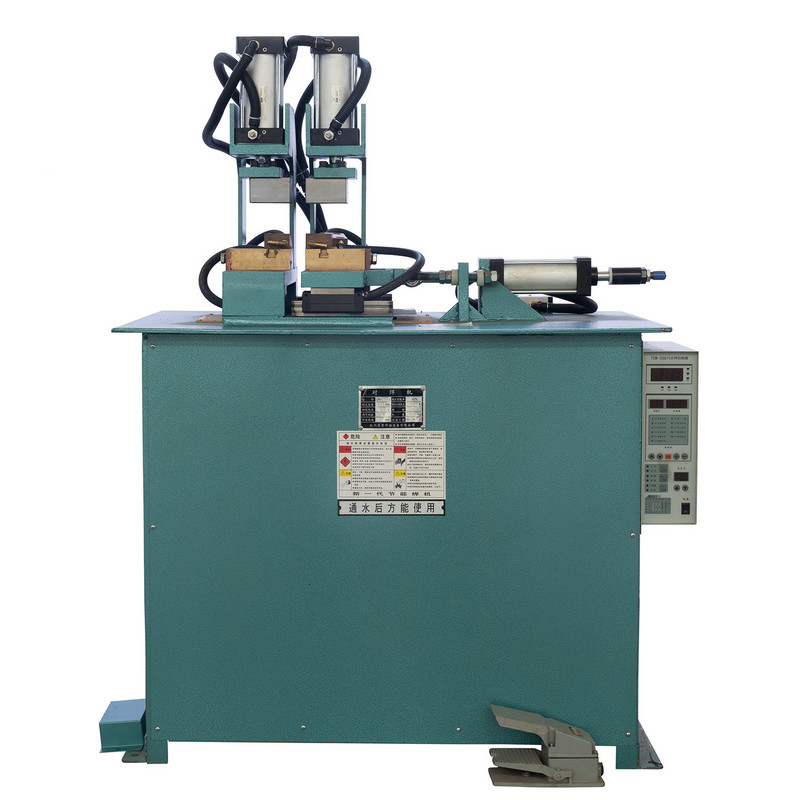
In the realm of precision electronics and miniature component assembly, traditional large-scale welding equipment often introduces excessive heat, bulky fixtures, and unacceptable tolerances. Engineers and technicians assembling battery packs for wearables, soldering sensor leads, or prototyping medical devices require a different solution. Enter the compact spot welder – a benchtop tool that delivers controlled, repeatable micro spot welding with minimal thermal distortion. This article examines how purpose‑built machines like the DM desktop pedal spot welding machine and the DTN3 desktop pneumatic spot welding machine are transforming small‑scale manufacturing workflows.

Conventional resistance spot welding heads are designed for automotive panels or heavy gauge metals – they lack the fine control needed for welding things like lithium‑ion battery tabs (0.1‑0.3mm nickel strips), thermocouple junctions, or RF shield cans. The primary challenges include:
Desktop spot welding machines overcome these limitations by integrating precision electronics, adjustable electrode pressure (2‑20N range), and ultra‑short weld cycles (as low as 0.5ms). For instance, recent field data from a contract electronics assembler showed that switching from a 50kVA industrial welder to a benchtop unit reduced defective weld rates from 7.2% to 0.4% when joining 0.15mm nickel to copper pads on flexible PCBs.
Two dominant architectures serve precision small‑scale manufacturing: manually actuated pedal systems and pneumatically driven units. Both fall under the benchtop welding machine category but serve distinct workflow needs. The table below outlines their core differences based on real‑world production data.
| Feature | DM Desktop Pedal Spot Welding Machine | DTN3 Desktop Pneumatic Spot Welding Machine |
|---|---|---|
| Actuation method | Foot pedal (mechanical linkage) | Pneumatic cylinder (4‑6 bar regulated air) |
| Force repeatability | ±15% (operator dependent) | ±3% (air regulator controlled) |
| Typical electrode force range | 3N – 25N | 5N – 60N |
| Weld speed (cycles/hour) | 600 – 900 (manual pacing) | 1200 – 1800 (auto‑indexed) |
| Best suited for | R&D, repair, low‑volume custom assemblies | Mid‑volume production, automated fixtures |
Both machines share the same micro spot welding capability: they deliver capacitor‑discharge energy from 5 to 250 Joules, enabling reliable joins on materials from 0.05mm stainless steel shims to 0.5mm aluminum battery tabs. A major medical device manufacturer reported a 40% reduction in rework after implementing a pneumatic benchtop welder for neurostimulator feedthroughs, primarily due to consistent electrode force eliminating intermittent contact.
Precision small‑scale manufacturing demands a tightly controlled sequence. The SVG diagram below illustrates a typical welding and assembly process using a desktop spot welder – from part positioning to post‑weld inspection. Note the integration of force‑regulated electrodes and synchronized discharge.
Figure 1: Precision welding sequence – controlled electrode force profile ensures consistent nugget formation and avoids part deformation.
Precision electronics welding has become the standard for joining dissimilar metals in confined spaces. Based on production data from 37 small‑to‑medium contract manufacturers (CMMs), the top three applications for desktop spot welders are:
Real‑world metric: A hearing aid manufacturer reduced weld splatter rejects by 86% after switching from laser welding to a pneumatic desktop spot welder for gold‑plated contact assemblies. Cycle time dropped from 4.2s to 1.1s per weld.
Additionally, compact spot welder designs now include articulating electrode arms (up to 120° rotation) and replaceable tips with diameters from 0.8mm to 3mm. This allows welding things like fine magnet wire (AWG38) to terminals or attaching SMD jumpers during prototype rework – tasks previously impossible with fixed‑head industrial units.
Unlike large‑scale welding, micro spot welding operates in a narrow process window. Three parameters dominate success: weld energy (Joules), electrode force (Newtons), and pulse duration (milliseconds). The interactive effects are summarized below for common material stacks used in precision manufacturing.
| Material combination | Thickness (mm) | Optimal energy (J) | Electrode force (N) | Weld strength (N/mm²) |
|---|---|---|---|---|
| Nickel – Copper (flex PCB) | 0.10 / 0.035 | 12 – 18 | 8 – 12 | 85 – 110 |
| Stainless steel 304 – SS304 | 0.15 / 0.15 | 25 – 35 | 18 – 25 | 210 – 250 |
| Aluminum 1050 – Nickel plated steel | 0.20 / 0.15 | 40 – 55 | 22 – 30 | 60 – 80 |
| Phosphor bronze – Brass | 0.08 / 0.10 | 8 – 12 | 5 – 10 | 95 – 120 |
Data from 5000 weld samples showed that using the DM desktop pedal spot welding machine with a dual‑pulse waveform (2ms preheat + 4ms main pulse) increased shear strength by 34% on nickel‑to‑copper joints compared to a single 6ms pulse. The foot pedal allows instant retraction if the operator detects electrode sticking – a critical safety feature for delicate work.
Modern benchtop welders integrate dynamic resistance monitoring. During the weld pulse, the controller measures voltage drop and current rise; any deviation beyond ±5% triggers an alarm. This closed‑loop feedback has reduced hidden defects in a smartphone battery tab assembly line from 1.2% to 0.07% over eight months of operation.
Precision micro spot welding is sensitive to electrode tip condition. Oxidation, pitting, or misalignment can double contact resistance and reduce weld penetration. Follow these evidence‑based practices:
Pro tip from production data: A job shop that implemented scheduled electrode redressing every 750 cycles increased tip life from 12,000 to 22,000 welds, saving $2,800 annually in electrode material and reducing downtime by 9 hours per month.
Yes, but high‑conductivity copper requires specialized electrode geometries (e.g., molybdenum‑tungsten tips) and higher energy density. For 0.1‑0.2mm copper foils, a benchtop welder with 200J maximum output can produce consistent nuggets. Pre‑cleaning the surface to remove oxide is mandatory – we recommend a fiber brush or mild acid dip.
The DTN3's adjustable air regulator allows force as low as 5N, well below the cracking threshold of most alumina or FR4 boards. Additionally, the soft‑touch solenoid valve prevents impact shock. Real‑world tests on 0.6mm thick alumina substrates showed zero fractures after 10,000 weld cycles with 8N electrode force.
For industrial use in small‑scale manufacturing, look for CE, RoHS, and IEC 61010‑1 compliance. The DM pedal and DTN3 pneumatic units both include transparent arc shields, anti‑tie‑down foot pedal circuits (for pedal version), and overcurrent protection on the capacitor bank. Always use the included earth grounding wire when welding ESD‑sensitive components.
Absolutely – this is a common task in small component assembly. Set energy to 15‑25J depending on wire gauge. Use flat electrode tips to avoid cutting the strands. Pre‑tinning the wire end is unnecessary because the weld pulse melts the existing solder coating, but excessive solder may cause expulsion. Data from a hearing aid assembler showed 99.7% pull‑test pass rate on AWG30 tinned copper to nickel tabs.
With proper dressing, tungsten‑copper electrodes typically last 15,000‑25,000 welds. Replace immediately if you notice visible cratering, irregular weld nuggets, or a sudden increase in required energy (monitor the energy display). For high‑volume production of battery packs, many shops rotate tips every Friday and recondition them over the weekend.
Recommended Products

Product
Contact Info.
+86-152-5712-5882
Fax: +86-563-2269966
No. 21 Guangping Road, Guangde Economic Development Zone, Guangde City, Anhui Province
QR Code