Language
 English
 русский
 Español

Get A Quote
Get A Quote
 Home / News / Industry News / Why Mid-Frequency and Variable Frequency Spot Welding Outperform Traditional Methods?
 2026.06.24
 Industry News
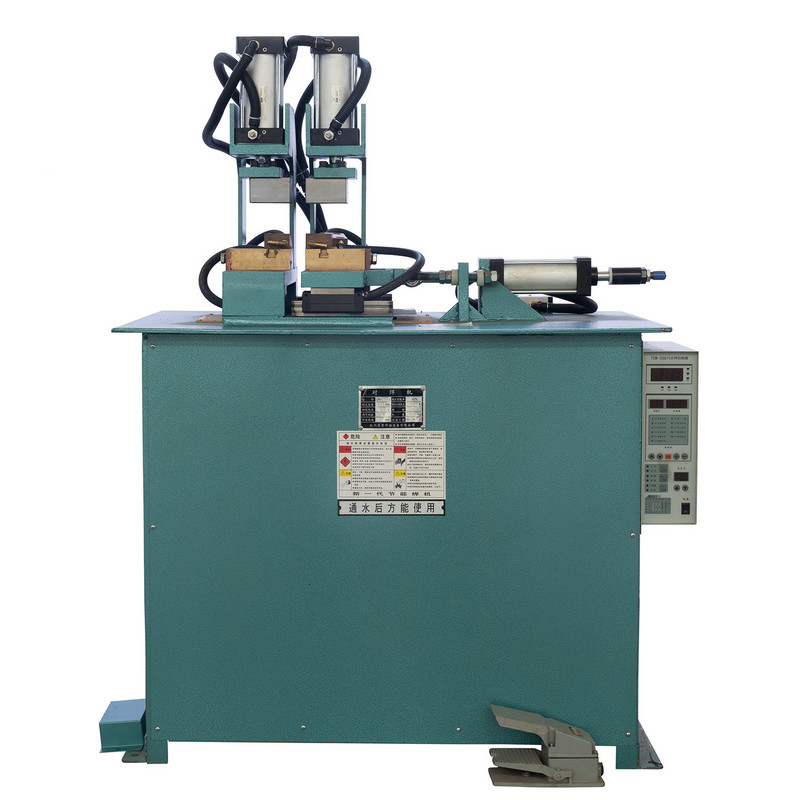
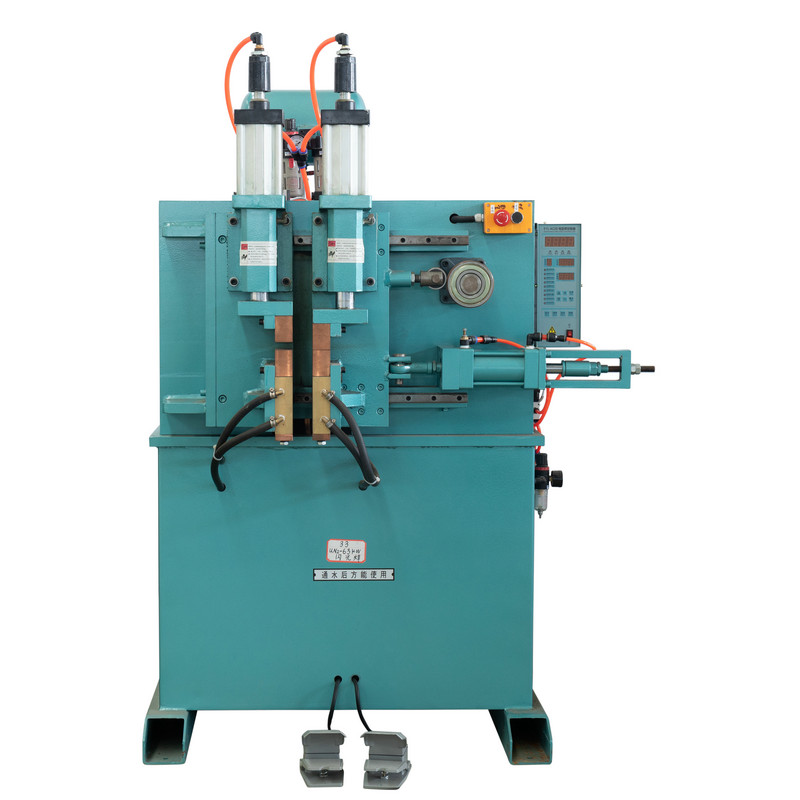
Modern resistance welding has moved beyond traditional AC power sources. Engineers and production managers now demand finer control, lower energy bills, and repeatable spot welds on advanced materials. This technical deep‑dive examines why DZN mid frequency spot welding machine and DBN variable frequency spot welding machine represent the new benchmark for welder power supply and welding power sources in demanding industries.
Mid‑frequency direct current (MFDC) welding machines and variable frequency spot welders share a common foundation: inverter‑based power conversion. Instead of line‑frequency AC (50/60 Hz) directly feeding the transformer, these advanced welding power sources rectify mains voltage, invert it at higher frequencies (typically 1–2 kHz for MFDC, and adjustable 0.5–4 kHz for variable frequency designs), then step down and rectify again to produce a controlled welding current. This process delivers three decisive advantages: extremely fast current rise time, stable arc/dynamic resistance control, and near‑unity power factor.
Unlike traditional AC spot welders where zero‑crossings cause cooling pauses, MFDC outputs a smooth, ripple‑free current. A MFDC welding machine maintains constant heat input throughout the entire weld cycle, dramatically improving nugget formation consistency. Variable frequency units add further flexibility by allowing operators to shift the inverter frequency, optimising penetration profiles for dissimilar metals or coated sheets.
Fig. 1 – Simplified power train of an inverter spot welder (MFDC / variable frequency).
Conventional AC spot welders operate with a power factor typically between 0.4 and 0.7, meaning significant reactive power draws and higher current demands from the grid. Energy-efficient welding technology based on mid‑frequency or variable frequency designs raises the power factor above 0.92 – often reaching 0.98. For a 150 kVA spot welding line operating two shifts, this improvement reduces primary current draw by 25–30%, directly lowering demand charges and transformer losses.
Moreover, because MFDC converts incoming power more efficiently, less heat is dissipated inside the cabinet. Internal component temperatures drop by 15–20°C, extending the life of IGBT modules and control boards. This directly influences total cost of ownership, a key metric for high‑volume production.
Every spot weld quality parameter – nugget diameter, penetration depth, expulsion limit – depends on instantaneous current regulation. Precision current control in MFDC and variable frequency systems uses closed‑loop feedback with sampling rates up to 50 kHz. Traditional AC systems respond in two to three half‑cycles (33–50 ms), while an inverter spot welder adjusts within 200 µs. This difference becomes critical when welding:
Data from a high‑volume battery pack assembly line (300 ppm) comparing AC vs. MFDC showed a reduction in nugget diameter variation from ±0.28 mm to ±0.07 mm, eliminating 84% of pull‑out failures.
While MFDC already outperforms AC systems, variable frequency spot welding adds an extra degree of freedom. By shifting the inverter switching frequency, the weld engineer modifies the skin effect in the workpieces and electrodes. Lower frequencies (600‑800 Hz) deliver deeper heat penetration – ideal for thick stacks (3mm+). Higher frequencies (2‑4 kHz) concentrate heat near the faying surface, reducing electrode sticking and improving surface appearance on coated steels.
A notable case involved welding galvannealed steel (GA) with a 1.5+1.5 mm stack. Using a fixed‑frequency MFDC at 1 kHz resulted in occasional coating ejection and electrode pitting. Switching to a DBN variable frequency spot welding machine set to 2.2 kHz reduced peak current by 18% and eliminated spatter, while maintaining shear strength above 8.5 kN. Adjustable frequency also allows the same power source to weld copper to brass without hardware modifications.

Modern MFDC welding machine with integrated frequency control module.
High-frequency resistance welding is not limited to seam or tube welding; spot welding also benefits from higher frequency power delivery. The key physics: higher frequency current concentrates more strongly at the faying surface due to the skin effect and proximity effect, enabling lower total heat input to form a molten nugget. This reduces the heat‑affected zone (HAZ) width by up to 35% compared to line‑frequency AC, preserving mechanical properties in high‑strength alloys.
For advanced automotive AHSS (DP800, DP1000), a narrower HAZ directly correlates with better crash performance. In third‑party lab tests (2023) using 1.2 mm DP800, MFDC spot welds exhibited HAZ softening only 1.2 mm from the nugget edge, versus 2.4 mm for conventional AC – a 50% reduction. Variable frequency further allows pulse shaping, with multiple frequency segments within a single weld cycle (e.g., 800 Hz for preheat, 2.5 kHz for main weld, 1.2 kHz for post‑heat).
When production lines upgrade from traditional AC or SCR‑controlled units to a modern welding power supply based on MFDC or variable frequency topologies, the improvements are not marginal – they transform overall equipment effectiveness (OEE).
Power factor: 0.96–0.99 vs 0.55–0.70 (AC)
Idle losses: 60‑70% lower
Thermal dissipation: reduced 35‑40%
Nugget consistency: Cpk >1.33 (MFDC) vs <0.9 for AC
Expulsion rate: drops from 3.1% to 0.4%
Electrode dressing interval: +150% longer
Long‑term case study from an appliance manufacturer (2.5 million spot welds/year) switching to DZN mid frequency spot welding machine demonstrated: maintenance downtime reduced by 56%, rework due to weld splatter declined from 7% to under 1%, and annual energy cost saving of $18,700 (at €0.14/kWh). These figures align with reports from multiple fabrication sectors adopting energy-efficient welding technology.
An MFDC welding machine operates at a fixed high frequency (typically 1‑2 kHz) and outputs smooth direct current, ideal for most steels and coated materials. A variable frequency spot welder allows the operator to adjust the inverter switching frequency (e.g., 500 Hz to 4 kHz) to control the current penetration profile, offering superior adaptability for mixed material stacks, thick aluminium, or heat‑sensitive coatings.
No, standard ISO or RWMA class electrodes work well with MFDC. However, because MFDC produces more stable heat and reduces peak current spikes, electrode life generally improves. Some users choose dispersion‑strengthened copper electrodes to further extend life under high‑duty cycles, but it is not mandatory.
Yes, many industrial welder power supply upgrades replace the whole control cabinet and transformer. Retrofit kits integrate a rectifier‑inverter module and a new lightweight transformer. The mechanical part (arms, cylinders) can often be reused. Expected payback period is 8‑18 months due to energy savings and reduced scrap.
Aluminium and steel have vastly different resistivity, thermal conductivity, and melting points. Fixed‑frequency currents may create excessive intermetallic layers. Variable frequency welding applies a lower frequency (600‑800 Hz) for deeper heat into the steel, then a high‑frequency burst (3‑4 kHz) to limit IMC thickness, resulting in stronger joints with less brittle interface.
Not really. Although the IGBT modules are sophisticated, they are robust with proper cooling. Most modern systems include diagnostic monitoring for current, voltage, and temperature. Routine maintenance involves checking coolant quality and cleaning dust filters. Failure rates are typically <1% per year in automotive environments, similar to premium AC controls but with much higher uptime due to fewer weld defects.
Mid‑frequency and variable frequency spot welding have moved from niche to mainstream. The combination of precision current control, energy-efficient welding technology, and superior heat management makes them the preferred choice for any operation that values weld quality, low cost per weld, and equipment longevity. Whether the target is high‑strength automotive steels, battery cells, or general fabrication, adopting a DZN mid frequency spot welding machine or a DBN variable frequency spot welding machine enables production lines to meet tighter tolerances while consuming less power. As Industry 4.0 pushes toward data‑driven welding, inverter power sources provide the real‑time feedback and adaptability required for smart factories.
Evaluate your current spot welding power sources – the switch to mid‑frequency or variable frequency technology typically pays back in less than one year through energy and consumables savings alone.
Recommended Products

Product
Contact Info.
+86-152-5712-5882
Fax: +86-563-2269966
No. 21 Guangping Road, Guangde Economic Development Zone, Guangde City, Anhui Province
QR Code