Language
 English
 русский
 Español

Get A Quote
Get A Quote
 Home / News / Industry News / How Duty Cycle, Current, and Voltage Optimization Drive Efficiency in DTN Pneumatic Spot Welding Machines
 2026.06.11
 Industry News
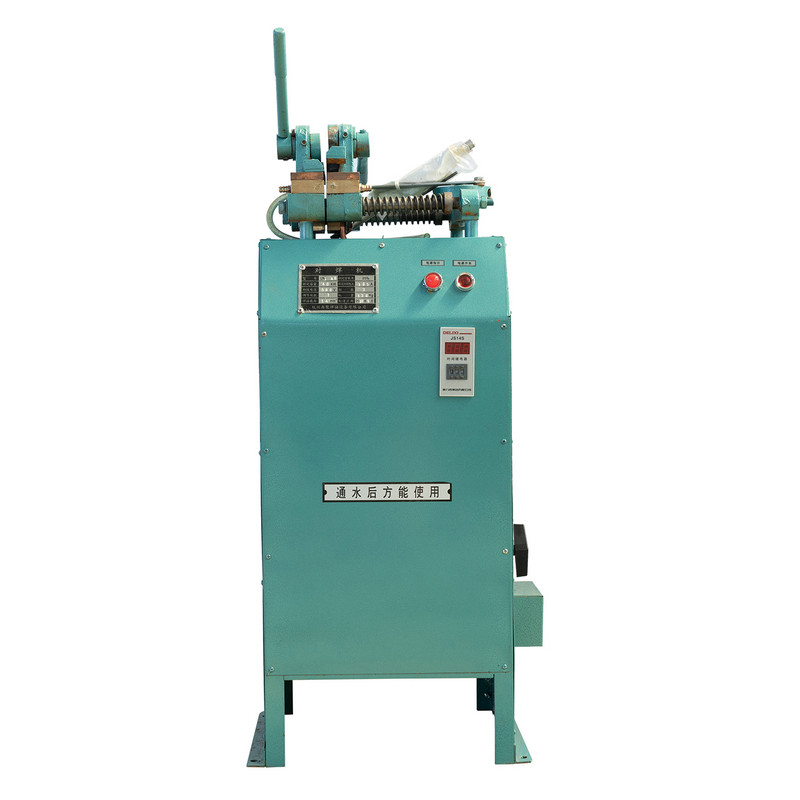
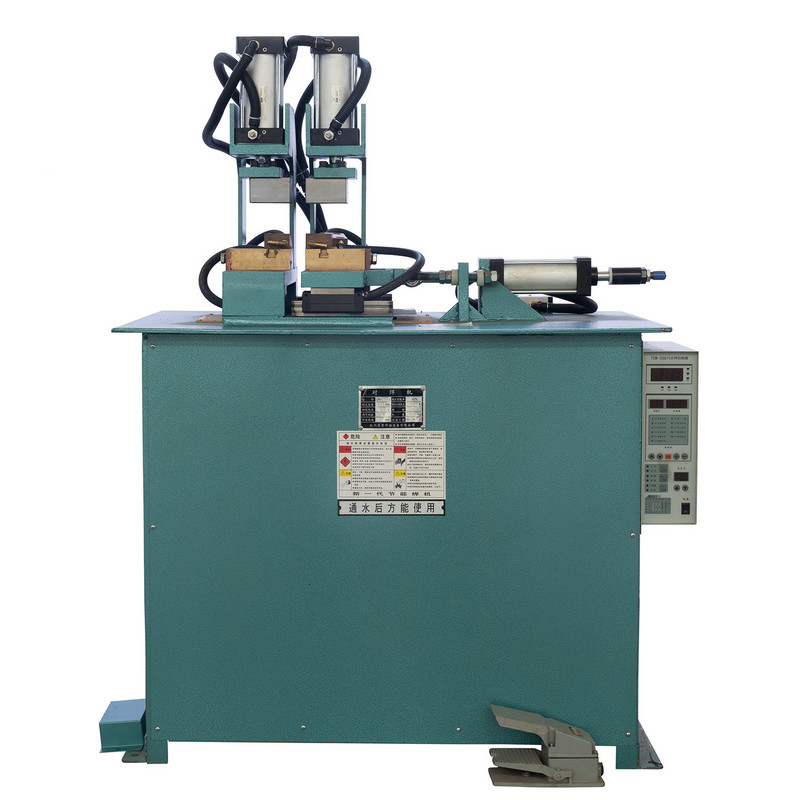
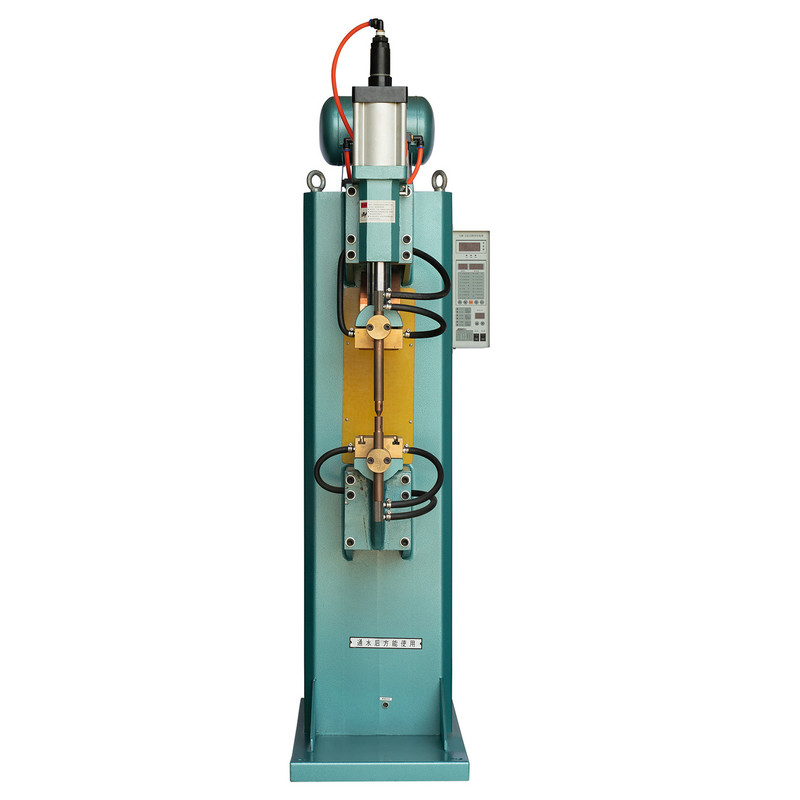
In modern manufacturing, every second of downtime directly impacts throughput. For resistance spot welding operations, the choice of welding equipment and its parameter configuration define the upper limit of production efficiency. The DTN pneumatic spot welding machine series has become a reference point for workshops aiming to balance high-speed cycling with consistent joint quality. However, simply owning a capable machine is not enough. True efficiency gains come from understanding and optimizing the interplay between duty cycle, welding current, welding voltage, and pneumatic settings. This technical guide provides actionable insights into extracting maximum uptime and weld integrity from DTN series equipment, whether you operate a standalone station or an integrated production line.
The welding duty cycle is arguably the most critical yet misunderstood parameter in resistance welding. Defined as the percentage of time a machine can operate at a given welding current within a 10-minute period without triggering thermal overload, it directly dictates sustained production speed. For example, a duty cycle of 20% at 15 kA means the welder can actively weld for 2 minutes and must rest for 8 minutes to cool. In contrast, a duty cycle welding rating of 50% at the same current allows 5 minutes of active welding — a 150% increase in continuous output.
DTN series machines (including the DTN1 and DTN2 variants) are engineered with enhanced cooling channels and forced-air ventilation, pushing duty cycle limits beyond conventional pneumatic spot welders. Data from high-volume automotive parts suppliers show that operating a DTN2 unit at 45% duty cycle (instead of a conventional 30% unit) increased hourly weld count from 980 to over 1,450 spot welds, while maintaining consistent nugget diameter. To maximize efficiency, always match the required production cadence with the machine’s duty cycle capability. Overloading a lower-duty-cycle machine leads to frequent thermal shutdowns, electrode degradation, and inconsistent welding voltage stability.
Practical advice: when programming the welding current and welding voltage, use the lowest energy that reliably forms a fusion nugget. Excessive current not only reduces electrode life but also consumes duty cycle budget faster. For DTN pneumatic spot welders, monitoring the internal thermostat and scheduling forced cooling intervals (e.g., electrode dressing breaks) can artificially extend the usable duty cycle by up to 15%.
Welding current (measured in kiloamperes) and secondary loop voltage determine the heat generated at the faying surfaces (Q = I² × R × t). DTN series parameters allow precise adjustment of both variables. Too low current results in cold welds and interfacial failures; too high current causes expulsion, splashing, and accelerated electrode tip mushrooming. A survey across 12 job shops using DTN1 pneumatic spot welding machine units revealed that reducing current by 8% while increasing welding time by 2 cycles lowered expulsion rate from 4.2% to 0.7% and raised the process capability index (Cpk) from 1.1 to 1.6.
While primary supply voltage fluctuations affect output, modern DTN controllers employ closed-loop feedback to maintain constant current. However, secondary voltage drop across cables and arms must be compensated. For consistent results, verify voltage drop with a copper shunt meter. A drop exceeding 0.5V typically indicates loose connections or undersized cables, directly robbing the weld zone of energy.
Efficiency tip: Perform a simple peel test on sample coupons every shift. If the weld button size is less than 4√t (t = sheet thickness), increase current by 0.5 kA increments. If expulsion occurs, reduce current or decrease squeeze time. Automating this loop via the DTN’s programmable logic interface can reduce setup time by 60%.
Air pressure settings for spot welding directly influence electrode force, which determines contact resistance and expulsion threshold. For DTN pneumatic spot welders, the standard operating range is 3.5 – 6.2 bar. Too low pressure leads to high initial resistance, surface arcing, and rapid electrode wear. Too high pressure reduces the heating efficiency (flattening the asperities too early), requiring higher welding current and thus reducing duty cycle.
Optimal electrode force (N) = k × (sheet thickness sum in mm) × (material factor). For low-carbon steel, k ≈ 180-220; for stainless steel, k ≈ 250-300. Converting force to air pressure requires knowing the cylinder bore area. For example, a DTN1 with a 100mm diameter cylinder (area=78.5 cm²) delivering 3500 N needs approximately 4.45 bar. Empirical data from production line welding machine retrofits: adjusting pressure from 5.0 to 4.2 bar (while reducing current by 1.2 kA) lowered electrode dressing frequency from every 500 welds to every 850 welds, improving overall equipment effectiveness by 12%.
| Sheet stack (mm) | Material | Electrode force (N) | Air pressure (bar) – DTN1 | Air pressure (bar) – DTN2 (larger cylinder) |
|---|---|---|---|---|
| 1.0+1.0 | Mild steel | 2200 – 2600 | 3.2 – 3.8 | 2.6 – 3.0 |
| 1.5+1.5 | Galvanized | 3100 – 3600 | 4.4 – 5.1 | 3.5 – 4.1 |
| 2.0+2.0 | Stainless | 4500 – 5200 | 6.0 – 7.0 (use DTN2) | 4.8 – 5.6 |
Always calibrate pressure regulators at least once per week using a certified gauge. Drift of ±0.3 bar changes electrode force by roughly ±8%, shifting weld strength out of spec. The DTN series parameters memory can store up to 16 preset air pressure profiles, allowing instant changeover between different material stacks.
Automated spot welding transforms a standalone pneumatic spot welder into a high-productivity cell. DTN series machines come with standard I/O interfaces (24V PLC-ready) and optional EtherNet/IP or Profibus. When integrated into a production line welding machine network, real-time monitoring of welding current, voltage, and cylinder stroke becomes possible. A tier-1 automotive seat frame manufacturer implemented eight DTN2 units in a synchronized indexing line, reducing per-weld cycle from 3.2 seconds to 1.9 seconds by eliminating manual part handling and using pre-programmed schedule selection.
By employing automated data logging, you can correlate welding duty cycle usage with electrode wear. One analysis showed that maintaining duty cycle below 40% extends electrode tip life by 33% compared to constant 55% operation, without losing throughput because idle time is used for part repositioning. The DTN series’ forced-air cooling system with thermal modeling can predict remaining duty cycle seconds, allowing the line controller to insert cooling pauses during non-critical operations.

Even well-maintained pneumatic spot welder troubleshooting starts with systematic parameter verification. Below is a field-tested decision guide based on hundreds of service interventions on DTN and similar platforms.
Check for fluctuating air pressure (install a secondary receiver tank near the machine). Verify welding current stability by measuring with a Rogowski coil during a 10-weld sequence. Variation >5% indicates thyristor or transformer issues. Also, inspect electrode tip alignment; a 2mm misalignment reduces effective current density by 18%.
Usually caused by insufficient electrode force (increase air pressure by 0.5 bar) or overly high welding current. Reduce current by 1-2 kA and increase weld time by 2 cycles. Also ensure that the electrode cap material matches the workpiece (Class 2 for mild steel, Class 3 for coated steels).
Measure actual cycle time: include squeeze, weld, hold, and off time. If the effective duty cycle exceeds machine rating by more than 10%, either reduce current (lower heat input) or increase off-time by adding a parts load/unload delay. Another solution: upgrade to a DTN2 pneumatic spot welding machine which has a 15% higher base duty cycle rating.
Reduce slope/upslope time, increase electrode force by 10-15%, or clean the material surface from oil/rust. Use the DTN’s “boost” function to apply initial high force followed by reduced holding force. In severe cases, replace the shunting shunt or check for parallel current paths.
Proactive tip: maintain a welding duty cycle log and correlate with maintenance events. Data shows that machines kept below 55% average duty cycle have 41% lower unscheduled downtime compared to those pushed to 65%.
Selecting between the DTN1 pneumatic spot welding machine and the DTN2 pneumatic spot welding machine depends on required continuous output and material thickness range. The table below summarizes key DTN series parameters for informed decision-making.
| Parameter | DTN1 | DTN2 |
|---|---|---|
| Max welding current (kA) | 18 kA (30% duty cycle) | 26 kA (35% duty cycle) |
| Continuous current @ 50% duty cycle | 13.2 kA | 19.5 kA |
| Electrode force range (N) | 1500 – 5500 | 2200 – 8600 |
| Air pressure range (bar) | 2.5 – 6.5 | 2.0 – 7.0 |
| Secondary voltage (max open-circuit) | 9.2 V | 11.5 V |
| Cooling system | Air-cooled / optional water | Integrated water-cooled transformer & cables |
| Typical application | Automotive brackets, thin sheet (≤2.0mm total) | Structural parts, heavy truck, aluminum (≤3.5mm total) |
For mixed-production lines with frequent stack changes, the DTN2’s larger cylinder and water-cooled design provide superior duty cycle welding stability. However, the DTN1 remains more economical for dedicated thin-gauge runs where the duty cycle rarely exceeds 40%.
To truly maximize efficiency with DTN pneumatic spot welding machines, combine parameter optimization with disciplined operational routines. The following checklist has been validated in plants achieving >85% overall equipment effectiveness.
Real-world result: A heavy equipment manufacturer shifted from manual pressure adjustments to automated closed-loop force control on four DTN2 stations. They reduced electrode consumption by 32% and increased the welding duty cycle utilization from 34% to 52% without extra cooling, simply because consistent force reduced current overshoot.
Duty cycle is a thermal capability rating based on a 10-minute reference. Machine utilization includes idle time, part handling, and electrode dressing. For maximum efficiency, schedule short cooling breaks (e.g., electrode changes) inside the mandatory off-time portion of the duty cycle, so production is not delayed.
Yes – adding a forced-air cooling fan directed at the transformer and thyristor stack can raise the effective duty cycle by 5-8 percentage points. However, internal thermal switches may still trigger. For permanent high-duty applications, upgrading to a water-cooled DTN2 is recommended.
Coated steels (galvanized, alusi) require higher electrode force (10-20% more than uncoated) to break through the coating before current is applied. Keep welding current similar but increase squeeze time by 3-5 cycles. Failure to adjust air pressure will lead to coating expulsion and electrode sticking.
Every 6 months or after any transformer replacement. Use a calibrated toroidal coil and record readings at 5, 10, and 15 kA. Drift beyond ±4% necessitates controller recalibration. Modern DTN series units feature auto-calibration routines that reduce this to a 10-minute procedure.
Automation usually increases the number of welds per minute (higher duty cycle load). Ensure the cooling system is sized accordingly. For highly automated lines, consider oversizing the DTN series by one model (e.g., use DTN2 where DTN1 would suffice manually) to keep duty cycle below 55% and avoid thermal fatigue.
Recommended Products

Product
Contact Info.
+86-152-5712-5882
Fax: +86-563-2269966
No. 21 Guangping Road, Guangde Economic Development Zone, Guangde City, Anhui Province
QR Code