Language
 English
 русский
 Español

Get A Quote
Get A Quote
 Home / News / Industry News / How to Choose the Right Industrial Spot Welding Machine for Your Factory
 2026.06.04
 Industry News
Selecting the wrong welding machine for your production line can cost tens of thousands of dollars in rework, downtime, and scrapped parts. With dozens of configurations available — from bench-top units to fully automated systems — knowing exactly what to evaluate before signing a purchase order is not optional. It is essential. This guide walks factory managers, process engineers, and procurement specialists through every critical decision point: machine type, power source, duty cycle, electrode force, and more. Whether you are setting up a new sheet metal fabrication line or upgrading legacy resistance welding equipment, the framework below gives you a clear, technical path to the right choice.
Before evaluating any specification, you must match the machine category to your production scenario. Industrial spot welding machines fall into five broad families. Each family solves a different problem.
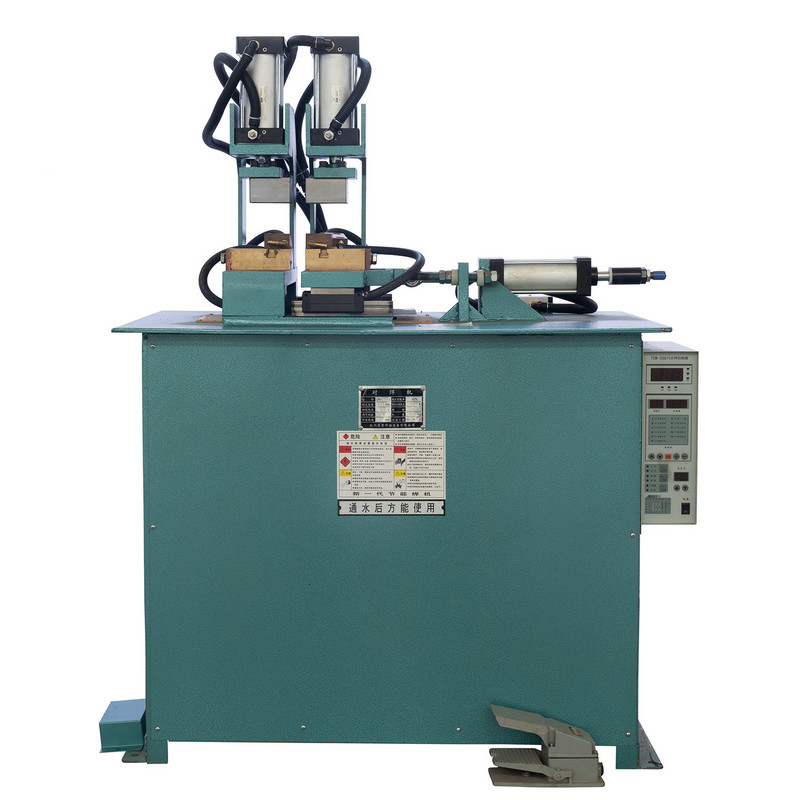
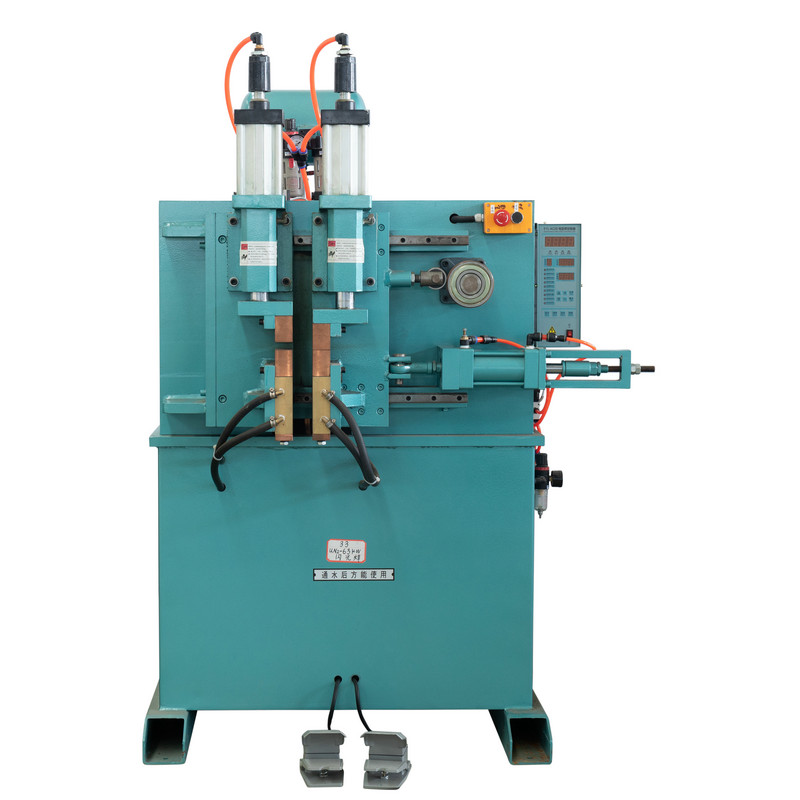
Foot-activated machines that free both hands for part positioning. The dn pedal spot welding machine is the standard reference in this category, widely used for wire-to-terminal assemblies and light sheet metal.
Swing-arm design with mechanical or pneumatic electrode actuation. Ideal for flat, accessible weld spots on panels up to 3 mm thick. Common in HVAC duct fabrication.
Vertical-action electrode movement for precise force control. Handles stacked assemblies and dissimilar-thickness joints that rocker-arm machines cannot reach consistently.
Suspended or handheld units that bring the weld to the part rather than the part to the machine. Necessary for large subassemblies like automotive body panels.
Rotating wheel electrodes that produce overlapping spot welds in a continuous line. Used for water-tight containers, fuel tanks, and roll-formed sections.
Decision rule: If your operators must reposition parts frequently or work with both hands, a pedal-operated unit eliminates a critical bottleneck. If your throughput exceeds 800 welds per hour on a single station, evaluate a pneumatic press-type or automated seam welder instead.
The welding machine power source determines weld quality consistency, energy efficiency, and electromagnetic compatibility with neighboring equipment. Three main technologies compete in modern factories.
| Power Source Type | Frequency | Typical Efficiency | Weld Repeatability | Best Application |
|---|---|---|---|---|
| AC Single-Phase | 50 / 60 Hz | 55 – 65% | Moderate | Light gauge steel, wire splicing |
| AC Three-Phase | 50 / 60 Hz | 65 – 75% | Good | Medium sheet metal, balanced grid load |
| Mid-Frequency DC (MFDC) | 1,000 – 4,000 Hz | 85 – 92% | Excellent | Coated steels, aluminium, precision assembly |
MFDC inverter technology converts AC mains power to a stable DC weld current at frequencies between 1,000 and 4,000 Hz. The result is a smoother current waveform with virtually no ripple. In practice, this means:
Despite MFDC advantages, AC machines remain the economical choice for uncoated low-carbon steel under 1.5 mm, high-volume consumable wire welding, and facilities where capital budget is the primary constraint. The upfront cost of an AC pedal welder is typically 40 – 60% lower than an equivalent MFDC unit.
Electrode actuation — the mechanism that closes the electrodes onto the workpiece — has a direct impact on weld consistency, operator fatigue, and cycle time. This is the core of the pneumatic vs manual spot welder debate.
A useful benchmark: factories producing more than 500 identical welds per shift on sheet metal thicker than 1.2 mm should strongly prefer pneumatic actuation. Below that threshold, a quality manual or pedal-operated unit delivers acceptable results at lower operating cost.
The welding machine duty cycle is expressed as a percentage and tells you how long a machine can operate at rated output within a standard 10-minute window before it must cool. A machine rated at 50% duty cycle at 100 kVA can deliver 100 kVA for 5 minutes, then must rest for 5 minutes.
Start by measuring your weld time per cycle and your rest time between welds. If each weld takes 0.4 seconds and you allow 1.6 seconds between welds, your actual duty cycle demand is 20%. A machine rated at 35% is sufficient. However, if automation removes the inter-weld pause and you fire every 0.6 seconds in a 10-second burst, your actual demand jumps to 60%. Always add a 15 – 20% safety margin above measured demand to account for production surges and thermal derating at elevated ambient temperatures.
Most machines are rated at 20 degrees Celsius. For every 10 degrees above that baseline, effective duty cycle drops approximately 5 – 8%. A factory floor running at 40 degrees Celsius in summer can reduce a 50% rated machine to an effective 35 – 40% capacity. If your facility is in a hot climate or near furnaces, always specify machines with a higher nominal duty cycle or forced-air cooling.
The flowchart below maps the logical sequence from production requirement analysis to final machine specification. Following this path prevents the most common mistakes: over-specifying expensive MFDC systems for simple wire-splicing tasks, or under-specifying manual machines for demanding structural sheet metal work.
Once you have settled on machine type and power source, these specifications determine whether the machine actually fits your parts and process.
Throat depth is the horizontal distance from the electrode centerline to the machine frame. If your largest part requires the weld to be 350 mm from any edge, you need a throat depth of at least 350 mm. Standard pedal and rocker-arm machines offer 150 – 350 mm. Large press-type machines reach 500 – 800 mm. Always measure your most restrictive part before specifying this dimension.
This is the maximum current the transformer can deliver to the electrode tips. It is not the same as weld current. A machine with 100 kA short-circuit current may operate at 60 – 80 kA during actual welding. The gap between rated short-circuit current and operating current gives the machine headroom to compensate for electrode wear, shunting, and part surface variation.
For steel sheet metal, a general guideline is 1,000 – 1,500 N of electrode force per millimeter of total stack thickness. For a 2 mm stack (two 1 mm sheets), this means 2,000 – 3,000 N minimum. Pneumatic machines typically offer 500 – 8,000 N depending on cylinder bore size and air pressure. Verify that the machine's minimum force is low enough for your thinnest materials and that maximum force covers your thickest stack.
Modern digital weld timers resolve to single cycles (1/50 or 1/60 second). For precision work on thin gauge aluminium or coated steels, timer resolution matters because even one extra cycle can push heat input beyond the optimal window. Look for programmable squeeze time, weld time, hold time, and cool time as separate parameters.

Different materials impose completely different requirements on the machine. What works perfectly for mild steel may produce cold welds or expulsion on stainless or aluminium.
| Material | Recommended Power Source | Relative Weld Current | Electrode Material | Key Challenge |
|---|---|---|---|---|
| Low-Carbon Steel | AC or MFDC | Medium | Cu-Cr-Zr alloy | Surface oxidation at high currents |
| Galvanised Steel | MFDC preferred | Medium-High | Cu-Cr-Zr alloy | Zinc coating causes rapid tip wear |
| Stainless Steel | AC or MFDC | Low-Medium | Cu-Cr-Zr alloy | Low thermal conductivity traps heat |
| Aluminium Alloy | MFDC essential | High | Cu-W composite | High conductivity demands fast weld pulses |
| Copper Alloy | MFDC essential | Very High | W or Mo tips | Extreme conductivity — very narrow process window |
Joining two different metals — for example, a mild steel bracket to a stainless steel panel — creates an asymmetric thermal problem. The higher-resistivity material generates more heat on its side of the joint. MFDC machines with programmable upslope and downslope current ramp let process engineers redistribute heat by adjusting pulse shape rather than replacing the machine. AC machines offer limited control over this parameter.
Production volume is the decisive factor when choosing between manual, semi-automatic, and fully automated resistance welding equipment. The table below maps volume ranges to appropriate machine configurations.
| Daily Weld Volume | Recommended Setup | Typical Investment Range | Operator Skill Needed |
|---|---|---|---|
| Under 1,000 welds | Manual pedal spot welder | Low | Basic |
| 1,000 – 5,000 welds | Pneumatic press-type with timer | Medium | Intermediate |
| 5,000 – 20,000 welds | Multi-head or indexing table system | Medium-High | Intermediate |
| Over 20,000 welds | Robotic weld cell with MFDC guns | High | Technician / Programmer |
The machine itself is often not the largest cost in a high-volume resistance welding installation. Custom electrode holders, water-cooled platens, and part fixtures can equal or exceed the machine price. Factor tooling into your total cost of ownership calculation. A slightly more expensive machine with a modular electrode holder system may save considerably on future tooling changes.
Total Cost of Ownership tip: For any machine running more than two shifts per day, calculate electrode tip consumption per year. On galvanised steel, tips may require dressing every 200 – 400 welds. At 15,000 welds per shift, that means dressing up to 75 times per shift — a process that must be integrated into the cycle time budget or automated with a tip dresser.
A correctly specified machine installed incorrectly will still produce poor welds. These practical factors determine whether your investment pays off from day one.
Verify the available short-circuit capacity at your panel before selecting machine rating. A 150 kVA single-phase AC welder drawing peak current can cause voltage sag that disrupts sensitive CNC equipment on the same circuit. Three-phase MFDC machines draw balanced loads and are far more grid-friendly. In facilities with older electrical infrastructure, this consideration alone may justify the upgrade to MFDC technology.
Machines above 30 kVA typically require water cooling for the transformer and electrode arms. Minimum flow rate is usually 2 – 4 liters per minute at inlet temperatures below 20 degrees Celsius. Closed-loop chillers are preferred over open circuits because they prevent mineral scale buildup in cooling passages. Blocked cooling is the leading cause of transformer failure in industrial spot welders.
Even a fully automated machine requires qualified personnel to set weld schedules, interpret weld monitor data, and perform preventive maintenance. Minimum training should cover:
A structured maintenance program extends machine life from a typical 8 – 10 year replacement cycle to 15 years or more in well-managed facilities.
| Frequency | Task | Consequence If Skipped |
|---|---|---|
| Each shift | Inspect and dress electrode tips | Weld nugget diameter drift, surface marking |
| Weekly | Check electrode holder alignment and contact surface | Asymmetric nugget, increased secondary resistance |
| Weekly | Verify cooling water flow rate and temperature | Transformer overheating, insulation breakdown |
| Monthly | Inspect secondary cables and shunts for cracking | Resistance increase, current loss, fire risk |
| Monthly | Calibrate weld timer against reference counter | Heat input drift outside process specification |
| Annually | Full electrical inspection by qualified technician | Hidden insulation faults, safety hazard |
A DN pedal spot welding machine is a foot-actuated resistance spot welder where the operator uses a foot pedal to close the electrodes, leaving both hands free to position the workpiece. The DN designation refers to a standardized capacity classification used in industrial specifications, typically covering machines from DN-16 (light gauge wire work) up to DN-100 and above (medium sheet metal). Use one when your process requires high part-positioning accuracy, when workpieces are small enough to handle manually, and when production volumes are moderate — typically under 3,000 welds per shift.
Start with the material stack: total thickness and material resistivity. For mild steel up to 2 mm total stack, most applications require 50 – 80 kVA. For stacks up to 4 mm, expect 80 – 150 kVA. For aluminium at any thickness, multiply the steel requirement by 1.5 – 2.0 because aluminium's high thermal conductivity demands faster, higher-current pulses. Always consult the machine manufacturer's weld schedule tables for your specific material combination and confirm that the available facility power supply can support the peak demand without causing damaging voltage sag.
Duty cycle is the percentage of time within a 10-minute period that a machine can operate at its rated output without overheating. A 50% duty cycle means 5 minutes on, 5 minutes off at full rated current. If your actual process demand exceeds the machine's rated duty cycle, the thermal protection will trip the machine or, worse, cause accelerated insulation degradation. Always calculate your actual weld-on time versus total cycle time, add a 15% safety margin, and select a machine with a rated duty cycle above that figure. For near-continuous automated production, specify machines rated at 80% or higher.
For production volumes above 500 welds per shift on material thicker than 1 mm, yes — the investment pays back through weld consistency alone. Manual actuation introduces operator-dependent force variation of 20 – 40%, which directly translates to nugget size variability. Pneumatic actuation holds force within 2 – 5% of setpoint every cycle. The scrap reduction and reduced rework typically offset the purchase premium within 6 – 18 months depending on part value and rejection rate. For low-volume prototype or repair work, a quality manual pedal machine remains the most economical choice.
Technically possible, but practically challenging. Aluminium requires roughly 10 times the thermal input speed of mild steel for the same thickness, which demands MFDC power source technology with very short weld times and high peak currents. The electrode tip geometry and material are also different: truncated cone tips for steel versus radius-face tips for aluminium. Switching between materials requires changing not just the weld schedule but often the electrode holders and tips as well. For dedicated high-volume production, separate machines optimized for each material deliver far better results and lower tooling change overhead.
Electrode tip maintenance and cooling system integrity are the top two. Worn or mushroomed electrode tips increase contact area, reduce current density, and produce undersized weld nuggets — often without triggering any alarm. Tip dressing or replacement on schedule is the single highest-impact maintenance action. Simultaneously, blocked or insufficient cooling water flow causes transformer winding temperature to rise beyond design limits. In most documented premature transformer failures, the root cause traces back to a blocked or undersized cooling circuit. These two items together account for over 70% of avoidable machine downtime and premature replacement in industrial environments.
Recommended Products

Product
Contact Info.
+86-152-5712-5882
Fax: +86-563-2269966
No. 21 Guangping Road, Guangde Economic Development Zone, Guangde City, Anhui Province
QR Code