English
 русский
 Español



Understanding Spot Welding Technology
Spot welding represents one of the most widely adopted joining techniques in modern manufacturing, providing reliable, cost-effective connections for metal fabrication across diverse industries. This process creates permanent bonds by applying concentrated heat and pressure to the joining surfaces of metal sheets or components, melting them together into a unified structure. The technique has become fundamental to automotive production, appliance manufacturing, aerospace assembly, and countless other industrial applications.
Unlike traditional welding methods that create continuous seams along the entire joint, spot welding concentrates energy at specific points, resulting in superior strength with minimal material distortion. This localized approach offers significant advantages in terms of speed, efficiency, and quality control, making it an indispensable process for manufacturers seeking to optimize production while maintaining strict quality standards.
What Is Spot Welding: Definition and Basic Principles
Spot welding, also known as resistance spot welding (RSW), is an electrical joining process that creates localized fusion welds between overlapping metal sheets. The process operates on the principle of electrical resistance heating, where electrical current flows through the metal components positioned between two electrodes, generating intense heat at the contact points.
Core Operating Mechanism
The fundamental physics behind spot welding involves three critical stages: electrode positioning, electrical current application, and cooling. When electric current passes through the metal pieces, the resistance at the contact interface generates heat according to Joule's law principles. This heat rapidly melts the surrounding metal, creating a molten zone called the nugget. As power is removed, the molten metal solidifies under pressure, forming an extremely strong permanent bond.
The quality and strength of a spot weld depend on several interconnected parameters: electrical current intensity (measured in kiloamperes), application duration (typically milliseconds to seconds), and electrode pressure applied to the joint. Each parameter must be precisely calibrated to achieve consistent, high-quality welds.
Spot Welding Equipment and Machinery Types
Modern spot welding encompasses various machine categories, each engineered for specific applications, production volumes, and material types. Understanding the distinctions between equipment types helps manufacturers select the most appropriate solution for their operational requirements.
Pedal Spot Welding Machines
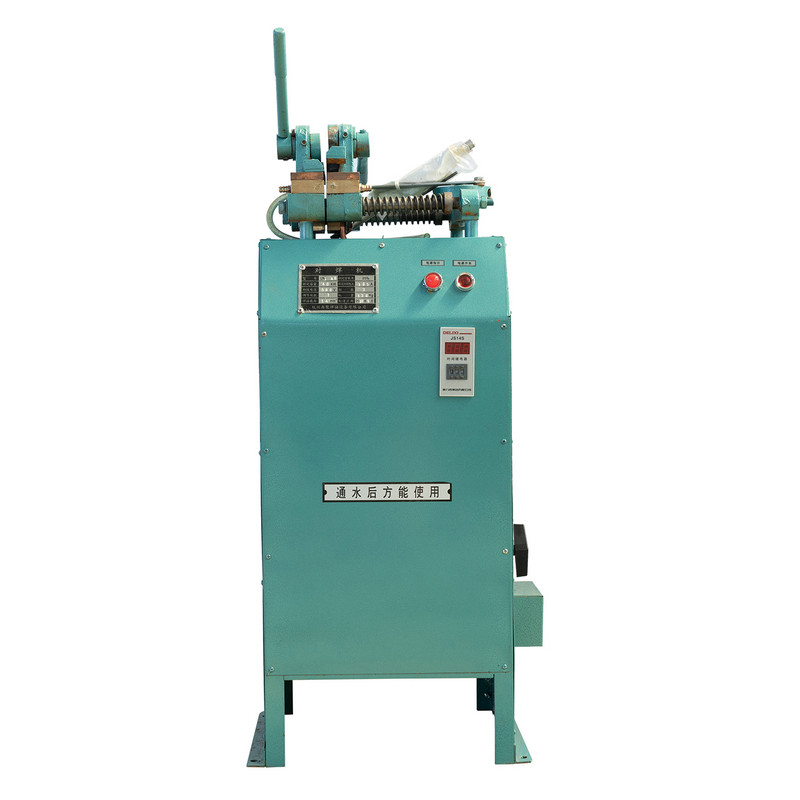
The pedal spot welding machine represents one of the most versatile and widely-used configurations in small to medium-scale manufacturing operations. These machines feature foot pedal activation, allowing operators to control welding timing and pressure manually, providing exceptional flexibility for varied joint configurations and material thicknesses.
Pedal-activated machines are particularly valuable for artisanal metalworking, repair operations, prototype development, and custom fabrication work. Their intuitive control mechanism enables skilled operators to optimize weld quality through tactile feedback and visual monitoring, making them ideal for applications requiring human judgment and adaptability.
Stationary Spot Weld Machines
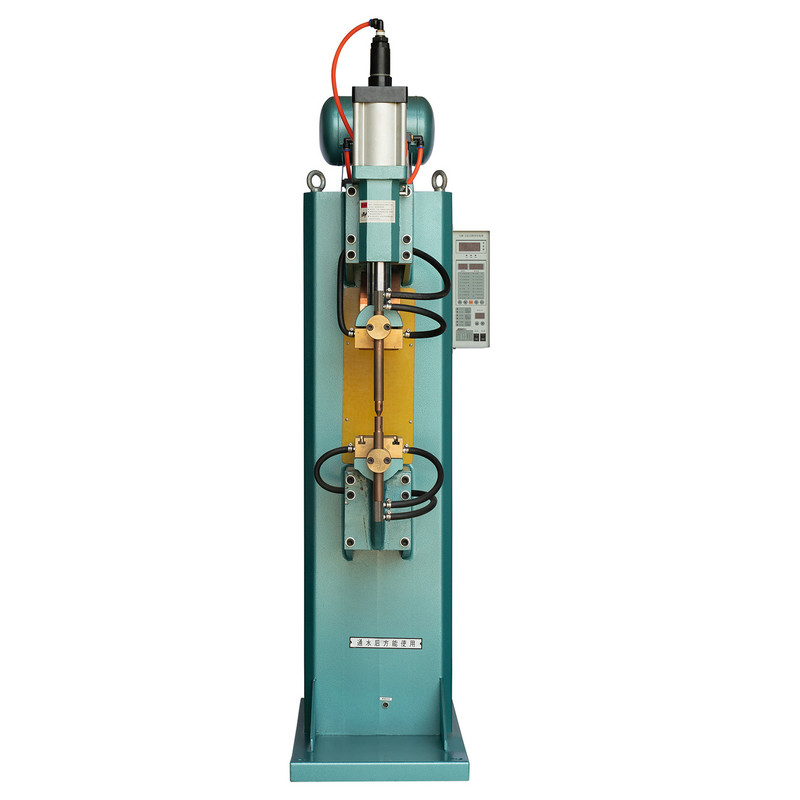
Fixed installation equipment dominates high-volume production environments where consistency and throughput are paramount. These machines incorporate precision positioning systems, advanced control electronics, and robust mechanical frames designed to withstand continuous operation. They excel in repetitive manufacturing scenarios where identical parts require uniform welds.
Portable Spot Welding Guns
Hand-held spot welding guns enable field assembly, on-site repairs, and flexible manufacturing configurations. These portable devices deliver self-contained welding capability, allowing operators to work on components that cannot easily be transported to stationary equipment. They represent critical tools in construction, maintenance, and field service operations.
Robotic Spot Welding Systems
Fully automated robotic installations represent the pinnacle of spot welding technology adoption. These systems deliver unmatched consistency, speed, and production capacity for mass manufacturing scenarios. Industrial robots position electrodes with micron-level precision, ensuring identical weld quality across thousands of components.
Comparative Overview of Spot Machine Welding Technologies
Different spot welding configurations offer distinct advantages and limitations. The following table illustrates key characteristics of major equipment categories:
| Equipment Type | Primary Advantage | Production Capacity | Operator Skill Required | Capital Investment |
|---|---|---|---|---|
| Pedal Machines | Flexibility and Control | Low to Medium | High | Low |
| Stationary Equipment | Consistency and Speed | High | Medium | Medium |
| Portable Guns | Mobility and Accessibility | Low | High | Medium |
| Robotic Systems | Maximum Consistency | Very High | Low | Very High |
The Spot Welding Process: Technical Workflow
Understanding the sequential steps involved in creating a spot weld illuminates why this technology remains so effective and reliable across diverse applications.
Step-by-Step Process
- Preparation and Alignment - Metal sheets are positioned and secured with precise alignment, ensuring electrodes will contact both surfaces uniformly
- Electrode Positioning - Electrodes are brought into contact with the metal surfaces, typically exerting initial pressure to ensure intimate contact
- Current Application - Electrical current flows through the electrodes and metal components, generating resistance heating at the contact interface
- Heat Generation and Melting - Concentrated heat rapidly raises the temperature at the joint interface to melting point, creating a molten nugget
- Solidification Under Pressure - Electrical current ceases while pressure continues, allowing the molten metal to solidify into a permanent solid-state bond
- Cooling and Completion - The joint cools to ambient temperature while maintaining mechanical integrity, creating the final weld
Timing and Parameter Control
The entire process typically completes in less than one second, with different phases lasting only hundreds of milliseconds. Precise timing control proves absolutely critical to weld quality:
- Squeeze time - Duration between initial electrode contact and current flow initiation
- Weld time - Duration of actual electrical current application
- Hold time - Period during which pressure continues after current ceases
- Off time - Interval between successive welds when processing multiple joints
Advantages of Spot Welding Technology
Spot welding has achieved dominance in numerous industries due to compelling operational and economic advantages that competitors struggle to match.
Speed and Efficiency
Individual spot welds complete in milliseconds, enabling extremely high production rates. High-speed automated systems can create thousands of welds daily, dramatically accelerating manufacturing throughput compared to alternative joining methods.
Cost-Effectiveness
Minimal material consumption, reduced labor requirements, and high automation capability combine to deliver exceptional value. The process wastes virtually no material compared to methods requiring filler metals or that remove material during joining.
Strong, Reliable Joints
Properly executed spot welds create joints with strength equivalent to or exceeding the base material itself. The solid-state fusion process eliminates common defect modes found in other joining methods, delivering consistently reliable performance.
Aesthetic Appeal
Unlike arc welding processes that leave visible seams and require finishing, spot welds create clean, minimal surface disturbance. This aesthetic advantage proves particularly valuable for visible assemblies and consumer-facing products.
Minimal Material Distortion
The concentrated, localized heating approach prevents the extensive heat-affected zones created by traditional welding. Surrounding metal experiences minimal thermal stress, preserving dimensional accuracy and material properties.
Suitability for Thin Materials
Spot welding efficiently joins thin metal sheets that would be challenging or impossible to weld using traditional arc processes. This capability proves essential in automotive, aerospace, and electronics manufacturing.
Industrial Applications and Use Cases
Spot welding permeates manufacturing across virtually every major industry, serving critical roles in component assembly and structural fabrication.
Automotive Manufacturing
Vehicle body assembly relies almost exclusively on spot welding for joining steel sheet metal components. A typical automobile body contains hundreds of individual spot welds, providing the structural integrity essential for safety, durability, and crash performance.
Appliance Production
Refrigerators, washing machines, dishwashers, and other major appliances utilize extensive spot welding for cabinet assembly, component attachment, and structural reinforcement. The process enables rapid assembly while maintaining the dimensional accuracy critical to appliance functionality.
Aerospace and Aviation
Aircraft fuselage and component assembly frequently incorporates spot welding, particularly for aluminum structures. The minimal distortion characteristics prove especially valuable in aerospace applications where dimensional tolerance proves critical to performance and safety.
Electronics and Precision Manufacturing
Battery pack assembly, connector fabrication, and electronic component enclosure construction all benefit from spot welding's precision and speed. The process enables high-volume production of components demanding extreme consistency.
Structural Steel Fabrication
Steel frame assembly, reinforcement attachment, and decorative metal fabrication frequently incorporate spot welding. The process enables efficient assembly of complex structures while maintaining clean aesthetic appearance.
Custom and Specialty Fabrication
Artisanal metalworking, jewelry production, tool manufacture, and specialty equipment assembly benefit from the flexibility offered by manual and semi-automatic spot machine welding systems.
Compatible Materials and Metallurgical Considerations
While spot welding accommodates a broad range of metallic materials, successful application requires understanding material-specific characteristics and constraints.
Steel and Stainless Steel
Carbon steel and stainless steel represent the primary materials for spot welding applications. Their electrical resistance characteristics, melting behavior, and mechanical properties align well with the process requirements. Stainless steel presents somewhat greater challenges due to higher electrical resistance and different thermal properties.
Aluminum and Aluminum Alloys
Aluminum requires modified processing parameters due to its superior electrical and thermal conductivity compared to steel. Higher electrical current and modified electrode materials become necessary, but excellent results are achievable with appropriate technique.
Copper and Copper Alloys
Exceptional thermal and electrical conductivity makes copper and its alloys more challenging to spot weld, requiring very high electrical currents and careful process control. Nevertheless, many copper applications prove feasible with specialized equipment.
Dissimilar Metal Combinations
Joining different metals through spot welding introduces additional complexity, requiring careful selection of welding parameters and electrode materials. Intermetallic compound formation and thermal mismatch necessitate precise process optimization.
Coated and Pre-treated Materials
Galvanized steel, painted surfaces, and other coatings require specific handling approaches. Generally, coatings should be removed from the weld area, or process parameters must be modified to account for coating presence.
Spot Welding Process Visualization
The following diagram illustrates the key stages and components involved in a typical spot welding operation:
Critical Process Parameters and Optimization
Achieving optimal weld quality requires precise control and understanding of multiple interdependent variables that influence the final joint characteristics.
Electrical Current (Amperage)
The electrical current flowing through the joint directly determines the amount of heat generated. Too little current produces incomplete melting and weak joints, while excessive current causes electrode degradation, expulsion of molten metal, and material burn-through. Proper current selection depends on material type, sheet thickness, electrode diameter, and desired weld quality.
Application Time (Duration)
The duration of current application must be precisely calibrated. Insufficient time prevents complete melting, while excessive duration causes excessive heat penetration into surrounding material, potentially degrading mechanical properties. Modern equipment provides millisecond-level timing precision.
Electrode Pressure (Force)
Adequate pressure ensures intimate electrode-to-metal contact, facilitates current flow, and promotes proper nugget formation. Insufficient pressure causes high contact resistance and poor heat distribution, while excessive pressure can distort parts or create undesirable material flow patterns.
Electrode Material and Condition
Electrode composition, geometry, and surface condition dramatically influence process performance. Electrode wear requires periodic replacement or dressing to maintain consistent contact characteristics and weld quality. Different materials demand specific electrode compositions.
Surface Preparation and Cleanliness
Rust, paint, oil, or other contaminants create variable contact resistance, resulting in inconsistent heat generation and poor weld quality. Proper surface preparation through cleaning or light abrasion proves essential for reliable results.
Quality Assurance and Weld Defect Prevention
Implementing robust quality control practices ensures consistent weld performance and eliminates defects that could compromise structural integrity or product reliability.
Common Weld Defects and Root Causes
- Insufficient Nugget Size - Results from inadequate current, excessive speed, or improper electrode pressure causing weak joints
- Expulsion - Occurs when molten metal is forcibly expelled from the weld zone due to excessive current or dwell time
- Surface Indentation - Develops when electrode pressure continues after solidification, creating visible depressions
- Electrode Sticking - Happens when molten metal adheres to electrodes, compromising subsequent welds
- Porosity and Internal Voids - Form from incomplete degassing or rapid cooling, reducing joint strength
- Heat-Affected Zone Cracking - Emerges in susceptible materials when rapid cooling creates brittle microstructures
Quality Control Strategies
Spot welding guns and stationary equipment should incorporate systematic monitoring and control. Regular electrode inspection and maintenance, consistent parameter logging, periodic destructive testing of sample welds, and visual inspection protocols all contribute to defect prevention. Modern systems employ real-time monitoring of electrical parameters to detect abnormalities before they result in defective welds.
Selecting the Right Spot Welding Equipment
Choosing appropriate equipment requires careful evaluation of production requirements, material characteristics, and operational constraints.
Production Volume Considerations
Low-volume or custom work benefits from the flexibility and lower capital requirements of pedal-operated or portable equipment. Medium production runs suit semi-automatic stationary machines, while high-volume manufacturing justifies investment in fully automated robotic systems.
Material Type and Thickness
Material selection influences equipment requirements. Thick materials demand higher current capacity and greater electrode force. Different materials necessitate equipment designed to accommodate their specific electrical and thermal characteristics.
Accessibility and Portability Requirements
Some applications require portable equipment for field assembly or on-site repairs. Others benefit from fixed installation enabling integration with production systems and greater process control.
Precision and Consistency Demands
Applications requiring exceptional consistency and repeatability justify investment in advanced equipment incorporating real-time monitoring and feedback control. Less demanding applications may function adequately with simpler, more basic equipment.
Maintenance and Operational Costs
Operating costs extend beyond initial capital investment. Electrode replacement frequency, maintenance requirements, energy consumption, and floor space demands all factor into total cost of ownership calculations.
Safety Considerations and Operator Protection
Spot welding operations involve significant electrical energy and high temperatures, necessitating comprehensive safety practices and protective measures.
Electrical Safety
Equipment should incorporate proper grounding, insulation, and safety interlocks preventing accidental activation. Operators must maintain awareness of electrical hazard zones and follow established safety protocols.
Thermal and Burn Hazards
Molten metal, hot surfaces, and expulsion risk require appropriate personal protective equipment including heat-resistant gloves, safety glasses, and face protection. Equipment design should minimize expulsion risk through proper parameter control.
Noise and Fume Exposure
While spot welding produces less fume than arc welding, adequate ventilation remains important. Process noise may require hearing protection in industrial environments.
Ergonomic Considerations
Equipment design should minimize operator strain and fatigue. Proper workstation layout, adjustable supports, and intuitive controls all contribute to safe, sustainable operations.
Future Developments and Industry Trends
Spot welding technology continues evolving with advances in control systems, monitoring capabilities, and equipment design driven by manufacturing demands.
Advanced Process Control
Sophisticated real-time monitoring systems now detect weld quality in microseconds, enabling dynamic parameter adjustment to compensate for variations. Machine learning algorithms analyze historical data patterns to optimize parameters proactively.
Integration with Industry 4.0
Connected equipment enables data logging, remote monitoring, and integration with enterprise manufacturing systems. Digital twins allow process simulation and optimization before physical production.
Energy Efficiency Improvements
Modern equipment incorporates innovations reducing electrical consumption while maintaining or improving weld quality. More efficient transformers, better electrode materials, and optimized parameter sets all contribute to lower operational costs.
Expansion into New Materials
Research continues expanding spot welding capabilities to challenging materials including advanced high-strength steels, aluminum alloys, and composite joining applications historically requiring alternative methods.
Automation and Robotics
Increasingly sophisticated robotic systems enable integration of spot welding into flexible manufacturing systems capable of handling multiple product variants with minimal changeover.
Spot Welding vs. Alternative Joining Methods
Understanding how spot welding compares to other joining technologies helps engineers select the most appropriate method for specific applications.
Spot Welding vs. Arc Welding
Arc welding creates continuous seams using consumable filler material, producing highly visible joints. Spot welding creates discrete point connections with minimal visual impact. Arc welding accommodates thicker materials and provides better access in some geometric configurations, while spot welding excels for thin sheet metal assembly at high speeds.
Spot Welding vs. Riveting
Riveting requires drilling holes and inserting fasteners, generating additional material removal and assembly complexity. Spot welding requires no additional components, produces stronger joints in similar applications, and integrates more easily with automated assembly.
Spot Welding vs. Adhesive Bonding
Adhesives offer advantages for joining dissimilar materials and producing vibration-damped assemblies but require cure time and careful surface preparation. Spot welding produces immediate permanent bonds and tolerates greater surface variation.
Spot Welding vs. Mechanical Fastening
Bolts and screws provide disassemblable connections useful for field maintenance but add weight, cost, and complexity. Spot welding creates lighter, lower-cost permanent assemblies suitable for manufactured products requiring minimal maintenance.
Practical Tips for Spot Welding Success
Experienced practitioners employ proven strategies to optimize results and prevent common problems.
Pre-Weld Preparation
- Thoroughly clean metal surfaces removing all rust, paint, oils, and contaminants that compromise contact quality
- Arrange components for precise alignment ensuring electrodes contact both surfaces uniformly
- Select electrode material composition appropriate for the specific metal being joined
- Verify electrode geometry and condition, replacing worn electrodes before quality degradation occurs
- Establish secure fixturing preventing component movement during weld application
Parameter Optimization
- Conduct trial welds on test coupons using materials and thicknesses identical to production
- Incrementally adjust parameters in systematic fashion, changing one variable at a time to isolate effects
- Document successful parameter sets for consistency and quick reference
- Account for material variations and ambient conditions that may necessitate parameter adjustment
- Verify electrode force annually to prevent parameter drift from worn or damaged equipment
Operator Training
- Ensure operators understand fundamental process principles enabling intelligent problem-solving
- Provide hands-on practice with realistic workpiece variations and assembly scenarios
- Establish clear quality standards and visual inspection techniques operators can apply
- Maintain safety consciousness through regular reinforcement of protective practices
Maintenance Best Practices
- Follow manufacturer recommendations for preventive maintenance schedules
- Monitor electrode wear patterns indicating process parameter or technique issues
- Maintain detailed maintenance logs enabling trend analysis and predictive maintenance
- Keep equipment clean and free of material buildup affecting performance
- Address minor issues promptly preventing escalation into equipment failure
Frequently Asked Questions About Spot Welding
Q1: What is the typical cost of spot welding equipment?
Equipment costs vary dramatically based on sophistication and intended application. Basic pedal-operated machines suitable for small operations start around several hundred dollars. Professional stationary equipment ranges from thousands to tens of thousands of dollars. Fully automated robotic systems represent six-figure to multi-million-dollar investments. Capital costs must be evaluated relative to production volume, labor costs, and desired automation level to determine true cost-effectiveness for specific applications.
Q2: How long do spot welding electrodes typically last?
Electrode service life depends on material composition, welding parameters, and process frequency. Under typical conditions, electrodes complete anywhere from several hundred to thousands of individual welds before requiring replacement or dressing. Copper alloy electrodes used in most applications provide better longevity than earlier materials. Regular inspection and maintenance extend service life and prevent quality degradation from electrode wear.
Q3: Can spot welding join different types of metals together?
Dissimilar metal joining proves more challenging than identical material combinations but is often achievable with proper technique. The primary concern involves managing differences in electrical conductivity and thermal properties that influence heat distribution. Careful parameter optimization, appropriate electrode material selection, and consideration of intermetallic compound formation at the interface enable successful dissimilar metal welding in many applications.
Q4: What thickness range of materials can be spot welded?
Spot welding accommodates a broad thickness range, from thin foil materials under 0.5 millimeters to heavier sections around 3 to 5 millimeters thick in common applications. Very thick materials require excessive electrical current and equipment capable of delivering the necessary force, making alternative joining methods more practical. Extremely thin materials risk burn-through and excessive distortion. Typical sweet spot involves materials in the 1 to 3 millimeter range where the process excels.
Q5: How is spot weld quality verified and tested?
Quality verification employs multiple approaches. Visual inspection identifies obvious defects like expulsion or improper electrode indentation. Cross-sectional metallography reveals internal nugget structure, porosity, and weld geometry on sample welds. Mechanical testing including tensile strength testing of welded coupons confirms strength characteristics. Modern non-destructive testing methods like eddy current inspection can detect subsurface defects without destroying samples. Production environments typically employ statistical sampling combined with real-time electrical monitoring of welding parameters.
Q6: What safety equipment and precautions are necessary for spot welding operations?
Essential safety measures include proper electrical grounding and insulation preventing shock hazards, interlocks preventing accidental activation, heat-resistant gloves and protective clothing preventing burn injuries, safety glasses and face shields protecting eyes from expulsion, hearing protection in high-noise environments, adequate ventilation removing any fumes, proper training ensuring operator competency, and adherence to lock-out tag-out procedures during maintenance. Equipment design and facility layout should minimize hazard exposure through thoughtful engineering.
Q7: How does material thickness affect spot welding parameters?
Thicker materials require proportionally higher electrical current to generate sufficient heat for complete melting through the material thickness. Electrode force must increase to establish adequate contact pressure and metal flow. Application time typically increases slightly with material thickness to allow heat penetration. These relationships are non-linear, requiring systematic parameter adjustment rather than simple proportional scaling. Material composition influences these relationships significantly, necessitating specific optimization for each material type and thickness combination.
Q8: What environmental factors influence spot welding quality?
Ambient temperature affects electrode material properties and electrical behavior. Humidity influences surface contamination characteristics and electrical conductivity. Surface condition varies seasonally affecting rust formation. Equipment cooling requirements increase in hot environments. Facility voltage stability affects consistent current delivery. Well-designed manufacturing facilities control these environmental factors within specified ranges to ensure consistent weld quality regardless of external conditions.
Q9: Can existing equipment be upgraded or adapted for different materials?
Limited upgrading is possible, typically involving electrode material changes, parameter modification, and possibly transformer upgrades for higher current capacity. However, equipment designed for specific materials may not be optimal for alternative materials due to fundamental differences in resistance heating characteristics and required force capabilities. Major material changes often justify equipment replacement rather than attempted adaptation, ensuring optimal performance and reliability.
Q10: How does automation affect spot welding costs and quality?
Automation increases capital costs but dramatically reduces per-unit labor costs in high-volume production. Quality consistency improves significantly with robotic application eliminating human variables. Setup time decreases for subsequent parts through rapid parameter selection from database. Flexibility decreases compared to manual equipment, making automation economically justifiable primarily for dedicated production of limited product variations in substantial volumes. Break-even analysis comparing automation investment to accumulated labor savings determines economic viability for specific applications.