Language
 English
 русский
 Español

Get A Quote
Get A Quote
 Home / News / Industry News / What is the benefit of integrating timing adjustment with a gear-type pedal welder?
 2026.05.28
 Industry News
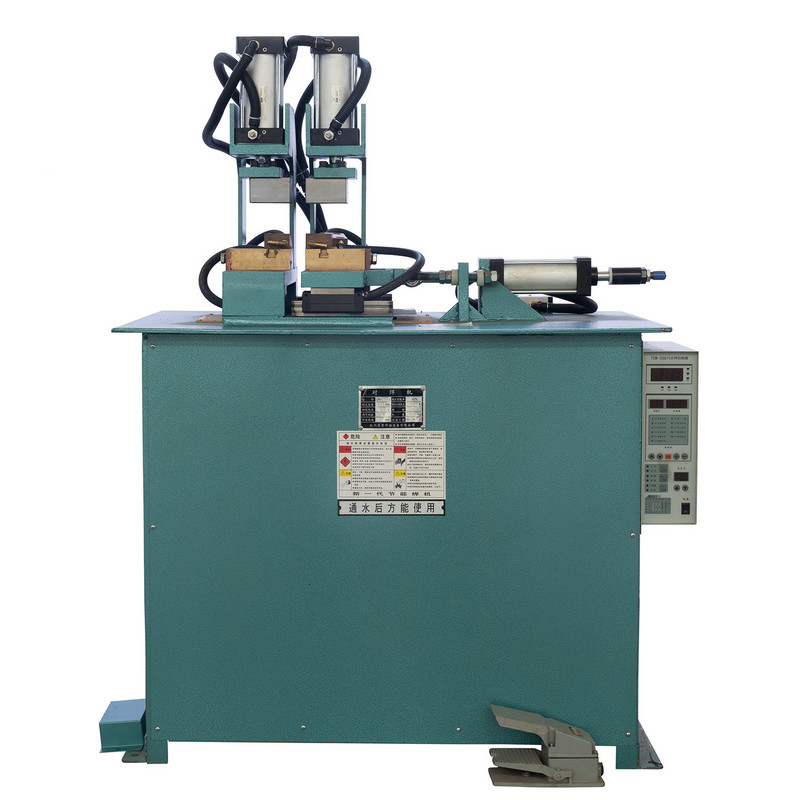
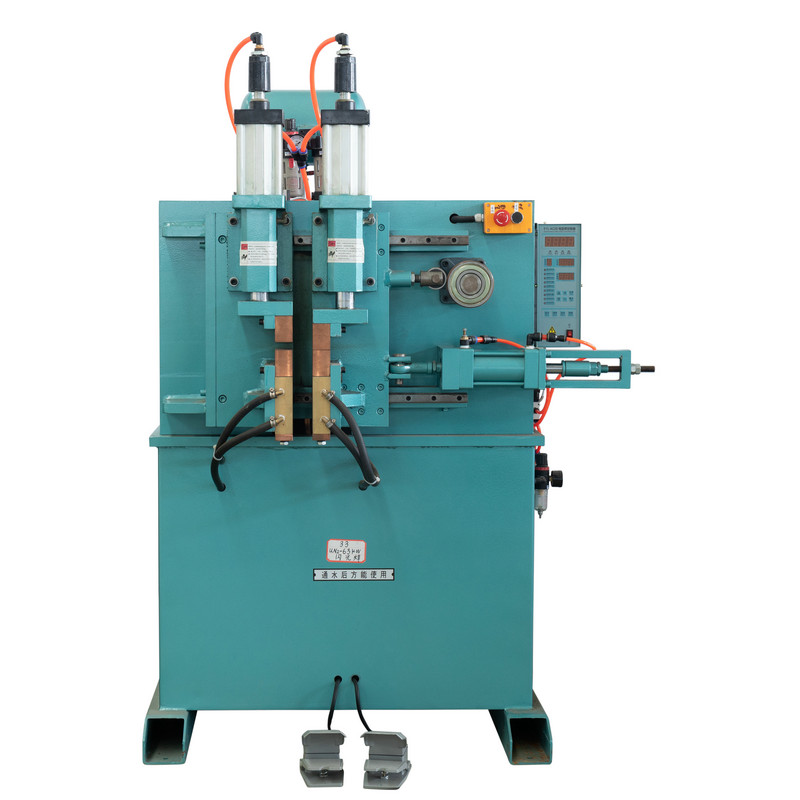
Spot welding, a key technique in various industrial fabrication processes, requires precise control of both the welding duration and the timing between different stages of welding. Among the different spot welding machines, the With Timing Adjustment Control Gear Type Pedal Spot Welding Machine stands out due to its enhanced control features. Timing adjustments in this machine allow for fine-tuning the welding process, optimizing both the quality and the efficiency of the welds.
Integrating timing adjustment with gear-type pedal welders brings about several practical benefits. From better control over heat generation to ensuring more consistent welds, this integration is essential in applications where precision and reliability are paramount. This article explores the key advantages of this feature, its impact on welding performance, and how it can be leveraged to improve both operational efficiency and product quality in industrial settings.
A gear-type pedal spot welder operates by providing the user with a foot pedal that regulates the amount of pressure applied to the electrodes. The gear mechanism ensures that pressure is applied consistently, which is crucial for uniform welding across a variety of materials. These machines are known for their reliability in manual applications, where precision is crucial.
The addition of timing adjustment control takes this technology a step further. By allowing operators to modify the duration of each welding cycle, the machine ensures a higher level of consistency and repeatability in the welding process, making it ideal for high-precision applications.
The primary benefit of integrating timing adjustment control into a gear-type pedal spot welder is the ability to fine-tune the welding time. This is essential for achieving optimal weld quality across a range of materials. Whether dealing with thin sheets or thicker metals, the right welding time ensures minimal distortion and consistent fusion of the materials.
Timing adjustments allow operators to set the duration of each welding cycle based on the material and its thickness. This leads to:
Precision is critical in many manufacturing applications, particularly in industries such as automotive, aerospace, and electronics, where even slight imperfections in welds can lead to failures or costly rework. The integration of timing adjustment provides operators with the ability to control the exact duration of the welding cycle, ensuring that each weld meets stringent quality standards.
By reducing variations in welding time, this feature helps achieve the following:
Operational efficiency in welding operations translates directly into cost savings and faster production cycles. With the ability to adjust timing settings, the gear-type pedal welder allows operators to quickly adapt to varying material types and thicknesses without having to pause for manual recalibration. This leads to:
Timing adjustment in gear-type pedal spot welders is especially beneficial in industries where precision and reliability are critical. Some of the most common applications include:
In each of these applications, the ability to adjust the timing of the welding cycle ensures that operators can achieve the required balance of strength and precision, ensuring the integrity of the final product.
To fully leverage the advantages of timing adjustment control, it's important for operators to understand how to fine-tune the machine settings according to the specific welding requirements. Key strategies include:
A1: Timing adjustment control allows operators to set the exact duration of the welding cycle, which helps achieve better heat control, precise welds, and consistent results across various materials.
A2: Yes, by controlling the heat input more effectively, timing adjustments reduce the risk of defects like overheating, burn-through, and weak joints, thereby improving weld quality.
A3: Timing adjustment is particularly useful for materials that require precise heat control, such as metals of varying thickness and heat-sensitive components in industries like automotive and electronics.
A4: By allowing for faster adjustments and more consistent welds, timing adjustment control helps reduce cycle times, minimize errors, and improve overall operational efficiency.
Recommended Products

Product
Contact Info.
+86-152-5712-5882
Fax: +86-563-2269966
No. 21 Guangping Road, Guangde Economic Development Zone, Guangde City, Anhui Province
QR Code