Language
 English
 русский
 Español

Get A Quote
Get A Quote
 Home / Equipment / UN Butt Welding Machine / UN3 Flash Butt Welding Machine / UN3-200KW Metal Shell Pipe Flash Butt Welding Machine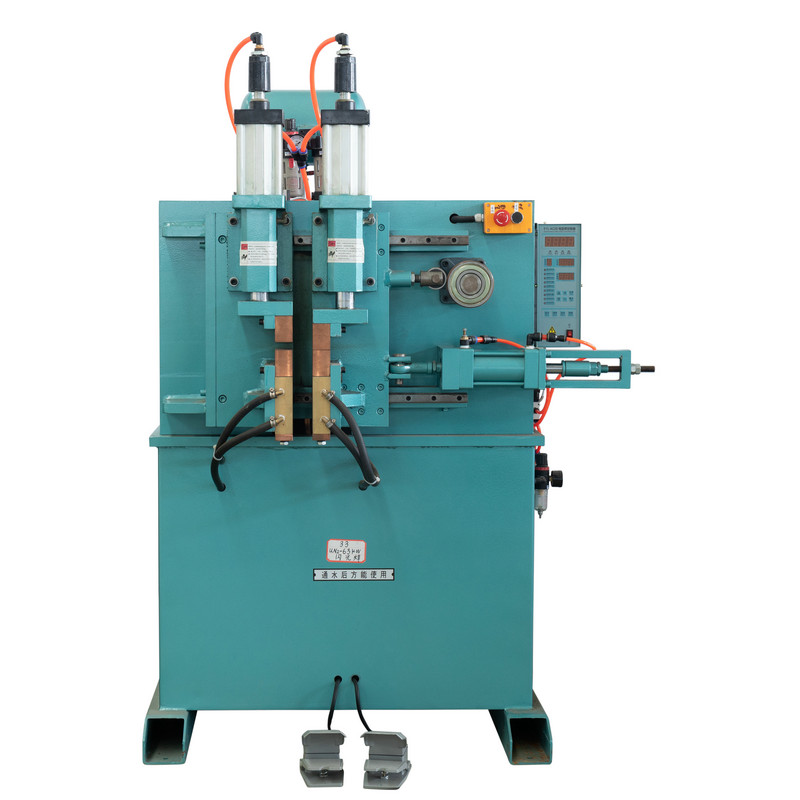
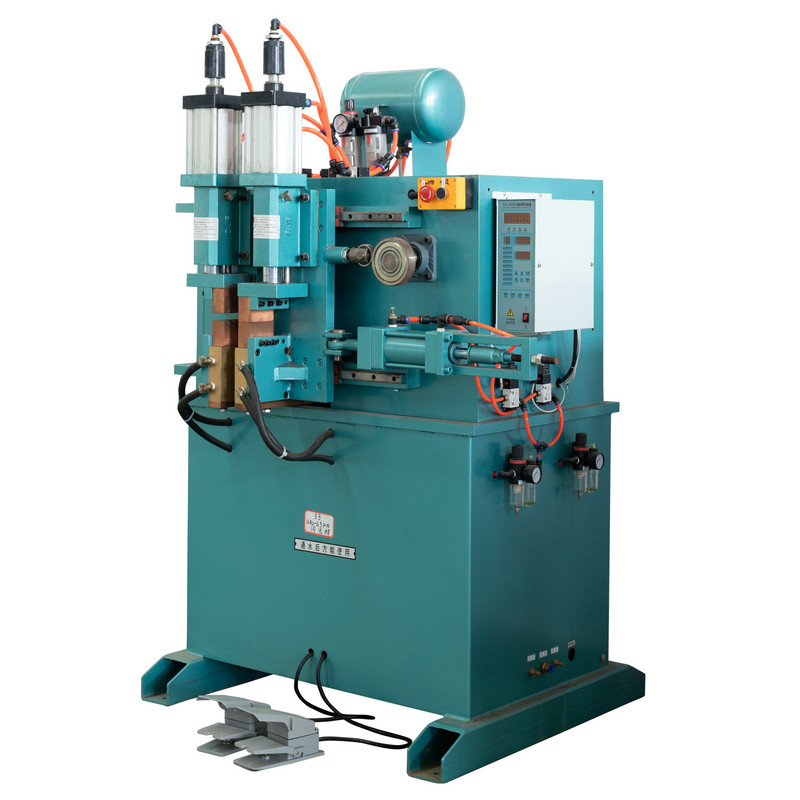
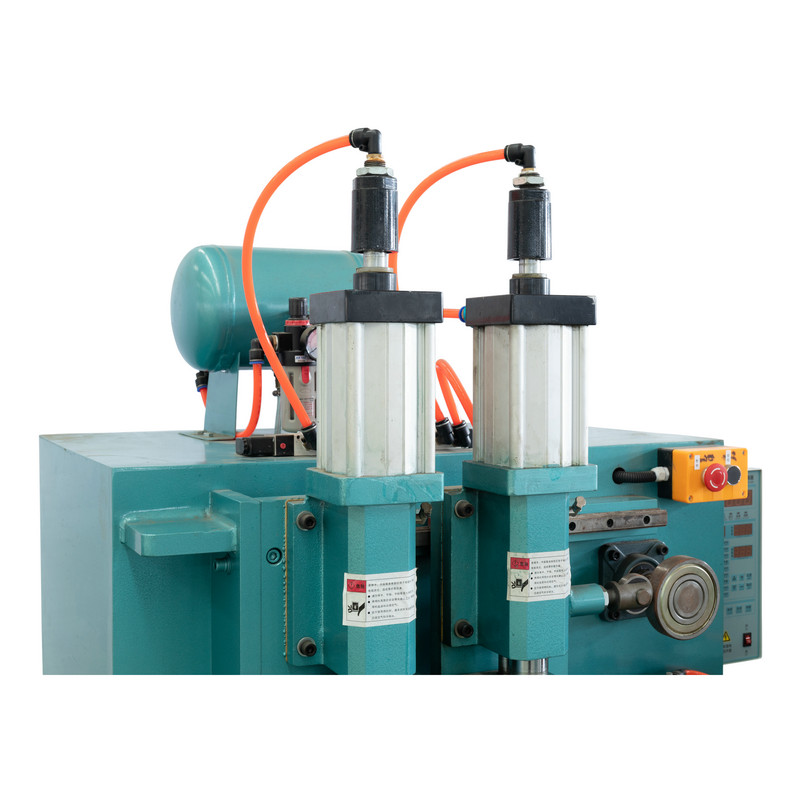
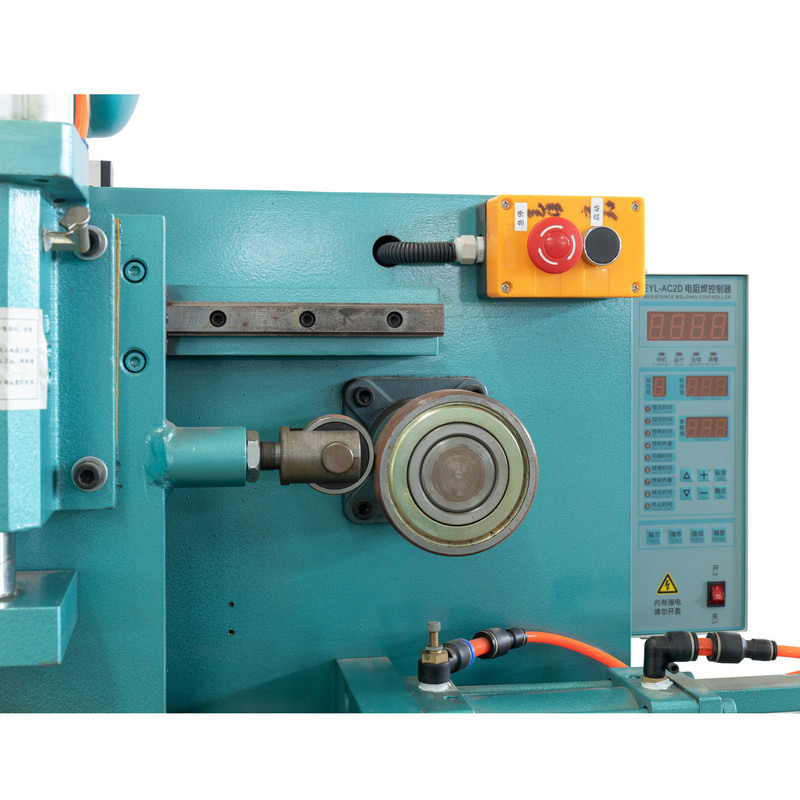
Equipped with a microcomputer controller, the UN3-200KW Metal Shell Pipe Flash Butt Welding Machine executes a series of personalized operations: clamping, flashing, upsetting, connecting, and stopping. The resulting welded products boast remarkable qualities—high strength, impeccable density, absence of false welding, slag inclusions, and pores, coupled with a robust and aesthetic appearance. This versatile machine is ideal for butt welding a wide range of hardware items, including round and square tubes, round steel, flat iron, as well as bicycle and motorcycle rims.

Specifications
|
Model |
Unit |
UN3-200KW |
|
|
Power input |
V/Hz |
380V/50Hz |
|
|
Rated capacity |
KVA |
200 |
|
|
Maximum short circuit current |
KA |
30 |
|
|
Rated load duration |
% |
20 |
|
|
Secondary no-load voltage |
V |
11.0 |
|
|
Secondary voltage regulation stage |
stages |
Stepless voltage regulation |
|
|
Maximum upsetting force |
N |
3000 |
|
|
Maximum clamping force |
N |
8000 |
|
|
Maximum jaw distance |
mm |
40 |
|
|
Maximum welding diameter |
Steel pipe |
mm |
Ф40 |
Product Description
The UN3-200KW Metal Shell Pipe Flash Butt Welding Machine is a high-performance, precision-engineered solution designed for robust and reliable flash butt welding. Encased in a durable metal shell, this machine integrates advanced microcomputer control technology to automate and perfect the entire welding sequence—clamping, flashing, upsetting, connecting, and stopping.
This automated process ensures consistently superior welded products characterized by exceptionally high strength, impeccable density, and a flawless finish. The welds are free from common defects such as false welding, slag inclusions, and pores, resulting in joints that are not only structurally sound but also aesthetically pleasing.
1. Pre-Operation Safety & Setup Checklist
2. Microcomputer Controller Setup
3. Executing the Welding Cycle
Initiate the process. The microcomputer controller will automatically execute the following sequence:
4. Post-Operation
Important Note: Always adhere to the machine’s 20% rated load duration to avoid overheating. This means the machine should be active for 2 minutes followed by an 8-minute cooling period for every 10-minute cycle. Never exceed the maximum specified clamping and upsetting forces.
Recommended Products
KEEP IN TOUCH


You are setting up a small fabrication shop, and a customer asks whether you can weld 1/8-inch mild steel and also handle some outdoor repair work. The quick answer is: if you want low-cost equipment...
READ MORE
Welding electrodes are not interchangeable. The copper-alloy tip that makes a clean spot weld on stainless steel will burn up quickly if you use it on galvanized sheet metal. Understanding how differ...
READ MORE
Every weld is a production decision. When you choose an electrical welding machine, you are really choosing how to balance weld quality, cycle time, and operator effort on your floor. After building ...
READ MORE
Understanding Resistance Butt Welding and the Role of Flash Weld Technology Joining two metal bar ends face to face without filler material is one of the oldest challenges in metal fabrication, and r...
READ MORE
Understanding Stud Spot Welding Technology Today Fastening components to metal panels without drilling or riveting has become a standard requirement across sheet metal fabrication, shipbuilding, and ...
READ MORE
Spot Welding Machine Categories and How They Differ Resistance spot welding equipment is generally divided by how the electrode force is generated and applied. Mechanical foot-pedal units rely on the...
READ MORE
Product
Contact Info.
+86-152-5712-5882
Fax: +86-563-2269966
No. 21 Guangping Road, Guangde Economic Development Zone, Guangde City, Anhui Province
QR Code