Language
 English
 русский
 Español

Get A Quote
Get A Quote
 Home / News / Industry News / What are the safety precautions when using a desktop spot welder in a home workshop?
 2026.04.16
 Industry News
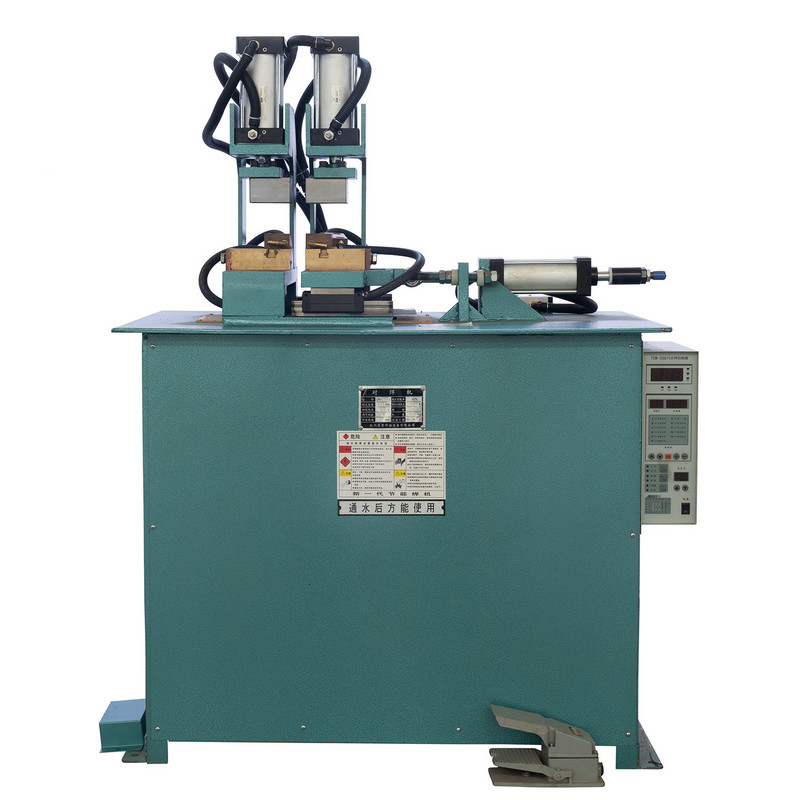
The Desktop Pedal Welding Machine is a compact, efficient, and user-friendly spot welding device designed for small-scale welding applications, widely used in home workshops, DIY manufacturing, electronic component processing, and small metal part repair scenarios. Unlike industrial large-scale welding equipment, this machine features a small footprint, low power consumption (typically 1KW-5KW), pedal-controlled operation, and precise welding output, making it the preferred choice for home workshop users. However, despite its compact size, the equipment involves electrical systems, high-temperature welding processes, and metal material processing, so standardized safety precautions are essential to avoid electric shock, fire, burns, and mechanical injuries during operation.
Safety operation is the top priority for using the Desktop Pedal Welding Machine in a home workshop. Home workshops usually have limited space, mixed tools and materials, and relatively simple safety protection facilities, which increases potential safety risks. This article systematically explains all-round safety precautions from pre-operation preparation, formal operation specifications, post-operation maintenance, emergency handling, and environmental safety, combined with the structural characteristics and usage scenarios of the equipment, to provide a complete safety operation guide for home workshop users.
Before formal use, users must clarify the core safety attributes of the Desktop Pedal Welding Machine: the equipment outputs low voltage but high current during operation, the welding electrode head generates an instantaneous high temperature of over 800°C, the pedal control mechanism has mechanical movement characteristics, and the internal circuit system requires stable power supply support. All safety precautions are formulated around these core attributes, and any non-standard operation may lead to safety accidents.
According to the risk sources and hazard types of the Desktop Pedal Welding Machine, safety precautions can be divided into five major categories, covering the entire life cycle of equipment use:
Home workshop users must master all the above safety categories, and implement corresponding preventive measures in each operation link, which is the basis for ensuring safe use of the Desktop Pedal Welding Machine.
Adequate pre-operation preparation is the first line of defense for safe use of the Desktop Pedal Welding Machine in a home workshop, which can eliminate more than 60% of potential safety risks. This stage includes site preparation, equipment inspection, personal protection, and material preparation, and each link has strict safety standards that cannot be omitted.
The home workshop space is limited, so a reasonable layout is critical to welding safety. The placement area of the Desktop Pedal Welding Machine must meet the following strict requirements:
For home workshops without independent ventilation devices, a portable exhaust fan can be placed to discharge welding fumes and harmful gases in a timely manner, which not only protects respiratory health but also avoids potential safety hazards caused by high-temperature gas accumulation.
Before each startup, users must conduct a full inspection of the Desktop Pedal Welding Machine, and strictly prohibit startup operation with faults. The inspection items include:
Statistical data shows that equipment failures caused by omitted pre-operation inspections account for 45% of home workshop welding safety accidents, so repeated inspections are an indispensable step.
Personal protective equipment is the last barrier to protect operators from injuries, and home workshop users must wear complete protective gear before operation, which must meet the following standards:
Complete personal protection can reduce the risk of burns and electric shock by more than 90%, and it is a mandatory safety requirement for operating the Desktop Pedal Welding Machine.
Prepare welding materials and auxiliary tools in advance to avoid random searching during operation leading to misoperation. Safety requirements include:
Select metal materials suitable for spot welding, such as low-carbon steel, stainless steel, and copper alloys within 3mm thickness; strictly prohibit welding flammable metals or materials with unknown components.
Place special pliers, cleaning brushes, and heat-insulating pads within easy reach; welded parts cannot be placed directly on the workbench or the ground to avoid ignition of combustible materials.
Formal operation is the core stage of using the Desktop Pedal Welding Machine, and standardized operation steps can ensure the stability of the welding process and avoid safety accidents caused by human factors. All operations must be carried out in strict accordance with the process, and any random adjustment or illegal operation is prohibited.
After completing pre-operation preparation and inspection, perform startup and parameter setting according to the following steps:
The parameter setting error is one of the main causes of equipment overheating and welding failure. Home workshop users are recommended to conduct 1-2 test welds on waste materials before formal welding to verify the rationality of the parameters.
The formal welding operation must strictly abide by the following specifications to ensure personal and equipment safety:
For the pedal control mode of the Desktop Pedal Welding Machine, the operator's foot strength and speed directly affect the welding effect and safety. Uniform force is the core requirement to ensure stable electrode pressure and avoid poor welding or mechanical failures.
To ensure absolute safety, the following behaviors are strictly prohibited during the operation of the Desktop Pedal Welding Machine in home workshops:
These prohibited behaviors are summarized from a large number of welding safety accident cases, and abiding by them can effectively avoid the occurrence of most safety risks.
When abnormal conditions are found during operation, handle them in accordance with the "stop-operation-inspection-recovery" process to avoid expanding the fault:
Common abnormal conditions and handling methods:
| Abnormal Condition | Safe Handling Method |
| Equipment emits burnt odor | Release pedal immediately, cut off power supply, stop operation, check circuit and electrode head after cooling |
| Electrode head does not lift | Cut off power supply, check pedal mechanism and connecting rod, do not pry forcibly by hand |
| Large amount of sparks splash | Stop welding, clean electrode head carbon deposition, adjust welding current and time parameters |
| Power indicator off | Check plug and socket, do not disassemble the equipment privately, contact professional maintenance |
Any abnormal condition must be handled after the equipment is completely powered off and cooled down, and blind operation with electricity is strictly prohibited.
Post-operation safety maintenance is an important link to extend the service life of the Desktop Pedal Welding Machine and reduce potential safety risks. Home workshop users often ignore this link, leading to equipment performance degradation and increased safety hazards. Standardized maintenance and storage must be implemented after each use.
After completing all welding tasks, perform the following operations in sequence to ensure the equipment is in a safe state:
Cleaning and maintenance must be carried out under the condition of complete power failure and cooling of the equipment, and the specific requirements are as follows:
Regular maintenance can reduce the equipment failure rate by more than 70%, and at the same time reduce safety risks caused by carbon deposition, poor contact, and mechanical jamming.
For the Desktop Pedal Welding Machine that is not used for a long time in the home workshop, storage must meet the following safety requirements:
Store the equipment in a dry, ventilated, and cool environment, away from direct sunlight, high temperature, and humidity; the ambient humidity should be kept below 60% to avoid internal circuit corrosion.
Cover the equipment with a dust cover to prevent dust accumulation; do not stack heavy objects on the equipment surface to avoid deformation of the casing and electrode mechanism.
Unplug the power cord and wrap it neatly and fix it on the equipment; take out the easily damaged electrode head and store it separately to avoid collision and deformation.
Conduct a comprehensive safety inspection every 3 months during storage, and perform an idle test run to ensure the equipment can be started normally.
The welding process of the Desktop Pedal Welding Machine produces high temperature and sparks, which is a high-risk link for fires in home workshops. Perfect fire safety preparation and emergency response capabilities are essential to ensure the safety of people and property.
The operating area of the Desktop Pedal Welding Machine must be equipped with complete fire-fighting equipment, which must meet the following requirements:
When a safety accident occurs suddenly, respond quickly in accordance with the following procedures to minimize losses:
Timely power cutoff is the core step of all emergency responses, which can avoid the expansion of accidents caused by continuous power supply and high temperature.
After handling the accident, conduct a comprehensive safety inspection of the Desktop Pedal Welding Machine and the workshop environment. The equipment can be reused only after confirming that all parts are intact and there are no potential safety hazards; damaged equipment must be repaired or replaced before use.
For home workshop users, professional operational training and standardized daily safety management are important guarantees for long-term safe use of the Desktop Pedal Welding Machine, especially for B2B buyers who use the equipment for small-batch processing, and safety management is more critical.
All operators must receive complete safety training before using the equipment, including:
B2B buyers who use the Desktop Pedal Welding Machine for small-batch production in home workshops need to implement stricter safety management:
Formulate a special safety operation system, and post it in a prominent position in the workshop for operators to follow;
Record equipment use, maintenance, and abnormal conditions every day to track the equipment status in real time;
Limit the continuous working time of the equipment to ensure periodic rest and heat dissipation, and extend the service life while ensuring safety;
Regularly check and update personal protective equipment and fire-fighting facilities to ensure they are in effective condition.
Home workshop users should always maintain a high degree of safety awareness, regard safety operation as a habit, avoid fluke psychology, and never take risks to operate the equipment with faults or in non-standard environments. Safety is the prerequisite for all welding operations, and no production or processing needs can exceed safety requirements.
The maximum continuous operation time is 30 minutes, and it needs to stop for 5 minutes to cool down to avoid internal overheating damage.
No, operating with wet hands or standing on wet ground will greatly increase the risk of electric shock, which is strictly prohibited.
Clean the electrode head after each use to remove carbon deposition, which can ensure welding quality and reduce safety risks.
Dry powder fire extinguishers are recommended; water-based fire extinguishers are prohibited to avoid electric shock.
No, such materials will produce harmful gases and splash sparks, which are potential safety hazards.
Cut off the power supply immediately, check the mechanism after cooling, and do not pry forcibly by hand.
Yes, a dedicated three-hole grounded socket must be used to prevent electric shock accidents.
Store in a dry and ventilated environment, cover with a dust cover, and conduct an inspection every 3 months.
Welding goggles, heat-insulating gloves, long-sleeved non-flammable work clothes, and safety shoes are mandatory.
No, minors and untrained personnel are prohibited from entering the operating area.
Recommended Products

Product
Contact Info.
+86-152-5712-5882
Fax: +86-563-2269966
No. 21 Guangping Road, Guangde Economic Development Zone, Guangde City, Anhui Province
QR Code