Language
 English
 русский
 Español

Get A Quote
Get A Quote
 Home / News / Industry News / How Does a Two-Stage Discharge System Reduce Defects in Pneumatic Butt Welding?
 2025.11.20
 Industry News
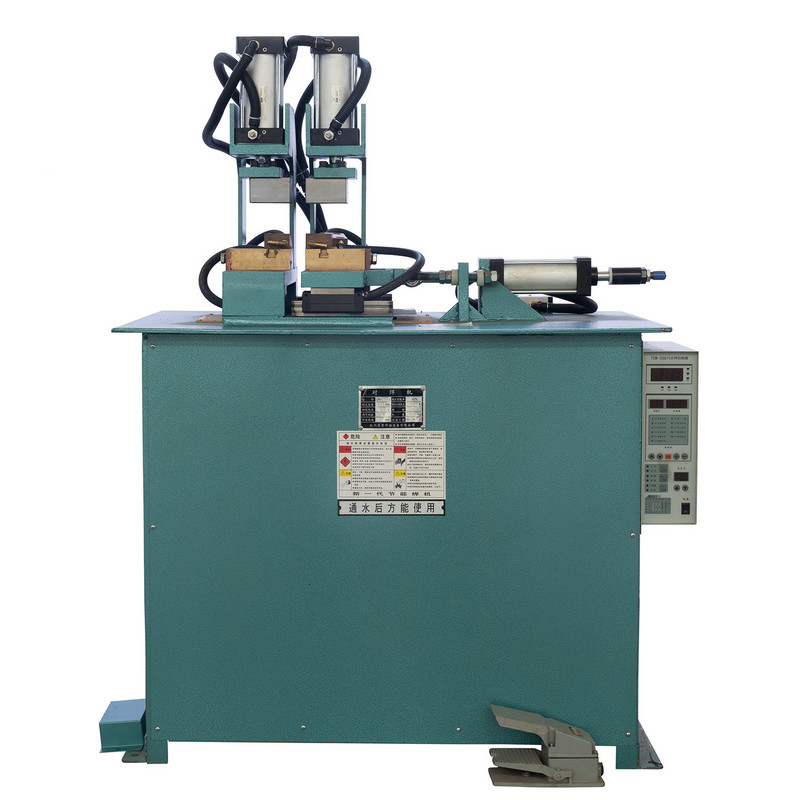
Pneumatic butt welding is a widely used process in industrial manufacturing, particularly in the joining of thermoplastic pipes and profiles. The Two-Stage Discharge Pneumatic Butt Welding Machine has emerged as a critical solution to enhance welding quality and reduce production defects. By incorporating a two-stage discharge system, manufacturers can achieve more uniform heat distribution, controlled pressure application, and consistent weld integrity.
In traditional pneumatic butt welding, a single-stage pressure system is applied to the workpieces. While effective, this method often results in uneven material flow, surface irregularities, and micro-defects in the weld joint.
A Two-Stage Discharge Pneumatic Butt Welding Machine addresses these challenges by introducing a controlled, sequential application of pressure:
By separating the welding process into two distinct stages, the system reduces the risk of overheating, uneven fusion, and excessive flash formation.
To understand the advantages of a two-stage discharge system, it is important to identify common defects that occur in standard pneumatic butt welding:
| Defect Type | Description | Causes | Impact on Production |
|---|---|---|---|
| Incomplete Fusion | Lack of proper bonding between surfaces | Insufficient heat or uneven pressure | Weak joint, potential leaks |
| Excess Flash Formation | Excess material squeezed out of the joint | Overpressure during welding | Material waste, additional trimming required |
| Misalignment | Workpieces not properly aligned | Poor pre-compression or fixturing | Non-uniform weld strength |
| Surface Deformation | Uneven or melted surface | Rapid or uncontrolled pressure | Reduced aesthetic and functional quality |
A Two-Stage Discharge Pneumatic Butt Welding Machine mitigates these defects by providing controlled pressure and gradual material flow.
Controlled pressure is the core advantage of a two-stage discharge system. By initially applying moderate pressure, the machine ensures proper alignment and material contact without creating excessive flash. The subsequent full-pressure stage then completes the weld with uniform fusion, reducing incomplete bonding.
This sequential pressure approach minimizes stress on the material and prevents sudden deformation, which is a common cause of surface irregularities in single-stage systems.
A key factor in reducing defects is the even distribution of heat across the workpieces. In a Two-Stage Discharge Pneumatic Butt Welding Machine, the pre-compression stage allows the material to reach a uniform temperature before full pressure is applied.
Flash is the excess material that is squeezed out during welding. While some flash is normal, excessive flash leads to increased material wastage and requires additional trimming.
The two-stage discharge process:
This controlled flash management reduces defects and increases production efficiency.
Misalignment is a common source of weld failure, especially in high-precision applications. The pre-compression stage in a two-stage discharge system ensures that workpieces are perfectly aligned before full pressure is applied.
Benefits include:
Rapid pressure application in single-stage pneumatic welding often introduces thermal and mechanical stress into the joint. Over time, this can cause warping, micro-cracks, or reduced durability.
By using a gradual, two-stage discharge:
The advantages of a Two-Stage Discharge Pneumatic Butt Welding Machine are particularly evident in industries that demand high-quality thermoplastic welds:
These applications demonstrate the importance of minimizing defects through advanced welding techniques, enhancing both product performance and operational efficiency.
When selecting a machine, buyers should consider several key factors:
| Factor | Consideration | Impact |
|---|---|---|
| Pressure Control Accuracy | Ability to finely tune both stages | Directly affects weld quality and defect reduction |
| Heating System Efficiency | Uniform heat application | Prevents incomplete fusion and thermal stress |
| Cycle Time | Adjustable discharge timing | Balances production speed and quality |
| Durability and Maintenance | Robust design with minimal downtime | Ensures consistent performance over long production runs |
Recommended Products

Product
Contact Info.
+86-152-5712-5882
Fax: +86-563-2269966
No. 21 Guangping Road, Guangde Economic Development Zone, Guangde City, Anhui Province
QR Code