Language
 English
 русский
 Español

Get A Quote
Get A Quote
 Home / News / Industry News / Why an Automatic Pipe Cutting Machine Is a Production Decision, Not Just a Tool
 2026.09.21
 Industry News
In shops that fabricate pipe or tube, the cutting stage is where schedules are lost. An operator measures a length, marks the material, sets up a manual saw, makes a cut, deburrs the edge, and repeats. On a good day, the shop produces a few hundred clean cuts. On a bad day, mis-measured lengths turn into waste, and end preparation gets pushed to a manual grinder.
The conclusion is straightforward: an automatic pipe cutting machine removes the most variable part of the preparation stage. Once the machine is programmed, it feeds, measures, clamps, cuts, and often bevels the pipe without operator intervention. But the value of that automation depends on how well you match the machine to your material range, batch sizes, and downstream joining process.
The cutting machine is only half of the pipe fabrication equation. Cut pipe is usually welded, and the cutting method directly affects how well that weld turns out. Shops that plan cutting and welding together get better throughput, fewer defects, and lower cost per joint.
Automatic pipe cutting machines fall into four broad categories. Choosing between them is almost always a trade-off between cut quality, speed, and consumable cost.
Plasma cutting runs a high-voltage arc through the workpiece and uses ionized gas to melt and blow away metal. These systems are fast and versatile, handling mild steel, stainless steel, and aluminum across a wide thickness range. The downsides are dross on the cut edge and a heat-affected zone that may need grinding before welding.
Laser cutting uses a focused beam to vaporize the material. The cut edge is narrow, the heat input is low, and the accuracy is excellent, especially for thin-wall tubing. The cost per cut is higher, and the machine requires careful alignment and gas control, but for high value work the precision pays for itself.
Band saw cutters are mechanical systems that use a continuous blade. They are slower than thermal processes but deliver a clean, square, burr-free cut without a heat-affected zone. For heavy-wall structural pipe or thick-walled pressure vessels, a band saw is often the most economical choice.
CNC and robotic cutting systems add material handling and multi-axis motion. They can cut profiles, compound angles, and bevel edges in a single setup, and they can be linked to conveyor feeding systems. These systems are the natural fit for shops moving toward full line automation.
| Cutting Method | Typical Wall Range | Cut Edge Quality | Cycle Speed | Consumable Cost | Best Use Case |
|---|---|---|---|---|---|
| Plasma | 1 to 50 mm | Dross at edges | Fast | Moderate | Mild steel, structural pipe |
| Laser | 0.5 to 20 mm | Very clean, minimal HAZ | Very fast | High | Stainless steel, thin wall |
| Band Saw | 1 mm to heavy wall | Clean, square, no HAZ | Slow | Low | Heavy wall, structural |
| CNC/Robotic | Depends on head | Programmable, bevel capable | Depends | Varies | Complex profiles, automation |
Before a purchasing decision, evaluate the machine against your actual production mix, not the brochure. The most important parameters are:
An automatic pipe cutting machine produces a clean, accurate cut, but the pipe is rarely the final product. In most cases, the cut piece is joined to another piece to form a pipe run, a column, a manifold, or a structural assembly. The integration of cutting and welding is where real gains appear.
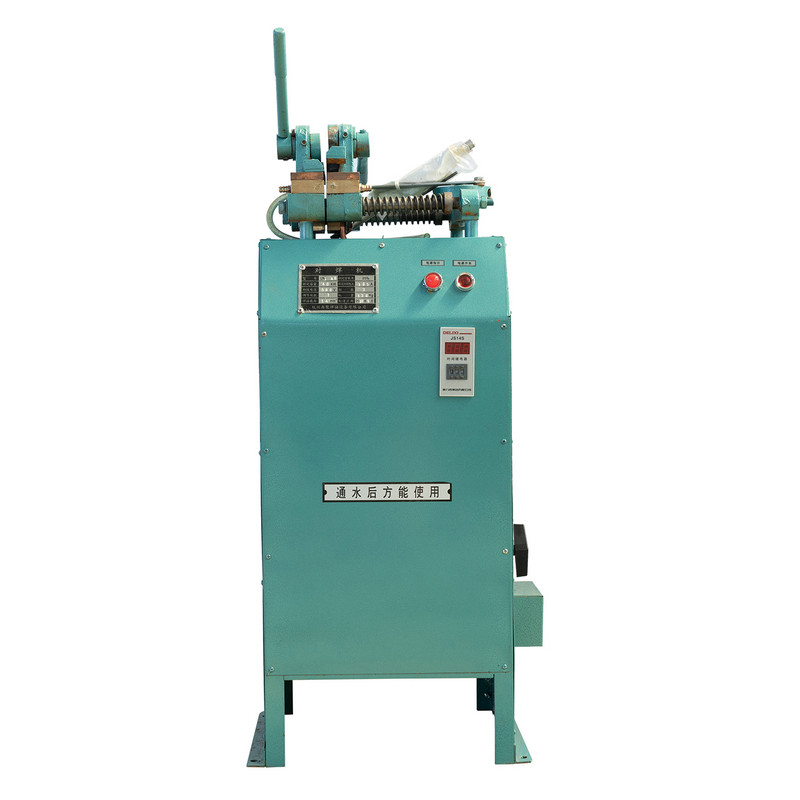
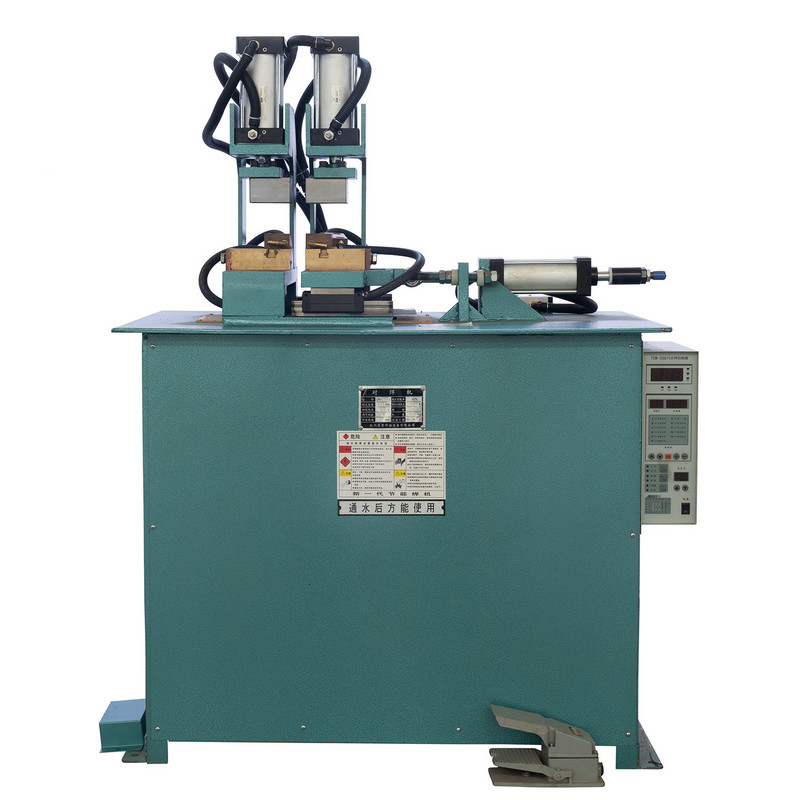
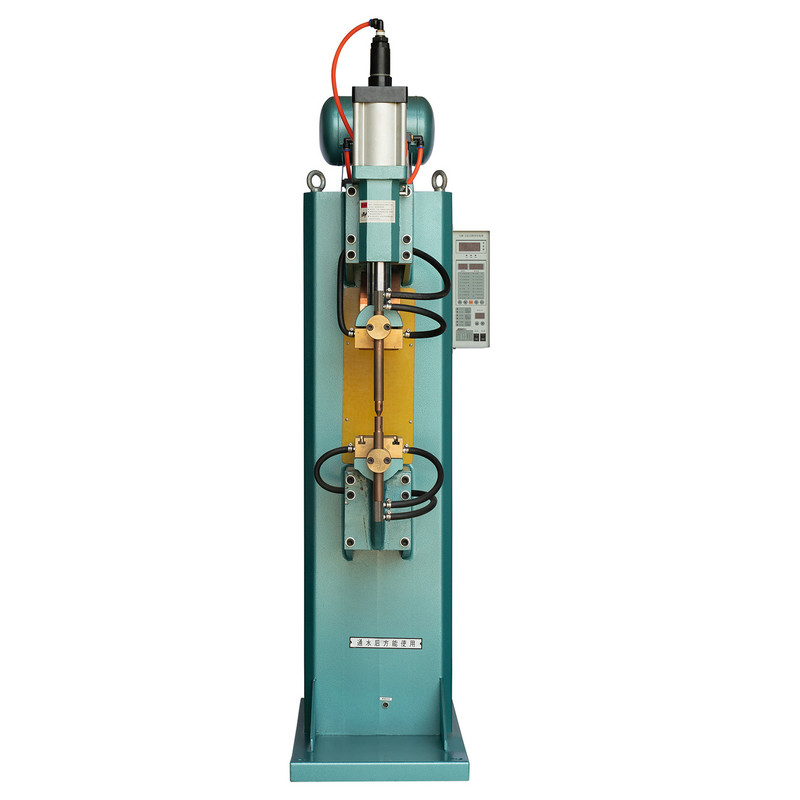
For end-to-end joints, the most common method is resistance butt welding. The two pipe ends are clamped, heated by contact resistance, and pressed together. This process is fast and produces a strong weld with no filler metal. A machine such as our pneumatic butt welding machine handles the clamping and forging automatically, which removes the operator skill variable from joint quality.
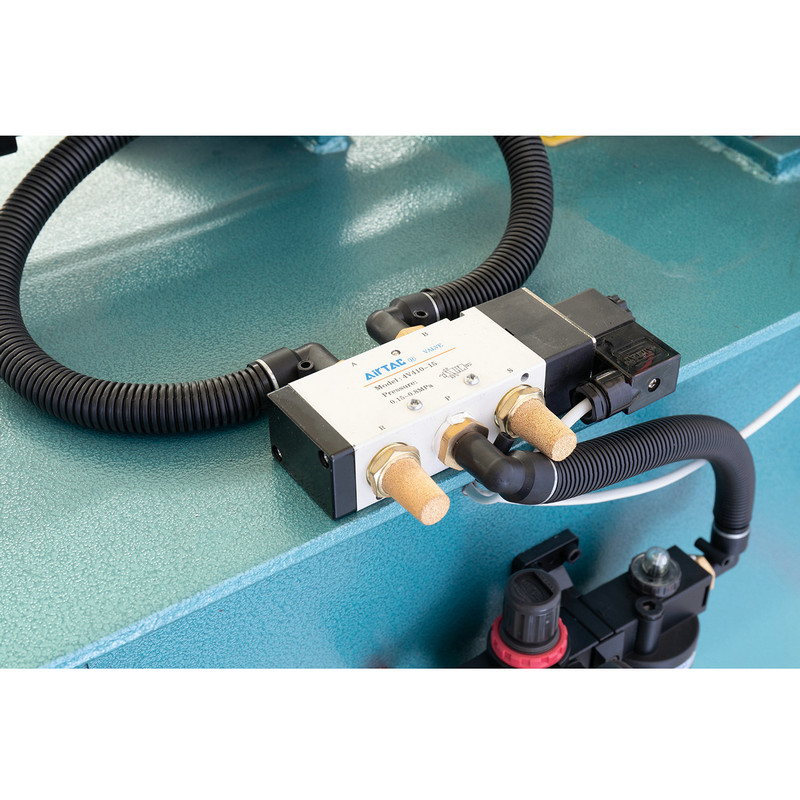 UN2-100KW Pneumatic Butt Welding Machine with Zero-Wear Linear BearingsThis automatic butt welder uses pneumatic clamping and microcomputer voltage control for fast, consistent joints. It suits complex pipe runs and high batch sizes, reducing operator skill dependence.View Product →
When the pipe run is complex or the batch size is high, a six-axis welding robotic arm can move around the workpiece, make consistent welds, and integrate with a feed conveyor. The cutting station and welding station share the same fixture data, which reduces setup time.
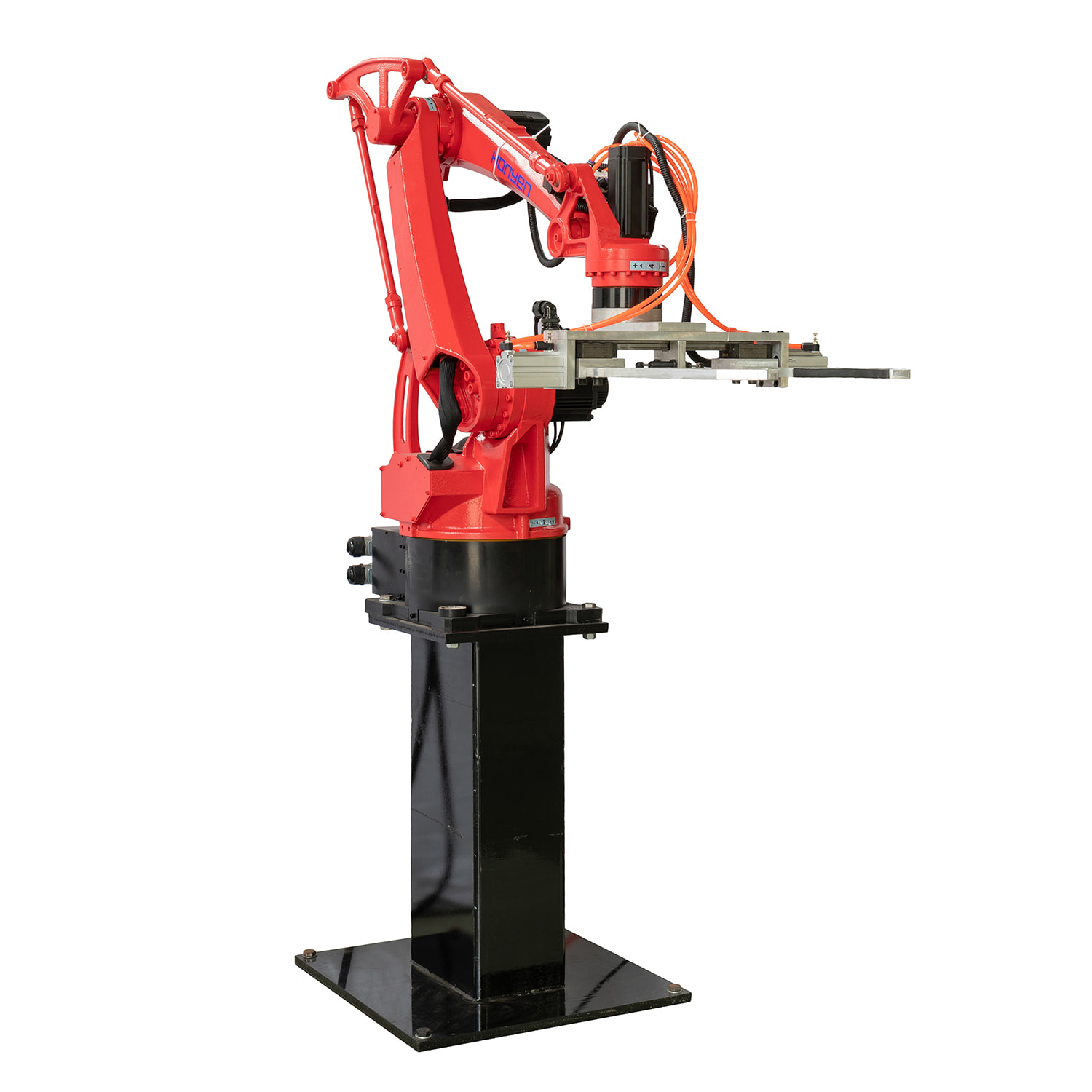 Fully Automatic Six-Axis Welding Robot Arm for Pipe FabricationThis robotic arm integrates with feed conveyors and shared fixture data, enabling precise welds and quick changeovers. It supports complex pipe runs and high batch sizes, improving throughput and consistency.View Product →
The pipe wall thickness you cut alters your welding parameters. Thicker walls need more current and longer heating cycles. Understanding the relationship between cut quality and weld quality is what separates a shop that produces consistent joints from one that performs rework. For a closer look at how butt welding temperature control plays out in pipe construction, read our article on butt welding temperature control in natural gas pipeline construction.
Purchase price is not the whole cost. Each cutting technology has a distinct consumable profile:
Maintenance schedules also differ. Thermal cutting systems need regular cleaning of the torch assembly; mechanical cutters need blade tension checks and guide adjustment. A shop that ignores maintenance ends up with slower cutting, poor edge quality, and premature component failure.
The most common procurement mistakes are: buying a machine sized for a future project rather than the current workload; underestimating material handling, which is often the bottleneck in small shops; and skipping integration planning, which leaves the machine as a standalone asset that cannot communicate with the rest of the line.
For stainless steel, laser cutting typically provides the best edge quality. Plasma can work on stainless, but dross control on thin wall material is more difficult and may require post-cut grinding.
Yes. Many CNC machines support bevel cutting as a standard feature or an add-on option. Bevel cutting requires a multi-axis torch or laser head, which increases the machine price.
High-end models achieve positional tolerances better than 0.5 mm over a standard length, while repeatability can be held to a few tenths of a millimeter. Practical accuracy on the floor depends on pipe flexibility and fixture rigidity.
It depends on the process. Plasma systems cut up to 50 mm and beyond, laser systems typically handle 15 to 20 mm on stainless steel, and band saws can cut very thick wall pipe, limited only by blade width and workpiece size.
An automatic pipe cutting machine is a long-term asset, but its value depends on the production context. Match the cutting method to your material and thickness range, size the machine with a safety margin, and plan the cutting station as part of the full pipe fabrication chain, including the welding stage. Shops that do this usually see the investment pay back faster than expected, because the cutting station stops being a bottleneck and the welding station stops being the source of rework.
Recommended Products

Product
Contact Info.
+86-152-5712-5882
Fax: +86-563-2269966
No. 21 Guangping Road, Guangde Economic Development Zone, Guangde City, Anhui Province
QR Code