Language
 English
 русский
 Español

Get A Quote
Get A Quote
 Home / News / Industry News / MIG vs Arc Welding: Key Differences, Costs, Equipment Needs and How to Choose
 2026.09.17
 Industry News
You are setting up a small fabrication shop, and a customer asks whether you can weld 1/8-inch mild steel and also handle some outdoor repair work. The quick answer is: if you want low-cost equipment and strong outdoor capability, arc welding (stick) is the safer choice; if you need fast, clean welds on thinner sheet metal and high production rates, MIG welding will serve you better. But the decision is not that simple. It depends on material thickness, local environment, and whether your operators have training. Many shops buy the wrong machine because they compare only price and brand, then discover that the process cannot meet their real workload.
MIG, or Gas Metal Arc Welding (GMAW), feeds a continuous solid wire electrode through a welding gun. The wire melts into the joint and becomes the filler metal, while an external shielding gas - argon, CO2, or a blend - protects the molten weld pool from oxygen and nitrogen. This process is smooth, fast, and produces very little slag.
Arc welding - often called stick welding or Shielded Metal Arc Welding (SMAW) - uses a consumable electrode covered in flux. The flux burns off to create a shield of gas and a protective slag layer. No external gas cylinder is needed, but the stick electrode has to be replaced when it becomes too short.
In this guide, when we say "arc welding," we mean stick welding, because that is the process most fabricators refer to in the MIG versus arc debate.
MIG is the workhorse of sheet-metal fabrication, car panels, and structural cartons. Arc welding is common in construction, pipeline repair, and farm equipment maintenance. Knowing the typical use helps you decide which process to buy first.
The two processes differ in electrode design, shielding method, heat input, and practical operating requirements. The table below summarizes the most important points for a purchasing decision.
| Factor | MIG Welding | Arc Welding |
|---|---|---|
| Electrode | Continuous wire from a spool | Short flux-coated stick |
| Shielding | External gas cylinder required | Flux coating creates gas and slag |
| Material thickness | Best for thin to medium sheet, under 3/8 in. | Better for thicker sections and root passes |
| Heat input | Lower heat input, less distortion | Higher heat input, deeper penetration |
| Speed | Continuous feed permits high deposition | Electrode changes slow down work |
| Cleanup | Minimal spatter, no slag to chip | Slag and spatter require brushing |
| Wind resistance | Poor in outdoor drafty areas | Excellent; no gas to blow away |
| Skill level | Easier to learn and control | Requires more practice for arc length |
| Equipment cost | Higher initial cost plus gas and feed parts | Low initial cost, simple to maintain |
| Common materials | Carbon steel, stainless steel, aluminum | Carbon steel, cast iron, alloys |
These differences translate directly into production costs. If you run MIG in a shop with clean indoor air, the lower cleanup time lets you ship more parts per day. If you take a MIG machine to a windswept pipe rack, the shielding gas will vanish and you will get porosity. Stick welding is slower but far more forgiving in dirty or outdoor environments.
Another point is consumable cost. A spool of MIG wire is more expensive per pound than stick electrodes, but you waste less because the wire is consumed continuously. Stick electrodes leave heavy stubs, which can add up in a busy shop.
Before you buy a machine, match the process to your actual workload:
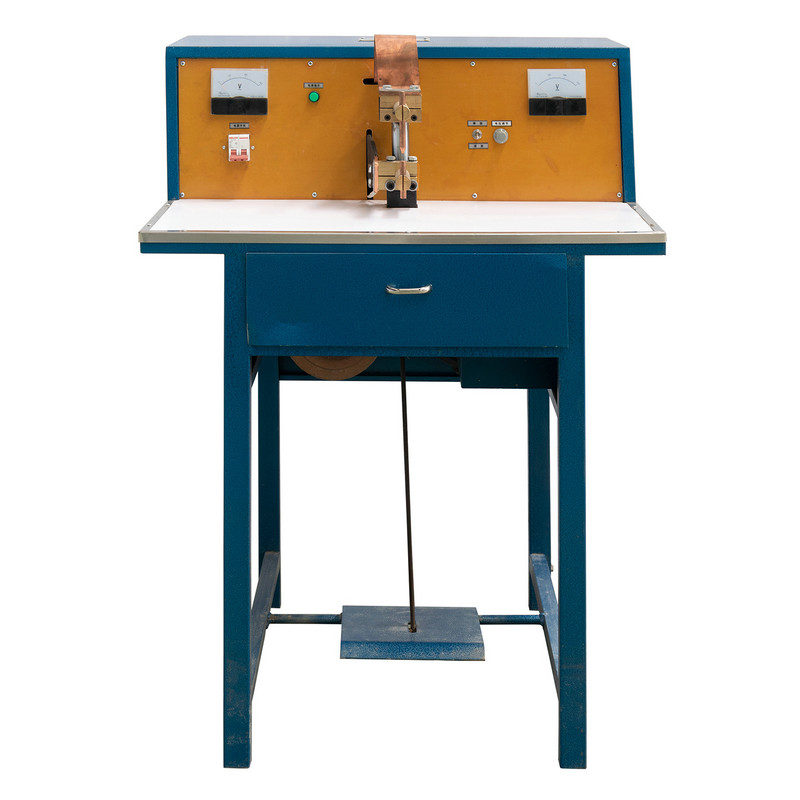
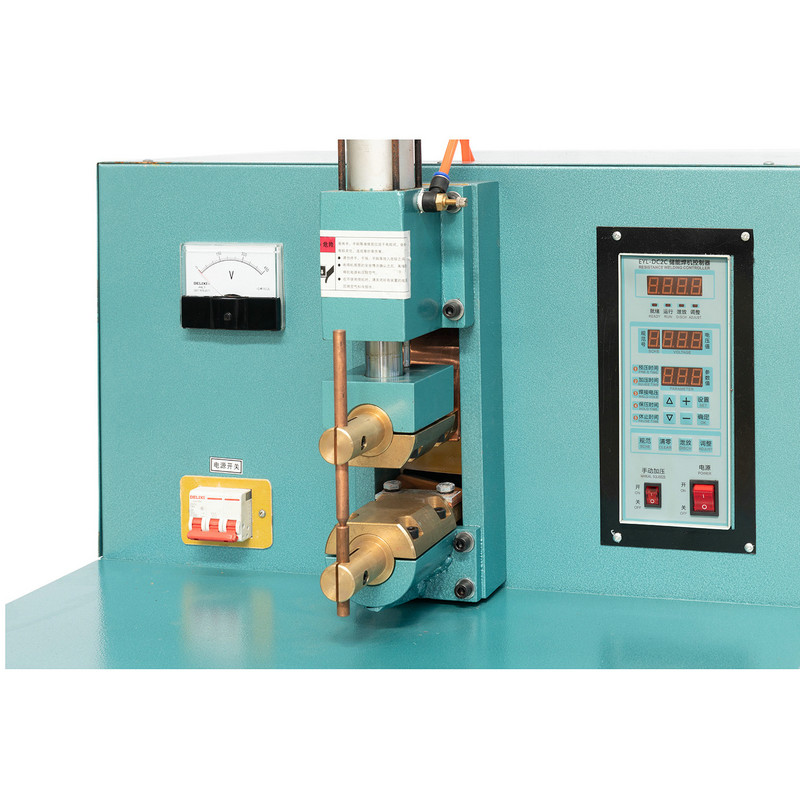 Capacitor Discharge Spot Welder for Precision Metal JoiningThis energy storage spot welder delivers controlled high-current pulses with minimal heat, making it ideal for thin sheets and delicate components. Its adjustable parameters suit varied production needs, ensuring strong welds without deformation.View Product → can join these components without filler metal and with limited heat damage.
As a rule of thumb, start with stick welding if you are uncertain about your future work mix. It is less expensive to buy, uses no gas, and can handle a wide range of steel thicknesses. You can always add a MIG unit later when your production volume grows and your shop environment becomes more controlled.
Whatever process you choose, the quality of the machine determines how repeatable your welds are. Poor wire feed speed creates inconsistent beads; unstable current produces weak fusion. In many cases, the highest cost in welding is not the equipment - it is rework.
For high-volume sheet-metal production, you may not need MIG or arc welding at all. Resistance spot welding uses current, force, and time to create a solid nugget between overlapping sheets. Since there is no filler metal and no shielding gas, it is clean, fast, and easy to automate. A DTN2 pneumatic spot welding machine offers repeatable electrode pressure and current for thin steel assemblies.
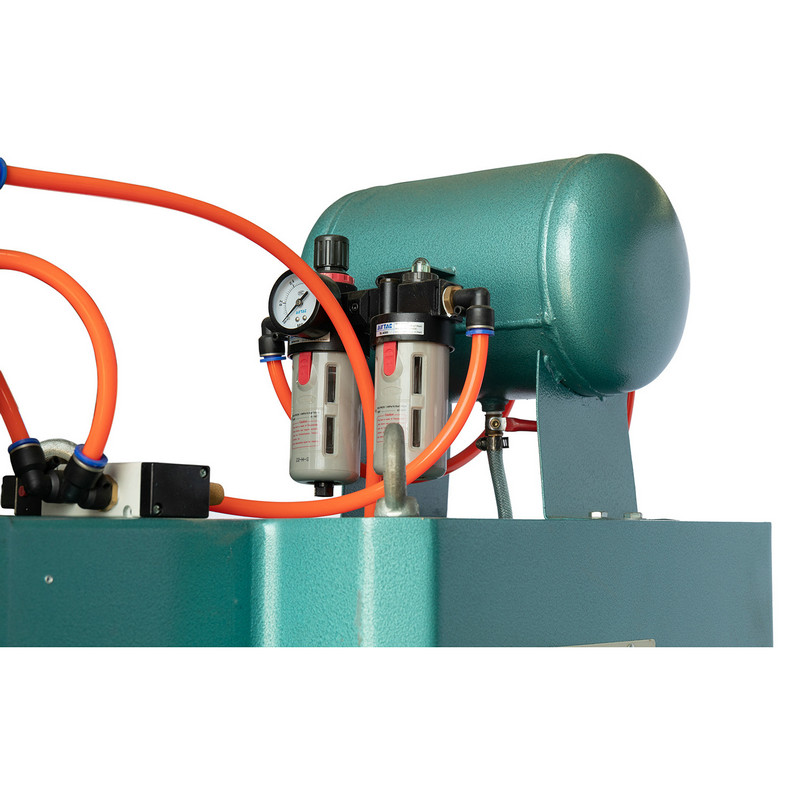 Customizable Pneumatic Spot Welder for Thin Steel AssembliesDesigned for high-volume sheet metal work, this machine uses microcomputer control for precise pressure and current settings. It handles stainless steel and other thin materials with minimal sparks and reliable results.View Product →
When you need to join wire, rod, or bars end-to-end, a UN2 pneumatic butt welding machine can produce a strong fusion zone without filler. This is another example of how resistance welding can replace arc welding in specific production stations.
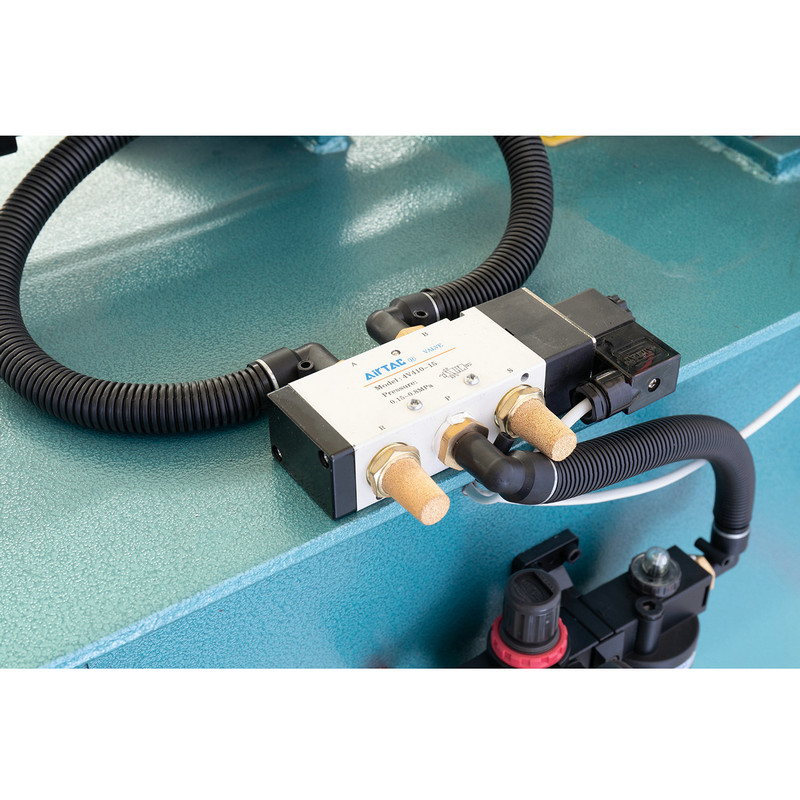 Pneumatic Butt Welding Machine for End-to-End Wire JoiningThis butt welder creates strong fusion joints without filler, using pneumatic clamping and linear bearings for accurate alignment. It's efficient for joining wire, rods, or bars in production settings.View Product →
Even when you stick with MIG or arc welding, modern controls matter. The ability to adjust welding time, current, and gas flow can prevent burn-through and porosity. The latest industrial welding machine technology has made these features more accessible, allowing small shops to achieve consistent production without hiring an advanced welder for every job.
Yes. MIG is formally called Gas Metal Arc Welding (GMAW). However, in everyday shop language, "arc welding" usually means stick welding, also known as Shielded Metal Arc Welding (SMAW).
Both can make strong welds when set up correctly. Arc welding is generally better for thick sections because of deeper penetration. MIG is often preferred for thinner metal because it reduces heat distortion and produces cleaner welds.
No. Stick welding uses flux-coated electrodes that generate the shielding gas and slag on their own. This is why stick welding works well in windy or outdoor conditions.
Yes, with a spool gun and pure argon or an argon-helium mix. Aluminum is softer than steel and requires more precise wire feed and joint preparation.
Stick welding has a lower initial cost because you only need a basic welder and electrodes. MIG requires a wire feeder, gun, gas cylinder, and consumables, so the total setup is more expensive.
Most new operators can produce acceptable MIG beads in a few days. Stick welding usually takes weeks of practice to control arc length and rod angle.
Recommended Products

Product
Contact Info.
+86-152-5712-5882
Fax: +86-563-2269966
No. 21 Guangping Road, Guangde Economic Development Zone, Guangde City, Anhui Province
QR Code