Language
 English
 русский
 Español

Get A Quote
Get A Quote
 Home / Equipment / DR Energy Storage Spot Welding Machine / DR1 Pneumatic Energy Storage Spot Welding Machine / DR1-3000J Non-deformable Metal Energy Storage Spot Welder
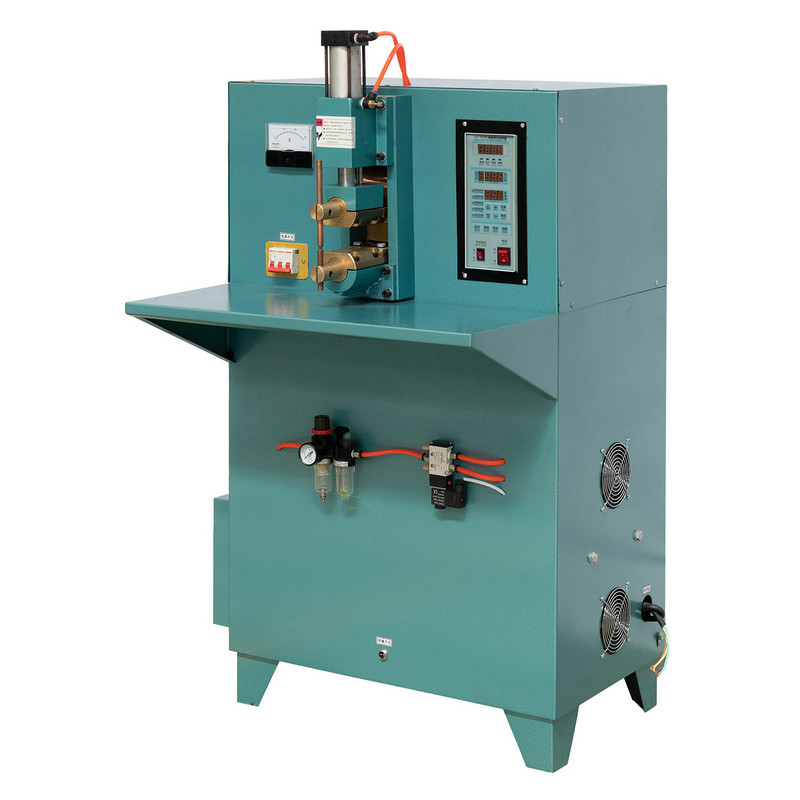
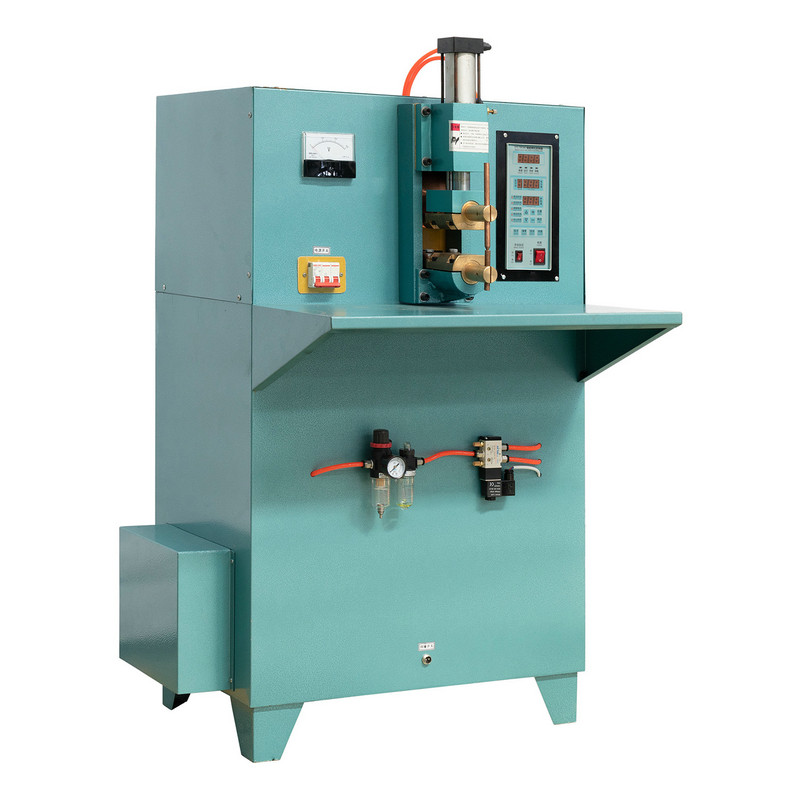
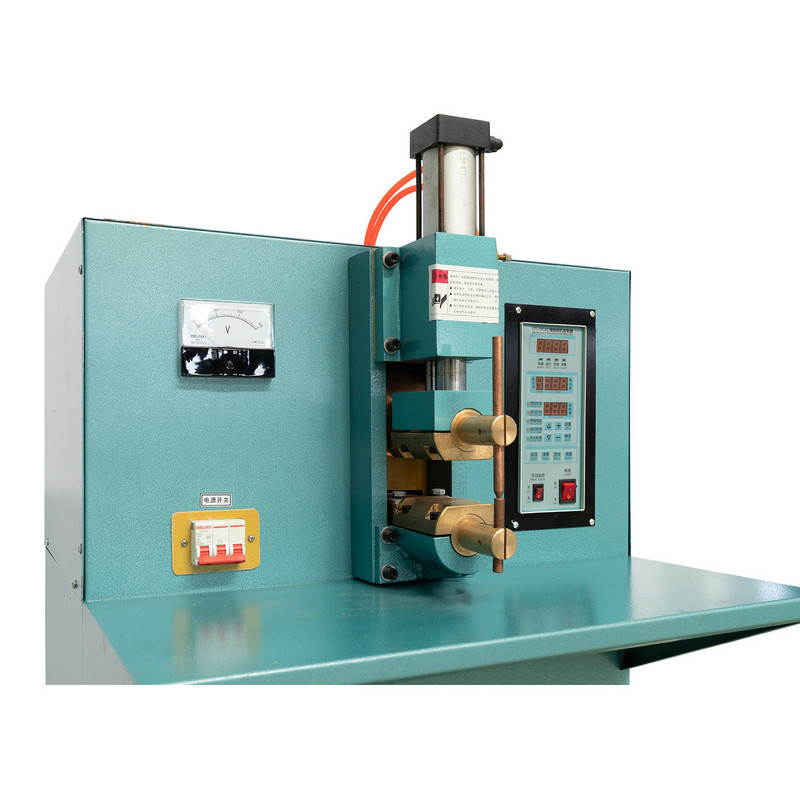
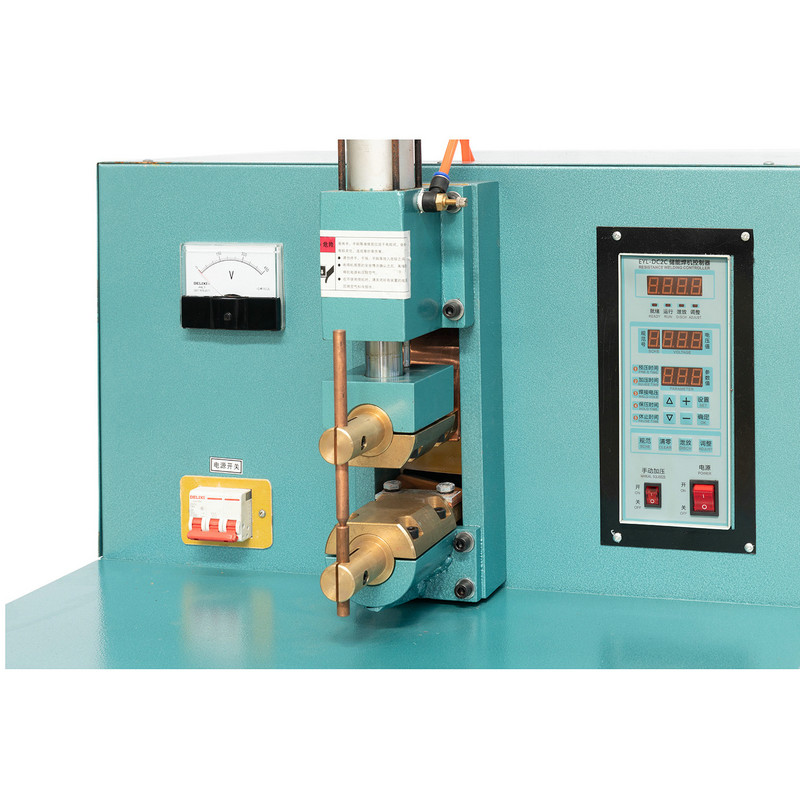
The DR1-3000J Non-deformable Metal Energy Storage Spot Welder boasts versatility in adjusting parameters such as preload, discharge, forging, maintenance intervals, rest periods, and charging voltage, all independently. It excels in performing high-standard welds on a diverse range of materials, including electrical switches, relays, instruments, metal products, stainless steel, various non-ferrous metals, sheets, wires, and silver contacts. By utilizing a capacitor-based energy storage power supply paired with a micro-resistance welding machine, it ensures minimal heat generation during the process, thereby making workpieces less prone to deformation post-welding.

Specifications
Product Description
The DR1-3000J represents the pinnacle of precision in resistance welding technology. Engineered for applications demanding minimal part deformation and impeccable weld integrity, this advanced energy storage spot welder utilizes a capacitor discharge system to deliver concentrated, high-intensity welds with exceptional repeatability. It is the definitive solution for high-value manufacturing where thermal distortion and material integrity are paramount.
Superior Weld Integrity with Minimal Thermal Impact: The core advantage of the DR1-3000J lies in its energy storage principle. Energy is accumulated in high-capacity capacitors and released in an instantaneous, controlled discharge. This process generates extreme heat precisely at the weld point for a milliseconds-long duration, drastically reducing heat conduction into the surrounding material. The result is a clean, strong weld nugget with virtually no deformation, discoloration, or annealing of the adjacent areas.
Uncompromising Process Stability and Repeatability: Every weld cycle is executed with exacting precision. The independent control over all critical phases of the welding process ensures that each parameter is perfectly replicated for subsequent welds. This eliminates variability, guarantees consistent weld quality, and significantly reduces rejection rates, leading to higher overall production efficiency and cost savings.
Enhanced Operational Versatility: The system’s design accommodates a vast spectrum of materials and part geometries. From delicate electronic components to robust metal fabrications, the welder can be finely tuned to achieve optimal results without the need for secondary finishing or corrective processes, streamlining production workflows.
Independent Multi-Stage Process Control: The welder provides distinct and independent adjustment for each phase of the welding operation, including preload pressure, discharge energy, forging force, maintenance time, and rest periods. This granular level of control allows engineers to meticulously tailor the weld profile to the exact requirements of any specific material or joint design.
Capacitor-Based Energy Storage Power Supply: This sophisticated power system is fundamental to the welder’s performance. It ensures the instantaneous delivery of a high peak current necessary for micro-welding applications, achieving superior penetration and bond strength without relying on sustained high current from the main grid.
Micro-Resistance Welding Methodology: By focusing a significant energy output into a highly confined area for an extremely short duration, the technology minimizes the total heat input. This makes it ideally suited for welding dissimilar metals, fine wires to sheets, and components with critical thermal sensitivity.
Robust Construction for Industrial Demands: Built with a non-deformable metal frame and industrial-grade components, the DR1-3000J is designed for reliability and longevity in demanding production environments, ensuring consistent performance over its operational lifespan.
The DR1-3000J is indispensable in industries where precision, aesthetics, and structural integrity are non-negotiable. Its typical applications include:
Recommended Products
KEEP IN TOUCH

You are setting up a small fabrication shop, and a customer asks whether you can weld 1/8-inch mild steel and also handle some outdoor repair work. The quick answer is: if you want low-cost equipment...
READ MORE
Welding electrodes are not interchangeable. The copper-alloy tip that makes a clean spot weld on stainless steel will burn up quickly if you use it on galvanized sheet metal. Understanding how differ...
READ MORE
Every weld is a production decision. When you choose an electrical welding machine, you are really choosing how to balance weld quality, cycle time, and operator effort on your floor. After building ...
READ MORE
Understanding Resistance Butt Welding and the Role of Flash Weld Technology Joining two metal bar ends face to face without filler material is one of the oldest challenges in metal fabrication, and r...
READ MORE
Understanding Stud Spot Welding Technology Today Fastening components to metal panels without drilling or riveting has become a standard requirement across sheet metal fabrication, shipbuilding, and ...
READ MORE
Spot Welding Machine Categories and How They Differ Resistance spot welding equipment is generally divided by how the electrode force is generated and applied. Mechanical foot-pedal units rely on the...
READ MORE
Product
Contact Info.
+86-152-5712-5882
Fax: +86-563-2269966
No. 21 Guangping Road, Guangde Economic Development Zone, Guangde City, Anhui Province
QR Code