Language
 English
 русский
 Español

Get A Quote
Get A Quote
 Home / News / Industry News / Resistance Welding Electrodes: Types, Copper Alloys, and How to Choose
 2026.09.10
 Industry News
Welding electrodes are not interchangeable. The copper-alloy tip that makes a clean spot weld on stainless steel will burn up quickly if you use it on galvanized sheet metal. Understanding how different electrode types, sizes, and copper alloys behave in real production conditions is the fastest way to cut downtime and reduce weld defects. This guide covers resistance welding electrodes: what they are, why copper alloys matter, how to match electrode size to your welding machine, and the warning signs that tell you it is time to replace them. If you stick to the selection and maintenance rules below, you will improve weld consistency and extend electrode life.
In resistance spot welding, the electrode is the component that presses against the metal workpiece and carries the welding current. It has two jobs: to deliver current with minimal energy loss and to apply clamping force so the metal surfaces make proper contact. The electrode also has to handle high temperature at the weld interface without deforming or oxidizing.
This is a different process from stick welding, where the electrode is a consumable rod that melts into the weld pool. In resistance welding, the electrode is considered a consumable tool: it does not melt into the weld, but it does wear out and requires periodic dressing or replacement. This distinction matters because the search term "electrodes for welding" often brings up arc welding stick electrodes. The selection criteria are completely different.
For high-volume production, electrode material choice and maintenance schedule have a direct impact on scrap rate and uptime. The right electrode can hold its shape for thousands of welds, while a poorly selected one may need dressing after a few hundred welds.
The vast majority of spot welding electrodes use copper-alloy materials. They are chosen for high electrical conductivity and adequate mechanical strength at elevated temperatures. The two classes you will encounter most often are:
| Copper alloy class | Electrical conductivity | Typical material to weld |
| Class 1 (Cu-Cd, Cu-Cr-Zr) | Highest | Aluminum, copper alloys, brass |
| Class 2 (Cu-Cr) | High, balanced | Low-carbon and stainless steel |
| Class 3 (Cu-Be, Cu-Ni-Si) | Moderate | Galvanized steel at high current |
Electrode size is often the most overlooked parameter when a welding operation starts producing inconsistent welds. The main dimensions to consider are the electrode tip diameter and the shank diameter. Tip diameter directly controls the weld nugget size and the current density. If the tip is too small for the welding current, the current density becomes too high and the electrode will stick to the workpiece. If the tip is too large, the weld may be too cold and produce undersized nuggets.
As a general rule, tip diameter should be roughly 4 to 5 times the thickness of the thinnest material being welded. For example, when welding two sheets of 1 mm low-carbon steel, an electrode tip diameter of 4 to 5 mm is a suitable starting point.
Shank diameter tends to follow the electrode size standard that your welding machine accepts. Common shank sizes in resistance spot welding equipment are 8 mm, 13 mm, 16 mm, and 20 mm. For a 16 mm welding electrode, the shank is designed to fit standard electrode holders, and the tip can be dressed to the required diameter.
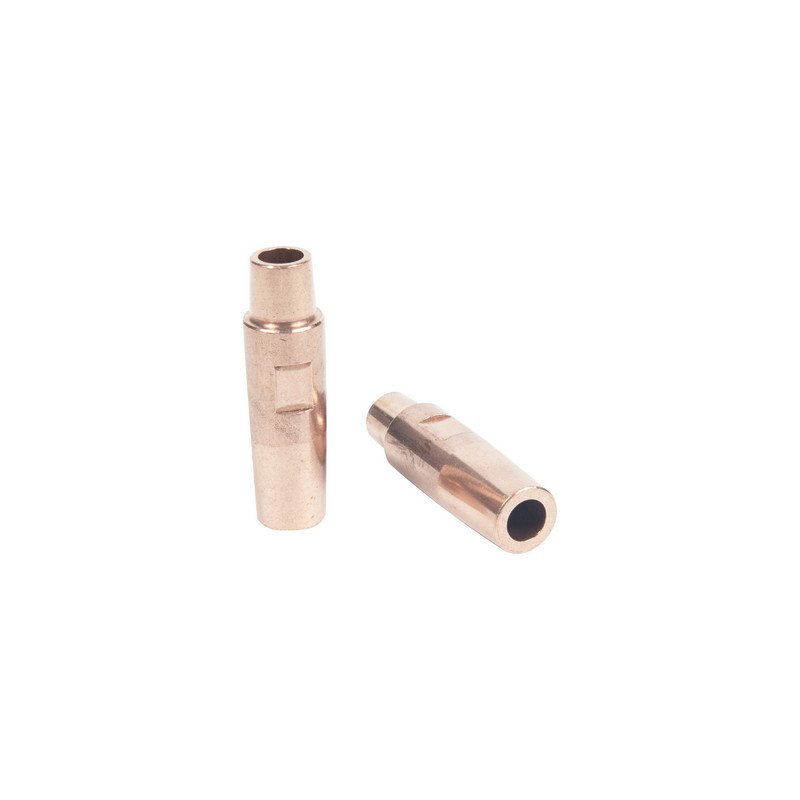 16 mm Chrome Zirconium Copper Resistance Welding ElectrodeThis 16 mm electrode made of chrome zirconium copper offers high conductivity and wear resistance, reducing dressing frequency. It suits spot welding machines and helps maintain consistent weld quality.View Product →
The useful life of an electrode depends heavily on the material being welded and the welding parameters. For low-carbon steel, electrodes in the 13 mm to 16 mm range can often last several thousand welds before dressing is required. Galvanized steel is much more aggressive and may require dressing after only 500 to 1,000 welds due to the zinc coating sticking to the copper alloy.
Here is a practical decision path that production engineers use when buying electrodes:
If you are still uncertain about your parameters, measure the weld nugget diameter after the first test welds and compare it with the expected value. A nugget that is larger than 5 times the sheet thickness indicates that the current may be too high or the tip too small.
Electrode wear is not always obvious until you see rejected parts. The most common indicators are:
When you identify these signs, you can either dress the electrode to restore the tip shape or replace it if the dressing allowance has been used up. Dressing removes a small amount of copper alloy from the tip. A 16 mm electrode typically allows several dressing cycles before the shank becomes too short.
Regular maintenance of welding electrodes and controllers plays a critical role in keeping your production line running. A simple weekly inspection program that includes wiping the electrode tips and checking the clamping force can eliminate a large share of spot weld quality issues.
Selecting the right electrode is a matter of matching the copper alloy class, tip shape, and shank size to your materials and welding parameters. A good place to start is by checking the specifications of your existing electrode holders and reviewing the material types you weld most often.
If your production relies on a standard resistance spot welding machine and you weld mild or stainless steel, a Class 2 electrode with a flat or slightly dome-shaped tip is a safe choice. To keep the electrode securely seated and to ensure consistent force application, the electrode grip rod plays a supporting role. A 16 mm electrode grip rod provides a secure connection between the machine arm and the electrode, which helps maintain stable electrical contact and reduces the chance of micro-pitting on the electrode tip.
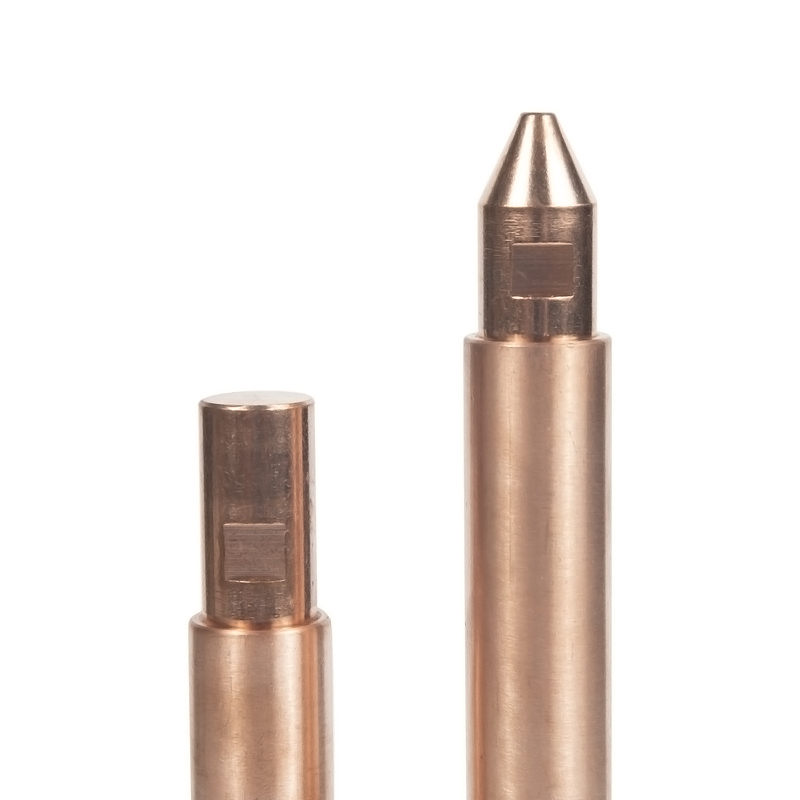 16 mm Welding Electrode Grip Rod for Spot WeldingThis 16 mm grip rod securely connects the electrode to the machine arm, ensuring stable electrical contact and reducing tip pitting. It supports consistent force and extends electrode life.View Product →
For higher production volumes or when you need to reduce electrode dressing frequency, you may also want to evaluate your whole welding system setup. A spot welding machine with a properly sized transformer and cooling system can keep electrode temperatures lower, which extends electrode life. In many cases, the pair of a DN2-25 kW pneumatic spot welding machine and a Class 2 electrode offers a balanced solution for medium-thickness steel panels in automotive repair and fabrication work.
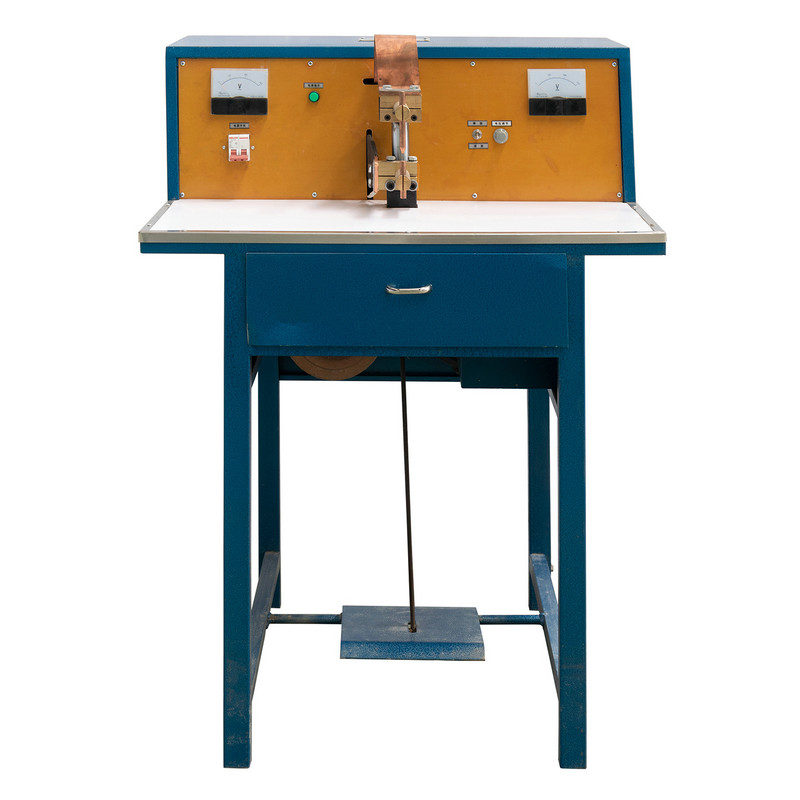
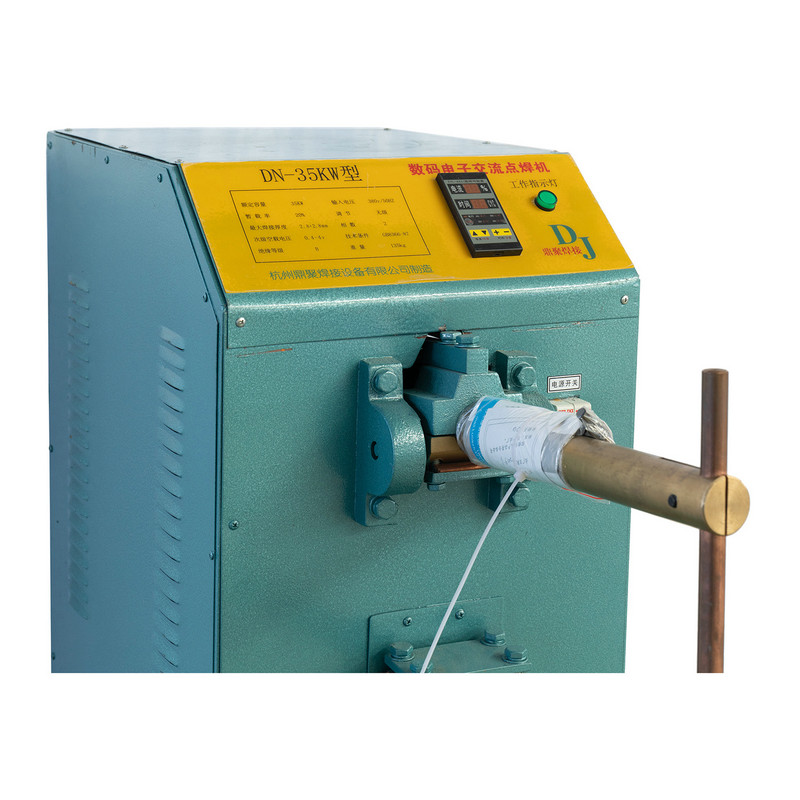 DN2-25 kW Pedal Spot Welding Machine with Stepless CurrentThis customizable pedal spot welding machine features a thyristor circuit and microcomputer control. It provides stepless current adjustment, making it suitable for low-carbon and stainless steel welding in fabrication.View Product →
No. Stick welding electrodes are consumable rods that melt and become part of the weld. Resistance welding electrodes are copper-alloy tools that carry current and apply pressure without melting into the weld. The materials, sizing standards, and wear characteristics are different.
The dressing schedule depends on your materials and current settings. For mild steel, dressing every 1,000 to 2,000 welds is a common starting point. When welding galvanized or coated steel, you may need to dress every 300 to 500 welds. The best approach is to inspect the tip after a known number of welds and adjust the interval.
A larger electrode tip lowers current density. You are likely to get cold welds with small or irregular nuggets. You may compensate by raising the welding current, but this also creates heat that shortens electrode life. As a general rule, aim for a tip diameter equal to about 4 to 5 times the thinnest sheet thickness.
Recommended Products

Product
Contact Info.
+86-152-5712-5882
Fax: +86-563-2269966
No. 21 Guangping Road, Guangde Economic Development Zone, Guangde City, Anhui Province
QR Code