Language
 English
 русский
 Español

Get A Quote
Get A Quote
 Home / News / Industry News / How Capacitor Discharge Energy Storage Spot Welding Machines Achieve High Peak Current With Low Power Draw
 2026.07.16
 Industry News
Capacitor discharge welding, commonly shortened to cd welding, stores electrical energy in a bank of capacitors and releases it in a single, extremely short pulse. This pulse can reach thousands of amps in a fraction of a millisecond, which is why the process is often described as high peak current welding. Unlike resistance welders that draw continuous power from the main supply during the weld cycle, a capacitor bank is charged gradually over several seconds and then discharged almost instantly, so the instantaneous demand on the workshop electrical circuit stays modest even though the weld current itself is very high.
This charge-then-release principle is the reason a DR Energy Storage Spot Welding Machine can run on a standard single-phase supply while still producing welds that rival much larger resistance welding equipment. The short pulse duration also limits the total heat input into the surrounding base metal, which matters a great deal when the workpiece is thin, coated, or otherwise heat sensitive.
The operating cycle of a capacitor discharge spot welder follows four repeatable stages. Understanding each stage helps operators diagnose weld quality issues and set parameters correctly.
| Parameter | Typical Role | Effect on Weld |
|---|---|---|
| Charge voltage | Controls stored energy level | Higher voltage increases nugget size |
| Electrode force | Maintains contact resistance | Insufficient force causes splash |
| Discharge time | Duration of current pulse | Shorter pulse limits heat spread |
| Capacitance | Determines total energy capacity | Larger capacitance supports thicker joints |
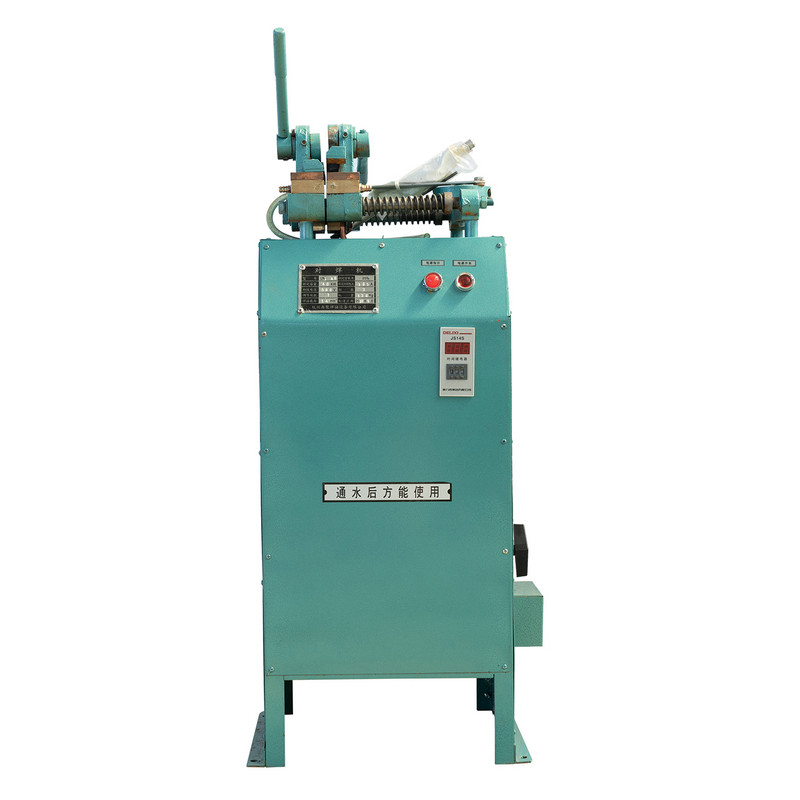
Within the same energy storage platform, actuation method changes how an operator controls electrode pressure and cycle timing. The DR1 Pneumatic Energy Storage Spot Welding Machine applies electrode force through a compressed air cylinder, giving consistent, repeatable pressure across long production runs. The DR2 Pedal Energy Storage Spot Welding Machine instead relies on a foot pedal, which suits bench work where the operator needs to reposition the part frequently between welds.

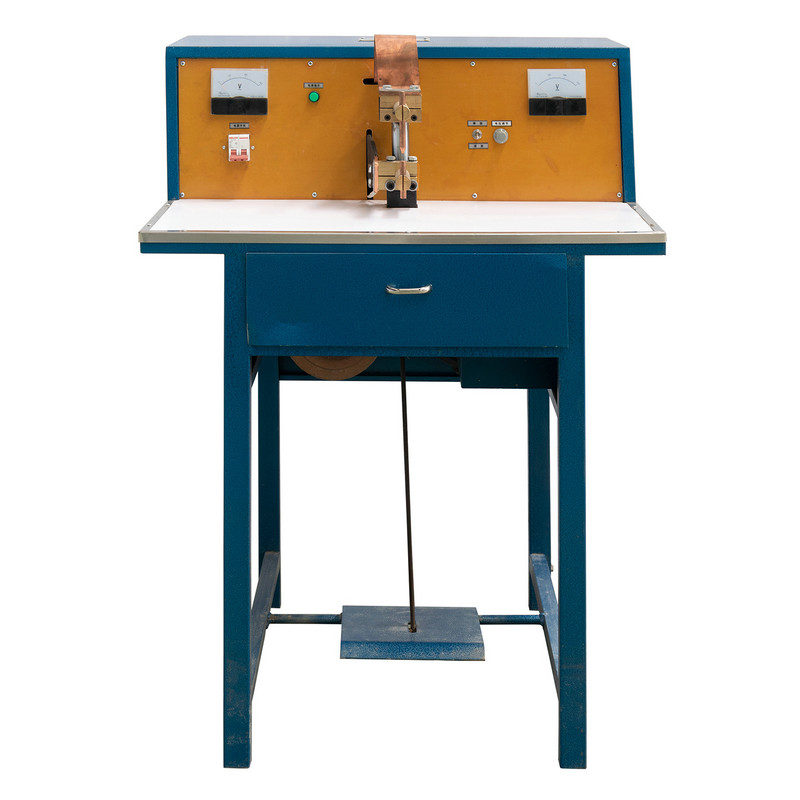
| Feature | DR1 Pneumatic | DR2 Pedal |
|---|---|---|
| Force consistency | High, cylinder driven | Depends on operator technique |
| Best suited task | Repetitive line production | Small batch, varied parts |
| Setup requirement | Compressed air supply needed | No air supply required |
| Operator involvement | Lower, semi automatic | Higher, manual trigger |
Thermal sensitive metal welding is one of the strongest use cases for capacitor discharge technology. Because the discharge pulse lasts only a few milliseconds, the heat affected zone stays narrow, which reduces distortion, discoloration, and grain growth around the joint. This is particularly valuable when welding thin gauge stainless steel enclosures, plated brass contacts, or nickel strips used in battery assembly.
The same principle extends naturally to projection welding machine applications, where a formed projection on one workpiece concentrates the discharge current at a controlled point of contact. This is common when joining nuts, studs, or brackets to sheet metal without warping the surrounding surface.
A capacitor discharge spot welder is selected for jobs where energy control matters more than raw throughput speed. Typical scenarios include the following.
| Application | Material Example | Why CD Welding Fits |
|---|---|---|
| Cd stud welding | Steel fasteners on panels | Localized heat avoids panel warping |
| Battery tab joining | Nickel and copper strips | Short pulse protects cell chemistry |
| Electronic enclosures | Thin stainless sheet | Minimal discoloration on visible surfaces |
| Projection welding | Formed nuts and brackets | Concentrated current at projection tip |
Choosing between actuation types and capacitor capacity depends mainly on part geometry, batch size, and how consistent the electrode force needs to be across a shift. A general starting checklist looks like this.
Because the entire weld energy passes through the electrode tips in a very short pulse, tip condition has an outsized effect on consistency compared with slower resistance welding processes.
Capacitor discharge welding stores energy gradually and releases it in a single short pulse, while resistance welding draws continuous current from the mains during the weld. This gives cd welding lower average power draw for a given peak current.
Yes, the short pulse duration limits heat spread into the surrounding material, which is why thermal sensitive metal welding on thin gauge parts is a common application.
Pneumatic actuation applies electrode force through a compressed air cylinder for consistent repeatable pressure, while pedal actuation relies on the operator, offering more flexibility for varied part positioning.
Charge voltage, electrode force, discharge time, and capacitance together determine how much energy transfers into the joint and how large the resulting nugget becomes.
Capacitor discharge stud welding is often chosen for coated or plated surfaces because the concentrated, brief pulse reduces the risk of damaging surrounding finish compared with longer duration welding methods.
Recommended Products

Product
Contact Info.
+86-152-5712-5882
Fax: +86-563-2269966
No. 21 Guangping Road, Guangde Economic Development Zone, Guangde City, Anhui Province
QR Code