Language
 English
 русский
 Español

Get A Quote
Get A Quote
 Home / News / Industry News / MIG Welder Power Source: How to Choose the Right Machine for Your Shop
 2026.10.22
 Industry News
Your new MIG unit runs well for the first hour. Then the arc begins to sag, spatter builds up, and the machine trips out. You replace the contact tip, check the gas, and clean the liner, but the problem comes back. The real cause is often the MIG welder power source.
A MIG welder power source is not just a box that supplies current. It controls arc stability, heat input, penetration, and how long the machine can run before it needs to cool. As a welding equipment manufacturer, we see more production downtime from poor power source selection than from bad wire or wrong gas. This article covers what matters when you evaluate a MIG welder power source, and where a different type of power source makes more sense.
In MIG welding, the power source normally runs in constant voltage mode. Once you set the voltage, it controls arc length while the welding current adjusts to burn off the wire at the same rate that the feeder pushes it. The source must react quickly to small changes in wire stick-out, contact tip distance, and workpiece surface condition.
When a power source responds too slowly, the arc becomes unstable. You see the result as spatter, poor fusion, or an inconsistent weld bead. The table below shows how common shop-floor symptoms connect back to the power source.
| Symptom | Power Source Factor | Likely Correction |
|---|---|---|
| Heavy spatter | Voltage too low for the set wire feed speed | Increase voltage in small steps |
| Burn-through on thin material | Amperage too high or slow current response | Lower current or use pulsed output |
| Cold welds with poor fusion | Open-circuit voltage too low | Check cable size, contact tip, and settings |
| Thermal shutdown during long passes | Duty cycle is too low for the job | Move to a higher duty cycle machine |
Before comparing brands, compare the numbers behind the machine. Two machines with the same maximum current can behave completely differently over an eight-hour shift.
Duty cycle is the number of minutes a power source can weld at a given output within a 10-minute cycle before it needs to cool. A 300 A machine rated at 60 percent duty cycle can run for six minutes at 300 A, then rest for four. If your parts require long continuous welds, this rating matters more than peak current.
Our practical guide to how duty cycle, current, and voltage optimization drive efficiency explains why these three numbers should be read together instead of separately.
Look at the usable range, not just the maximum output. If you weld 2 mm mild steel with 0.8 mm wire, a machine with a minimum stable current of 30 A may not give you enough control. If you weld 10 mm plate with 1.2 mm wire, you need enough top-end current to maintain penetration. Good overlap between voltage taps and wire feed speed settings produces cleaner welds across different material thicknesses.
Single-phase 230 V machines are convenient for light fabrication and maintenance work. Three-phase machines normally offer a higher duty cycle and more stable output under heavy load. Before purchase, check your workshop input voltage, expected voltage fluctuation, and available breaker capacity. A machine rated for three-phase input will not deliver full output from a weak single-phase supply.
The wire feeder and power source must work as one system. Four-roll wire feeders reduce wire deformation with softer aluminum and flux-cored wires. Synergic control sets voltage and wire feed speed together, which shortens setup time. For production work, look for stable arc starts, clean re-strikes, and consistent behavior after cable heating changes resistance on the return path.
Most MIG welder power sources fall into one of three groups. Each group has a different balance of weight, cost, durability, and arc control.
| Type | Typical Character | Best Use |
|---|---|---|
| Transformer | Heavy, simple, rugged | Basic jobs with stable line power |
| Transformer-rectifier | DC output, smoother than AC | General steel fabrication |
| Inverter | Light, efficient, responsive | Pulsed MIG, aluminum, production flexibility |
For most modern shops, inverter technology offers the best combination of size, efficiency, and arc control. It also creates an extra requirement: protecting the electronics from heat, dust, and moisture. A MIG welder power source with inverter technology should be mounted where cooling air can flow freely, and it should be matched to the real ambient temperature of the production floor.
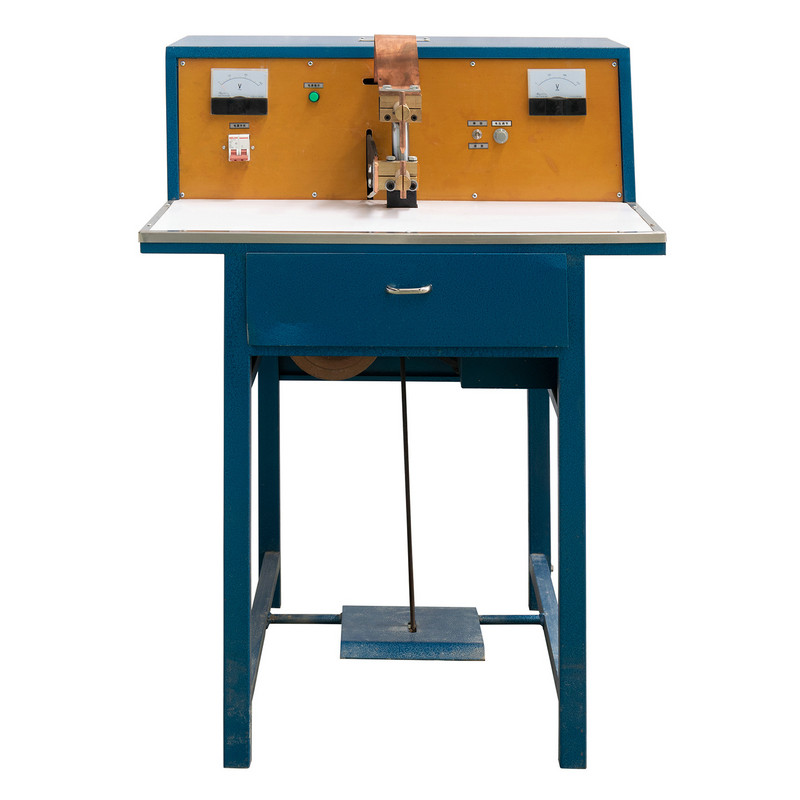
Frequency control is also used in resistance welding equipment. If you are comparing different ways to shape welding current, a variable-frequency spot welding power source gives precise control over the current waveform, which helps with coated metals and multi-layer stacks.
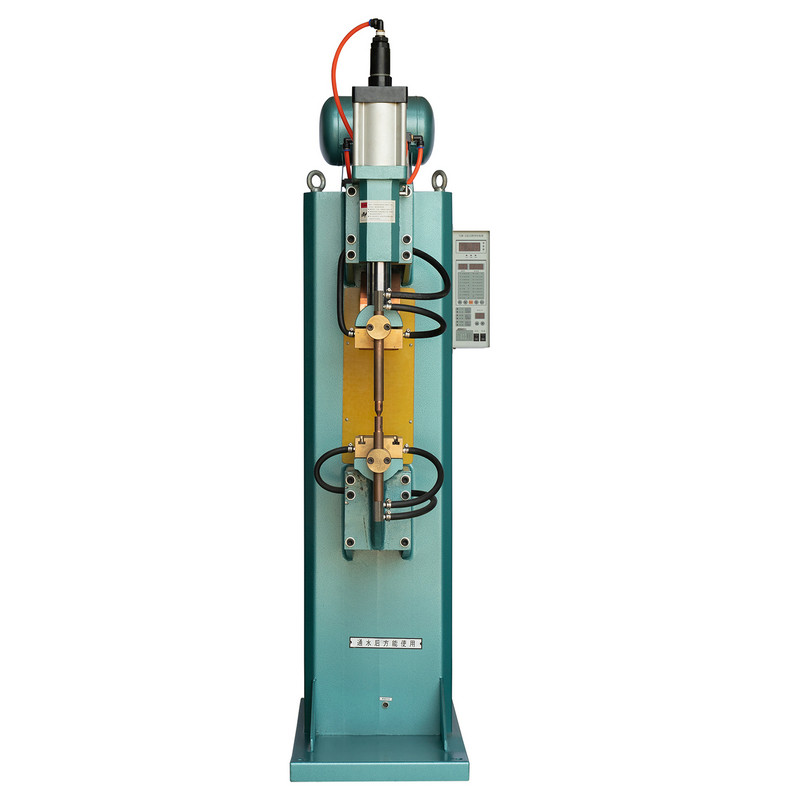
 DBN-100 Inverter Frequency Spot Welding Machine for Heavy-Duty ApplicationsThis inverter frequency spot welder maintains three-phase balance and reduces grid interference, enhancing welding stability. Its robust frame and pressure mechanism support multi-point projection welding of automotive components and industrial machinery parts.View Product →
Most MIG power source problems do not show up on a test coupon. They show up after weeks of continuous production. Avoid these common mistakes:
Ask for factory test data that shows actual welding current, duty cycle, and thermal recovery time. A power source that recovers quickly after thermal protection is more productive than one that stays locked out for several minutes.
Continuous MIG welding is the right answer for long seams, large fabrications, and jobs that require a filler metal. But many sheet-metal parts are assembled with a series of spot welds. If you use a MIG power source to make those small dot welds, you add unnecessary heat, slow down the cycle, and depend heavily on operator skill.
A resistance spot welding power source delivers current directly through two electrodes and creates a weld nugget in a fraction of a second. For brackets, panels, wire forms, and sheet-metal boxes, this method reduces heat distortion and increases repeatability.
DZN-100 1000 Hz Medium Frequency Spot Welder with Touchscreen ControlTouchscreen-controlled welder operating at 1000 Hz increases secondary-loop inductance, enabling reliable welding of thick and highly conductive metals like aluminum and galvanized steel. Real-time current display and fault alerts suit demanding new energy vehicle and appliance production.View Product →
Mid-frequency and variable-frequency resistance welding machines are especially useful when the material has a coating, the stack-up is multi-layer, or the weld quality requirement is tight. They give the operator direct control over welding time and current shape, which is harder to achieve with a continuous MIG arc.
The power source does not work alone. Cables, liner, contact tip, gas flow, and cooling all affect weld quality. Heat is the main enemy of power electronics. Inverter-based machines lose efficiency when internal temperature rises. If the workshop is hot or the machine is enclosed in a cabinet, the duty cycle can drop below the rated value before the machine reaches its thermal limit.
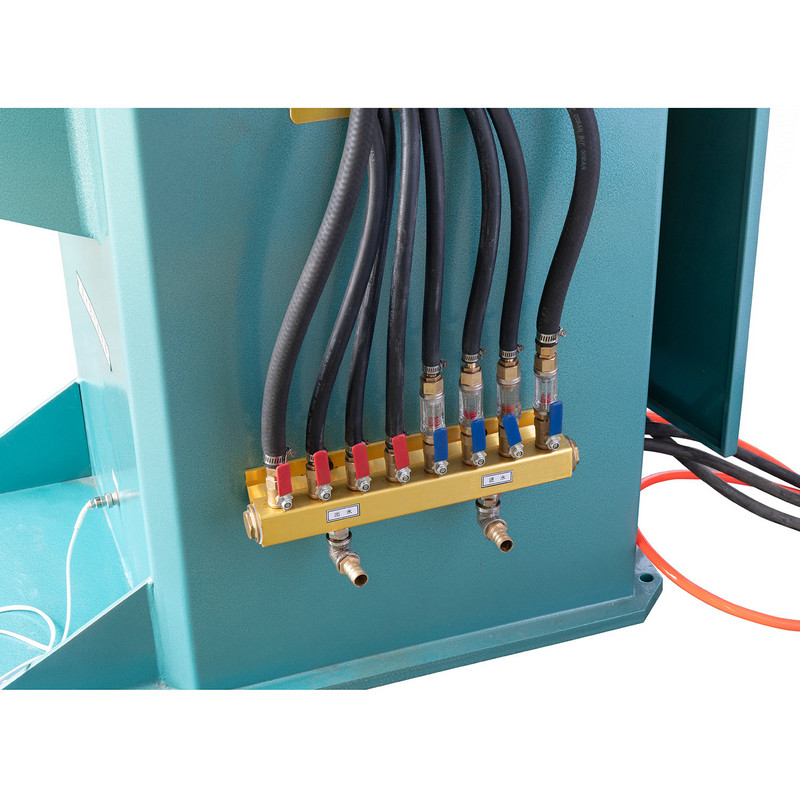
For water-cooled torches and high-current production, an industrial chiller keeps coolant at a stable temperature. The same principle applies to resistance welding transformers and spot welding electrodes, which also need controlled cooling to maintain consistent weld quality.
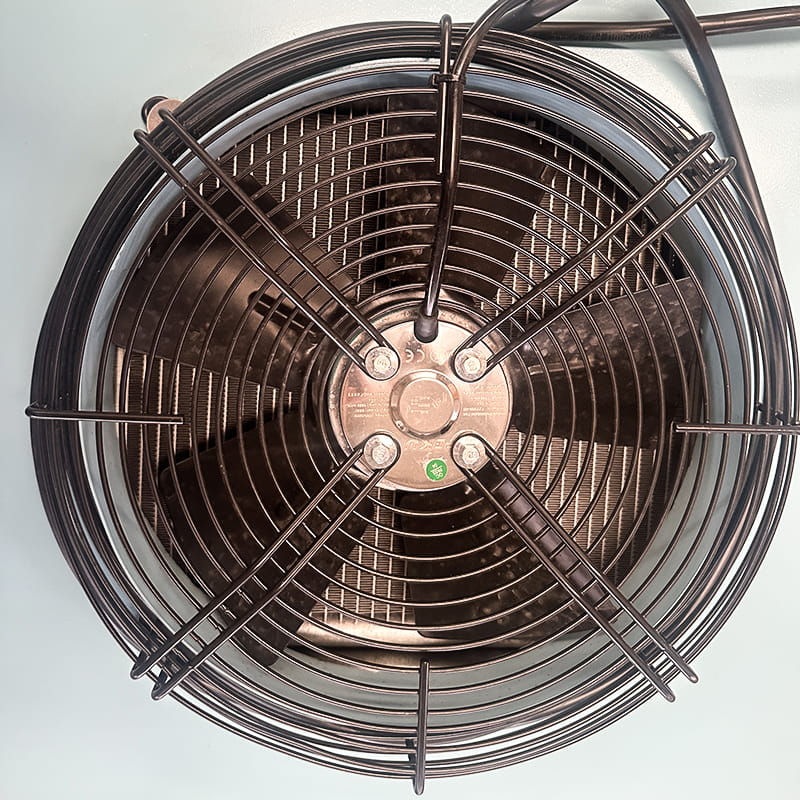 Industrial Water Circulation Refrigeration Motor Chiller for Welding CoolingCompact chiller with a large built-in fan provides fast heat dissipation and low vibration. Clear digital pressure gauges and stable operation maintain consistent coolant temperature for resistance welding transformers and spot welding electrodes in high-current production.View Product →
Manufacturers may quote duty cycle at a lower current than your typical application. Ask for tests at your normal operating current, not just the brochure number.
Some machines restart almost immediately. Others require a long cool-down period. In continuous production, the recovery time affects daily output more than most buyers expect.
Workshop power is rarely perfect. If line voltage drops during peak production, the machine should still maintain a stable arc without tripping. Confirm the acceptable input voltage window.
Aluminum, stainless steel, and flux-cored wire place different demands on the power source. Make sure the machine has the voltage range and control features needed for your specific welding process.
Start with the jobs you actually run, not the maximum output on the brochure. Map your material thickness, wire diameter, welding position, duty cycle, input power, and required weld quality. Then choose a MIG welder power source that holds stable performance within those numbers.
If your production process also includes spot welding, compare a continuous MIG power source against a dedicated resistance welding power source. For high-volume sheet-metal assembly, the right power source is often not the one that makes a smooth continuous bead. It is the one that makes a reliable nugget every time.
Recommended Products

Product
Contact Info.
+86-152-5712-5882
Fax: +86-563-2269966
No. 21 Guangping Road, Guangde Economic Development Zone, Guangde City, Anhui Province
QR Code