Language
 English
 русский
 Español

Get A Quote
Get A Quote
 Home / News / Industry News / Flash Butt vs Regular Butt Welding Machine: 7 Key Differences Buyers Must Know
 2026.10.15
 Industry News
You are rewiring a production cell to join steel rods before drawing or straightening. The two candidate machines on the quote are a flash butt welding machine and a regular butt welding machine. Both are resistance butt welders, but they are not interchangeable. Flash butt welding produces a stronger, more homogeneous joint for large-diameter and high-alloy workpieces. Regular butt welding is faster and cheaper for small wires and plain carbon steel, and it is still the default in high-volume wire drawing lines. Choosing the wrong one will show up as intermittent joint failures, wasted electrode dressings, or a welding transformer that cannot deliver the required current.
Flash butt welding is an upset welding process where the workpieces are first brought into brief contact under low pressure, then separated slightly while current continues to flow. The resulting arc flashes across the gap and heats the faces to a molten state. An upsetting force is then applied to close the gap, expelling the melted metal and forming a forged joint. Regular butt welding, also known as upset butt welding or plain resistance butt welding, presses the two faces together from the start and passes current until the interface reaches a plastic temperature. The applied pressure then upsets the material to make the weld.
The technical distinction is important: flash welding cleans the surfaces by burning them, so it tolerates rougher cut ends and scale. Regular welding relies on intimate contact and generally requires cleaner, square-cut ends. If you want to understand the electrical and thermal behavior more deeply, you can read a detailed comparison of flash butt welding vs resistance welding.
Flash butt welding is the go-to process for joining sections with a large cross-sectional area, such as railway rails, rebar for compression splices, alloy steel bars, and high-carbon rods. The flashing cycle creates a controlled heat-affected zone that is wider but more gently transitioned than in a regular upset weld. Because the interface melts, oxides are expelled with the flash, leaving a clean weld nugget with minimal inclusions.
The flashing action also reduces the power required at any given moment; the heating is distributed over the preheat and flashing phases. This allows a 100 kW flash butt welder to handle workpieces that would demand a 200 kW regular butt welder. In practice, this means lower transformer stress and lower peak current draw, which is an advantage when the installation already runs other high-KVA machines.
If your production mix includes heavy sections or steels that develop carbides at fast heating rates, flash butt welding is the safer route.
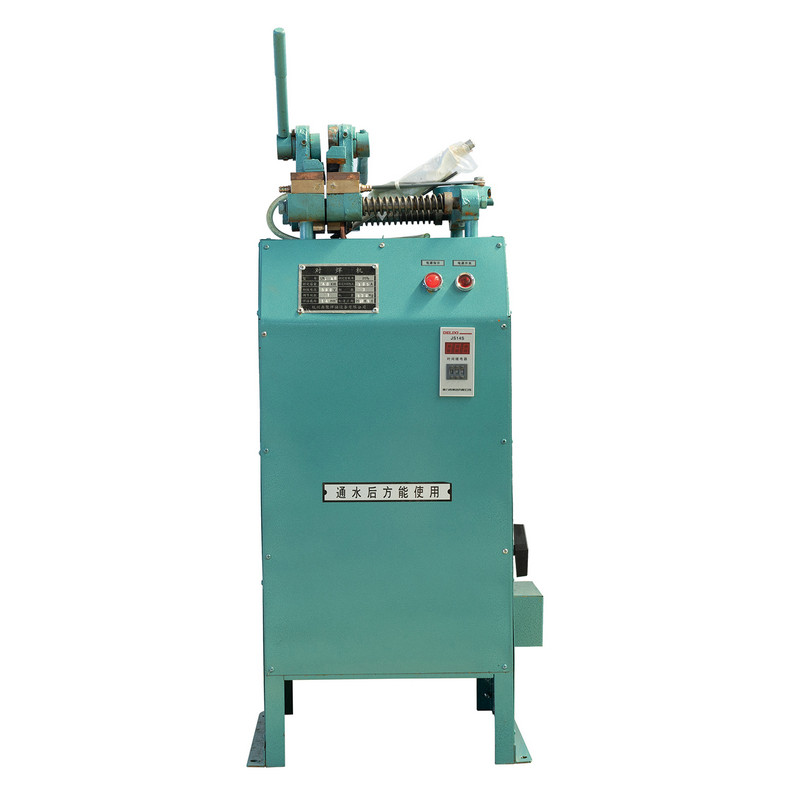
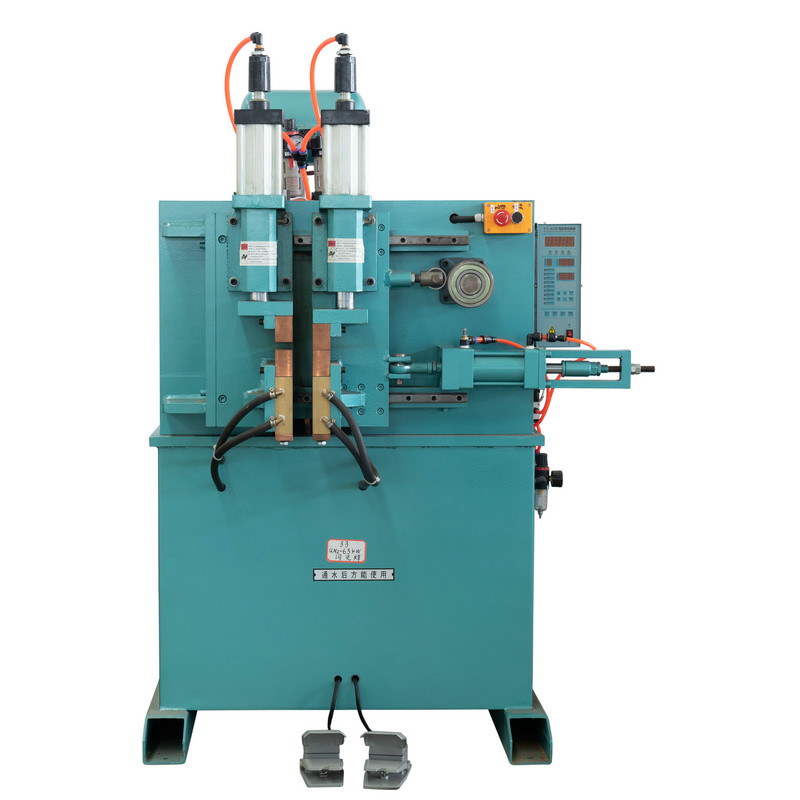
 UN3 Flash Butt Welding Machine for Heavy Sections and Carbide-Sensitive SteelsThis flash butt welding machine suits production involving heavy sections or steels prone to carbide formation. It provides a safer route when fast heating rates are a concern, making it a reliable choice for demanding industrial applications.View Product →
Regular butt welding is built around speed and simplicity. The weld cycle is short: clamp, squeeze, pass current, hold. No separate flashing phase means each weld takes about 0.5 to 1 second on small wire, so it is ideal for high-throughput wire drawing, cold heading, and continuous rod production.
The quality of a regular upset weld depends strongly on contact resistance and surface cleanliness. Wire that is heavily scaled or rusty will produce inconsistent heating. That is why electrode life and material preparation matter. Regular butt welding also requires more current per square millimeter of joint area, so the machine's transformer and clamping mechanism must be sized accordingly.
For mild steel wire up to about 12 mm diameter, regular butt welding is the most economical option. Many suppliers, including Dingju, offer pneumatic and hand-operated versions that integrate easily with wire straightening lines.
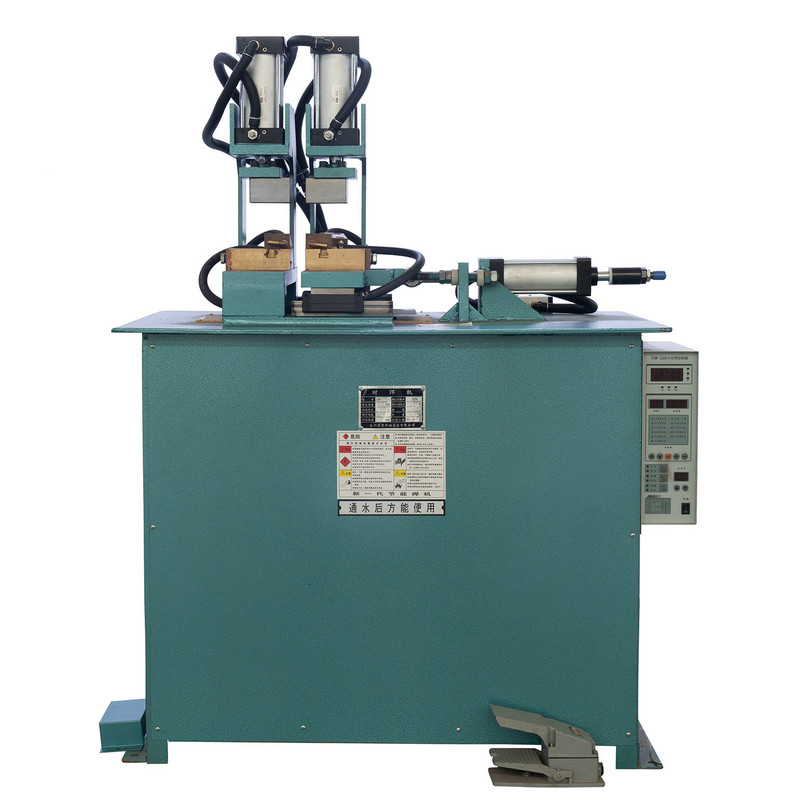
UN2 Pneumatic Butt Welding Machine for Efficient Wire JoiningDesigned for mild steel wire up to 12 mm diameter, this pneumatic butt welder integrates easily with wire straightening lines. Its efficiency and stability make it a cost-effective option for high-volume wire production.View Product →| Parameter | Flash Butt Welding | Regular Butt Welding |
|---|---|---|
| Joint preparation | Tolerates rough, scaled ends | Requires clean, square-cut ends |
| Heat-affected zone | Wide, gentle transition | Narrow, steep gradient |
| Ideal diameter | Over 12 mm, up to 150 mm+ | Up to 12–16 mm typical |
| Cycle time | 2–6 seconds (flash + upset) | 0.5–1.5 seconds |
| Peak power demand | Lower for large sections | High per mm² of area |
| Weld cleanliness | Oxides expelled during flash | Oxides trapped without flash |
| Consumable life | Electrodes last longer due to softer heating | Electrodes wear faster, need frequent dressing |
| Application examples | Rails, rebar splices, high-carbon bars | Wire drawing, chains, low-carbon rod |
Buyers often overlook the cost of electrode dressing, scrap, and downtime. A cheap regular butt welder that produces inconsistent welds can easily cost more over two years than a higher-priced flash butt welder on heavy sections.
Key metric: flash butt welding on large rebar can reduce scrap joints by 2–3% compared to regular upset welding, because the flash process self-corrects for slight end misalignment.
When total cost per weld is calculated, flash welding becomes attractive for large-diameter workpieces. For small-diameter, soft steel wire, regular butt welding remains unbeatable on cycle time and simplicity.
Use this quick decision framework to shortlist the welding machine for your line.
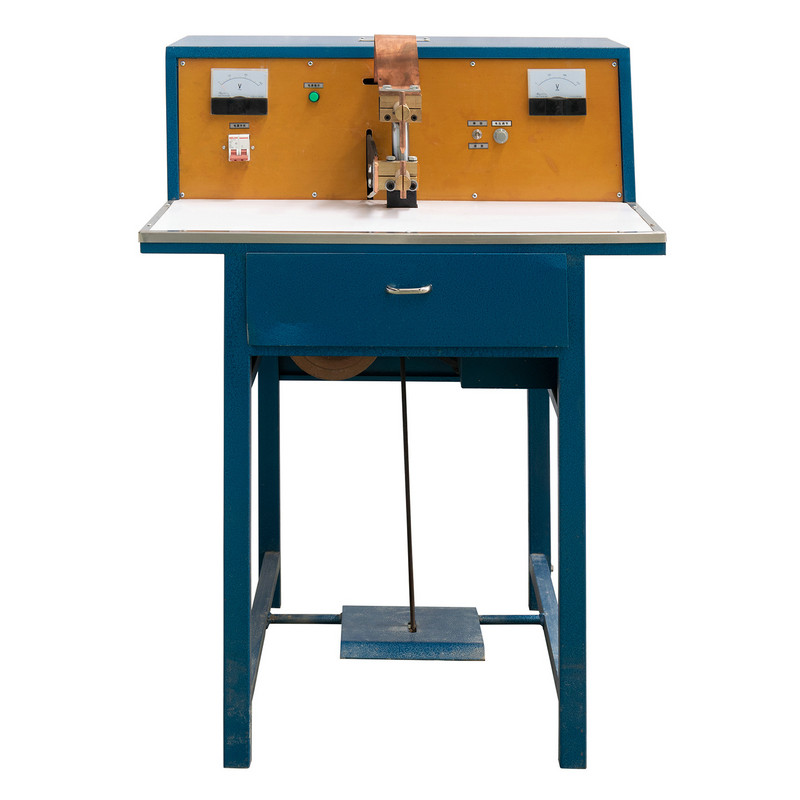
UN1 Hand Operated Butt Welding Machine for Small Wire ApplicationsIdeal for wires under 6 mm, this hand-operated welder offers a faster and cheaper alternative to flash welding. It suits low-carbon steel and non-ferrous metal joining with simplicity and quick cycles.View Product →Yes, but they are overkill. The flashing cycle is longer, and the machine's power capacity is higher than needed. For wires under 6 mm, a regular butt welder is faster and much cheaper.
Rebar with a diameter below 12 mm in mild steel can often be regular welded in short production runs. Above 16 mm, especially with ribbed or patterned bars, flash butt welding is the reliable method.
Regular butt welding is simpler to learn because it has fewer variables. Flash butt welding needs careful control of the flashing gap and upset timing, though modern controllers automate most of the cycle.
Any resistance butt welding machine generates heat in the transformer and clamps. On heavy duty cycles, an industrial chiller is recommended to keep weld quality stable and prevent transformer overheating.
Flash butt welding and regular butt welding are not competitors; they are complementary processes. Regular butt welding wins on speed, simplicity, and cost for small-diameter, low-alloy steel. Flash butt welding earns its higher price on large cross-sections, high-carbon grades, and demanding structural joints. When you evaluate a welding machine, always bring your actual wire diameter, surface condition, and required joint strength to the conversation. The right machine is the one that matches your production reality, not the one that looks best on a brochure.
Recommended Products

Product
Contact Info.
+86-152-5712-5882
Fax: +86-563-2269966
No. 21 Guangping Road, Guangde Economic Development Zone, Guangde City, Anhui Province
QR Code