Language
 English
 русский
 Español

Get A Quote
Get A Quote
 Home / News / Industry News / Oxygen Hose Color in Welding: What Color Is It and Why It Matters | Dingju
 2026.10.08
 Industry News
Walk onto any welding floor in the U.S. and you will see a green hose connected to an oxygen regulator. In Europe, the same gas hose is blue. Both are correct under their own standards. When someone asks "what color is the oxygen hose when welding," the accurate answer is green in the United States, blue in Europe—and the difference matters more than most welders think.
The U.S. Compressed Gas Association (CGA) assigns green to oxygen and red to fuel gases. In the ISO 2503/EN 559 system used across Europe, oxygen is blue and fuel gas is maroon or red. This difference has confused international teams for years, which is exactly why a label check matters more than the hose color alone.
If you are setting up a new welding station or replacing hoses, do not rely on color as the only identifier. The color is a quick visual cue, not a guarantee. Read the hose marking, inspect the fittings, and confirm the gas type with your supplier.
The most serious risk in welding gas handling is connecting the wrong gas to the wrong hose or torch. Oxygen supports combustion. When mixed with oil, grease, or fuel gas residue, oxygen can ignite violently. A fuel gas hose that was previously used for acetylene and then connected to an oxygen cylinder can carry internal residue that becomes a fire hazard under pressure.
Because of this danger, standards organizations created distinctive hose colors. The goal is to prevent deadly mistakes by using visual separation between oxygen and fuel gas lines. In many incidents, the root cause is a missing label or an operator assuming the color means the same thing as in their home country.
Consider a real example: a workshop replaces a torch set imported from Europe. The operator sees a blue hose and connects it to the oxygen cylinder. In the European system, blue means oxygen. But if the hose is actually the old inert gas line from another standard, the result can be catastrophic. The only reliable way to avoid this is to read the printed text on the hose.
The practical rule for welders is to check two things before using a hose. First, read the manufacturer markings stamped along the hose. Second, verify the fitting. Oxygen fittings use right-hand threads; fuel gas fittings use left-hand threads. The color is a helpful hint, but those two checks are what keep you safe.
The table below summarizes the most common hose colors for welding gases under U.S. CGA practice versus ISO/EN practice. Use it as a quick reference during setup or maintenance.
| Gas | U.S. CGA color | ISO/EN color |
|---|---|---|
| Oxygen | Green | Blue |
| Acetylene / fuel gas | Red | Maroon or red |
| Argon / helium (inert) | Dark blue | Grey |
| Carbon dioxide | Black | Grey |
| Hydrogen | Red | Red |
Notice that carbon dioxide and inert gases both appear grey in the ISO system. That is because those gases do not support combustion, so the standard prioritizes the distinction between oxygen and fuel gas rather than between each inert gas.
The difference arises from the history of gas handling codes. The CGA standards developed in the U.S. were built around the industrial gas market of the early 20th century. European standards evolved through national engineering codes that were later harmonized under ISO 2503. Each system chose colors independently, and changing the standard now would create more hazard than it solves.
For a multinational team, the most dangerous situation is when an operator is trained under one system and moves to another. For example, a European technician might pick a green hose for fuel gas because in their training green means nothing standard. That is why many facilities standardize on ISO markings and use laminated color charts at every station.
If your shop follows a different standard than the local code, document it clearly and train every worker on the meaning of each hose color in your facility.
Beyond hose color, remember these three safety checks before any welding session:
In the CGA system, oxygen fittings are labeled as CGA 540 and fuel gas fittings as CGA 510. These thread patterns are different on purpose. It is very difficult to connect the wrong gas with these fittings, but deliberate or worn-out hardware can still create an opening. Always inspect the nut label before tightening.
Also use flashback arrestors at the torch and regulator. Flashback arrestors stop a flame from traveling back into the hose and gas cylinder, which is often the cause of cylinder explosions in welding shops.
Gas pressure stability directly affects weld quality and the life of the machine. For spot welding machines, compressed air drives the pneumatic cylinder that applies electrode force. For seam welding and butt welding machines, a consistent supply of cooling water is essential to keep the transformer and electrode tips within their rated temperature range.
If the cooling line gets blocked or the gas supply fluctuates, the electrode face can soften, weld strength drops, and the machine may start to overheat. This also increases downtime and repair costs. Regular inspection of gas hoses, cooling system connections, and regulators is one of the most cost-effective maintenance routines a welding workshop can implement.
 Industrial water circulation refrigeration motor chillerThe Industrial water circulation refrigeration motor chiller is small in size and has a built-in large air volume fan. It has fast heat dissipation and low vibration. ...View Product →
Industrial chillers are a common solution for maintaining stable welding system temperature. When the cooling circuit is sized correctly, the transformer stays cool and you can run longer production cycles without thermal shutdown. For more on cooling systems for spot welding, it is worth reviewing the maintenance practices that prevent overheating failures.
When you are selecting a welding machine, check its gas-cooling requirements and the electrical capacity of your workshop. A mid-frequency spot welding machine, for example, offers precise current control and low heat input, which is advantageous for thin sheets and coated materials. But it also needs a reliable cooling water supply to maintain performance at high duty cycle.
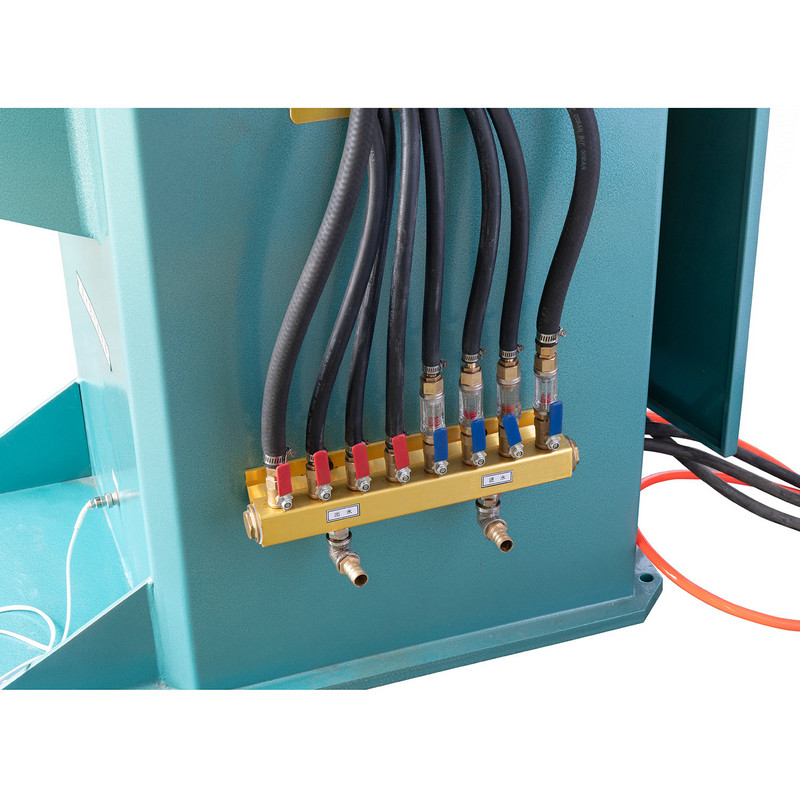 DZN-100 1000 Hz medium frequency spot welderControlled via a touchscreen, the DZN-100 1000 Hz medium frequency spot welder boasts a display that not only indicates the welding current but also promptly alerts us...View Product →
For shops that work with aluminum or stainless steel, the choice between AC, mid-frequency, or variable frequency machines will affect the welding result and the electrode life. The electrode material and shape also have to match the base metal and coating. Pedal spot welding machines are another common option for simpler production tasks.
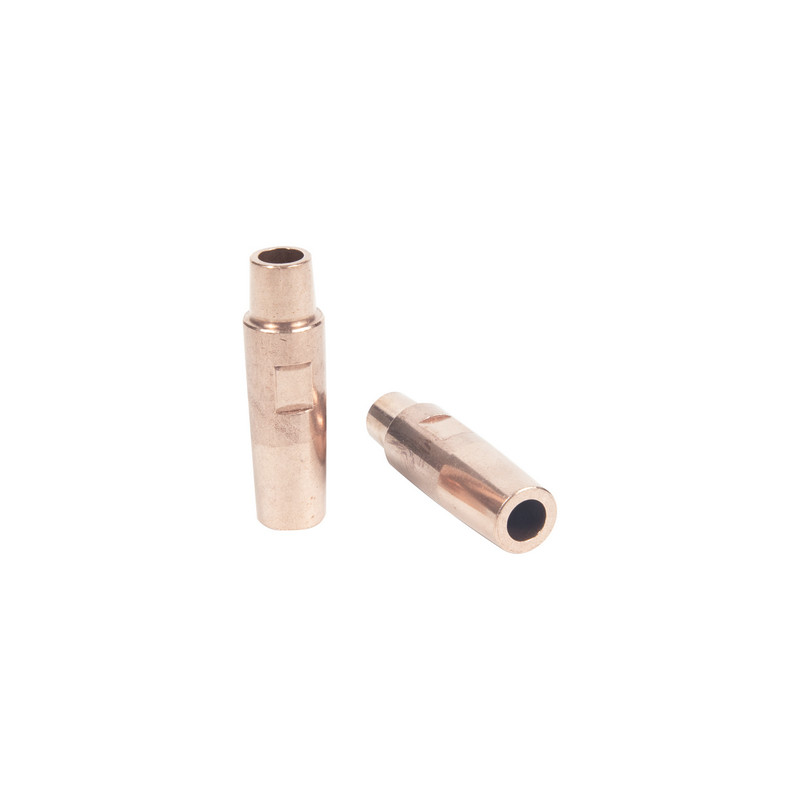 Ф16 head chrome zirconium copper welding copper head welding electrodeThe Ф16 head chrome zirconium copper welding copper head welding electrode is part of the circuit of the spot welding machine. It conducts current and provides the hea...View Product →
Spare parts such as electrodes and grips should be selected according to the sheet thickness and coating type you plan to weld, because these parts directly determine weld strength and maintenance frequency.
In the U.S., the oxygen hose is green. This is the CGA color standard. Fuel gas hoses, such as acetylene, are red.
In Europe, the oxygen hose is blue according to ISO 2503/EN 559. Fuel gas hoses are maroon or red.
Green is not the standard oxygen color in Europe. If a green hose is used, inspect the hose markings and fitting threads. Oxygen fittings use right-hand threads, while fuel gas fittings use left-hand threads. Never rely on color alone.
Read the printed hose markings along the hose surface. Also check the fitting type and the regulator color. If in doubt, replace the hose with a new one that has clear identification.
The next time someone asks what color the oxygen hose is when welding, give them the two-part answer. In the U.S., it is green. In Europe, it is blue. Then explain that color alone is not enough. The correct procedure is to check the hose marking, identify the gas, verify the fitting thread, and test for leaks.
For welding equipment buyers, the same attention applies to the whole gas and cooling system. A stable gas supply and a correctly sized chiller will keep your welding machine running at its rated capacity. Choose equipment that matches your local color codes and connect them with hoses that meet the relevant standard.
Welding safety starts with small details. Hose color is one of them, but the habit of verification is what prevents incidents.
Recommended Products

Product
Contact Info.
+86-152-5712-5882
Fax: +86-563-2269966
No. 21 Guangping Road, Guangde Economic Development Zone, Guangde City, Anhui Province
QR Code