Language
 English
 русский
 Español

Get A Quote
Get A Quote
 Home / News / Industry News / MMA Welding Techniques: Electrode Selection, Arc Control, and Weld Quality
 2026.10.26
 Industry News
Picture a mild steel bracket that cracks at the weld after a few months of vibration. The material looks correct, the rod was forgotten in a damp drawer, and the welder ran a long arc at 160 A. The failure was not caused by one mistake; it was caused by ignoring a sequence of MMA welding techniques that should become automatic.
MMA welding, also called Manual Metal Arc welding or stick welding, remains a practical process for steel fabrication, repair, and construction work. It tolerates outdoor wind, dirty surfaces, and awkward positions better than many processes. The trade-off is that weld quality depends heavily on the welder's technique. This article explains the essential techniques, from electrode selection and arc control to parameter setting and defect correction, so you can make stronger, cleaner welds.
In MMA welding, an electric arc forms between a consumable electrode and the base metal. The electrode core wire melts into the joint, while the flux coating produces carbon dioxide and other gases that shield the molten metal from oxygen and nitrogen. The coating also forms slag, which protects the cooling weld and shapes the bead.
Because the welder is manually controlling the arc, technique determines the outcome. The two most important electrical choices are current type and polarity. Most inverter welding machines use DC. Electrode positive, sometimes called DCEP or reverse polarity, gives deeper penetration and is the standard for many common electrodes. Electrode negative, or DCEN, increases deposition rate but lowers penetration. AC is used mainly on low-hydrogen electrodes or to control arc blow when welding near strong magnetic fields.
The AWS electrode classification is a quick guide. E6013 means 60,000 psi tensile strength, all-position usability, and a rutile flux that is easy for beginners. E7018 is a low-hydrogen rod with 70,000 psi strength, often specified for structural steel. E6010 has a cellulose flux and produces a fast-freezing slag that helps fill root gaps.
| Electrode | Polarity | Best For | Limitation |
|---|---|---|---|
| E6010 | DCEP | Deep penetration, rusty or painted steel, root passes | Rough bead; requires skilled arc handling |
| E6013 | AC, DCEN, or DCEP | Clean sheet metal, beginner practice, low spatter | Shallow penetration; not for heavy structural work |
| E7018 | DCEP (or AC) | Structural steel, high-strength joints, low hydrogen control | Must be kept dry; correct storage needed |
| E7024 | AC or DC | High-speed horizontal fillet welds | Not for vertical or overhead work |
For shop work on mild steel under 6 mm, a 2.5 mm E6013 rod is a forgiving starting point. For thicker material and load-bearing connections, choose E7018 and store the rod in a heated cabinet or an airtight container.
Keep the arc length close to the diameter of the electrode core wire. A short arc reduces spatter and porosity. A long arc creates excess heat, a wandering weld pool, and a rough bead. If you hear a sharp, cracking sound rather than a hissing buzz, the arc is likely too long.
Move the electrode at a steady speed that lets the arc melt both edges of the joint. If the puddle is too small, increase heat or slow down. If the weld spreads too wide, travel slightly faster. A normal bead width is about one and a half to two times the electrode diameter.
For flat and horizontal positions, drag the electrode at a 10 to 15 degree angle opposite the direction of travel. For vertical-up, point the rod slightly upward and keep the arc tight to support the puddle. Avoid steep angles because they push the arc away from the joint and cause lack of fusion.
A straight pull is enough for thin steel and narrow joints. For wider grooves, use a crescent weave or a slight backward-and-forward motion. E6010 and E7018 allow a whip and pause technique that lets the puddle cool briefly and reduces heat input. Keep the weave width under about three times the electrode diameter to avoid cold laps.
MMA welds fail when the base metal is dirty. Remove rust, oil, paint, grease, and moisture for at least 25 mm on each side of the joint. On machine-cut edges, clean off any scale before you strike the arc.
For plates thicker than 6 mm, bevel the edges to a 60 degree included angle with a root face of about 1.5 mm and a root gap of 2 to 3 mm. Tack weld the assembly at regular intervals of 10 to 15 cm. Tack length should be enough to prevent shrinkage from opening the joint during welding.
If the base metal is cold, wet, or made of high-carbon steel, preheat the joint before welding. Preheating slows the cooling rate and reduces the risk of hydrogen cracking, especially when using low-hydrogen electrodes like E7018.
Use the electrode manufacturer's current range, but start near the lower third of that range and adjust after a test pass. Too much current creates undercut, loss of coating, and excessive spatter. Too little current gives poor fusion and a lazy arc.
| Plate Thickness | Electrode | Current | Joint Note |
|---|---|---|---|
| 1.5 - 3 mm | 2.0 or 2.5 mm E6013 | 40 - 80 A | Short, quick passes to avoid burn-through |
| 3 - 6 mm | 2.5 or 3.2 mm E6013 | 80 - 120 A | Butt and fillet welds |
| 6 - 12 mm | 3.2 mm E7018 | 110 - 150 A | V-groove root pass and fill |
| 12 mm and above | 4.0 mm E7018 | 140 - 200 A | Multi-pass welding required |
Remember that duty cycle limits the welding machine, not just the rod. A 60 percent duty cycle at 120 A means the machine can run for 6 minutes out of every 10 at that amperage before needing a cooldown. Repeated overheating trips thermal protection and can damage the inverter.
When a weld has porosity, slag inclusions, undercut, or lack of fusion, review the last few steps before the arc was struck. Most defects are caused by contamination, an unusual arc length, or the wrong parameter range.
| Defect | Cause | Fix |
|---|---|---|
| Porosity | Moisture, oil, rust, or too long an arc | Clean base material, dry or discard wet electrodes, keep a tight arc |
| Slag inclusion | Slow travel, narrow bead, incomplete cleaning between passes | Remove all slag, use a slightly wider weave, raise current |
| Undercut | Excess current, fast travel speed, wrong electrode angle | Reduce amperage, slow down, keep the puddle against both edges |
| Lack of fusion | Low current, fast travel, too large a weave | Increase heat, move at a steady pace, keep the weave narrow |
| Arc blow | Magnetic force on DC near corners or clamped magnetic material | Switch to AC, move the ground clamp position, point the rod into the blow direction |
Before starting a production weld, run a short bead on scrap steel of the same thickness. Adjust the amperage and travel speed until the bead has a uniform ripple and no spatter cluster.
MMA welding produces intense light, heat, smoke, and spatter. Use a welding helmet with a shade of 11 to 13, heavy leather gloves, a flame-resistant jacket, and ear protection when grinding. Set up a partition or curtain to protect people nearby from ultraviolet rays.
Electrode coatings contain minerals and metals. Welding fumes should not be breathed in; keep your head out of the plume and use local exhaust ventilation. If you weld on galvanized or coated steel, the fumes are especially toxic and require respiratory protection.
Low-hydrogen electrodes need dry storage. Once a package is opened, store rods in a portable rod oven or a sealed container with desiccant. If the coating is cracked, chipped, or damp, discard the electrode. Moisture in the coating introduces hydrogen, which can cause delayed cracking in the weld.
For a beginner working on clean mild steel, a 2.5 mm E6013 rod is the most forgiving. It runs well on AC or DC, produces little spatter, and the slag is easy to remove. Use it for practice beads and light sheet metal work.
Sticking happens when the current is too low, the arc is too short, the earth clamp is weak, or the rod is too large for the workpiece. Reduce the electrode diameter, increase the amperage by 10 to 15 A, and make sure the ground connection is clean and tight.
Use DC positive, with the electrode connected to the positive terminal and the work to the negative terminal. This gives a stable arc, deep penetration, and proper slag behavior. An AC machine can weld certain E7018 rods, but DCEP is the standard choice.
MMA is a strong choice for thick sections, outdoor work, and joints that need deep penetration. But for thin sheet metal that requires many identical spot joints, resistance spot welding is often faster, more repeatable, and easier to operate. Many fabricators use MMA for frames and structural members, then switch to a spot welding machine for enclosures, brackets, and sheet metal panels.
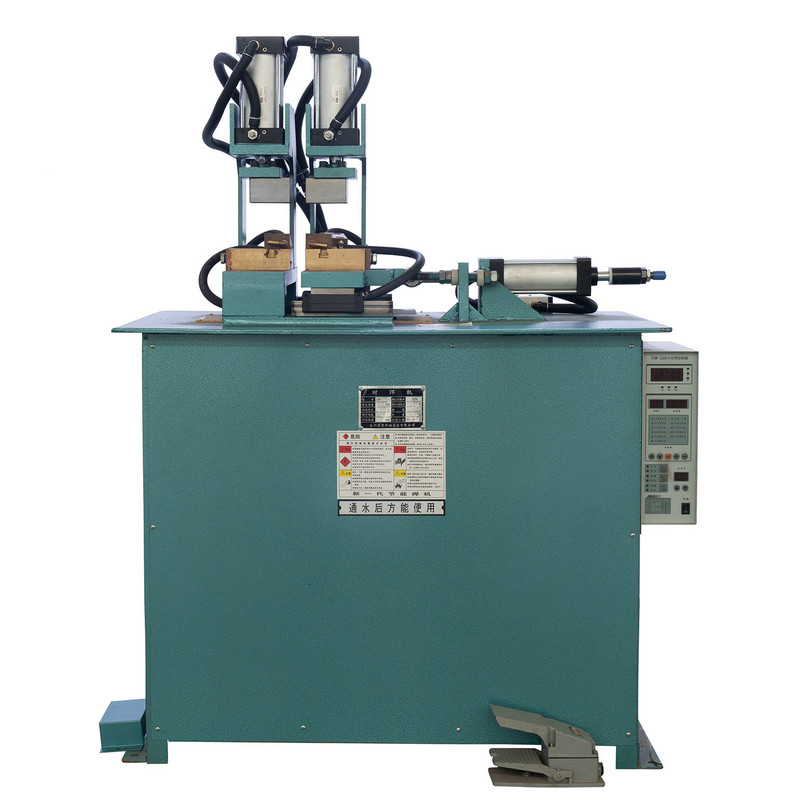
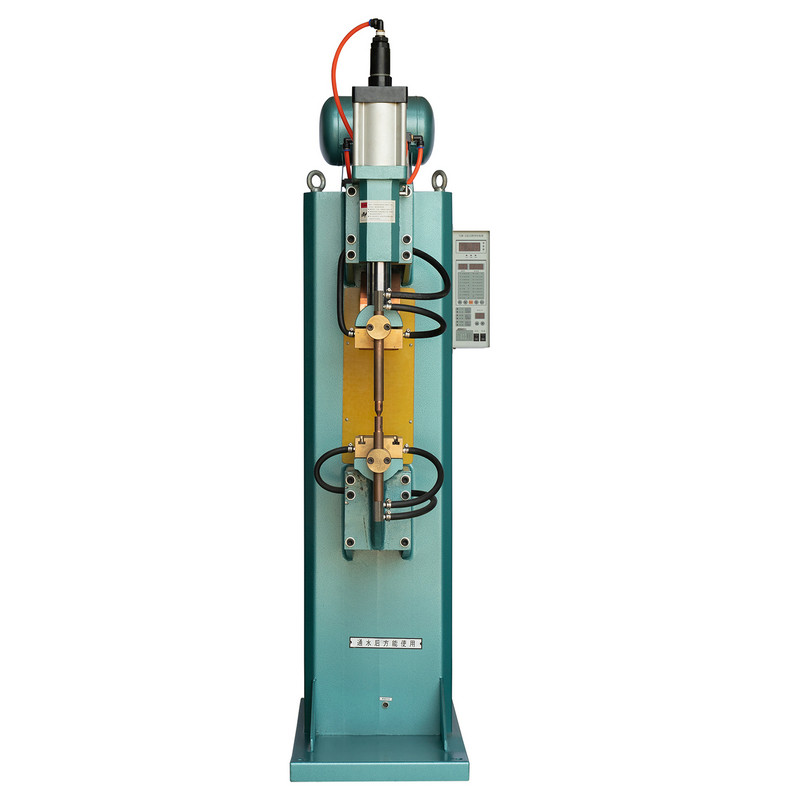
If your production mix includes that kind of work, a pedal-operated spot welder can complement an MMA station. It is a mechanical unit with no filler rod or flux, and it produces consistent spot welds in seconds.
 DN Pedal Spot Welding Machine for Consistent Sheet Metal WeldsA pedal-operated resistance spot welder designed for production work, this unit delivers repeatable spot welds without filler rod or flux, making it a practical addition beside an MMA station.View Product →
To evaluate whether a spot welder fits your shop, read our guide to choosing the right industrial spot welding machine.
Strong MMA welds look simple after you know what to look for. Choose the electrode based on the joint and steel type. Clean and fit the joint before you weld. Set the current in the right range. Keep the arc short and the travel speed regular. Watch the puddle, not the sparks, and clean between passes.
By turning these MMA welding techniques into a routine, you reduce rework, improve safety, and produce welds that pass visual inspection and perform in service.
Recommended Products

Product
Contact Info.
+86-152-5712-5882
Fax: +86-563-2269966
No. 21 Guangping Road, Guangde Economic Development Zone, Guangde City, Anhui Province
QR Code