Language
 English
 русский
 Español

Get A Quote
Get A Quote
 Home / News / Industry News / What Do You Need for Welding? A Complete Equipment and Tooling Checklist
 2026.11.05
 Industry News
A 2 mm sheet metal bracket, a cracked stainless table frame, and 500 appliance panels a day are three different welding problems, and they do not share one shopping list. That is why the honest answer to what you need for welding starts with the job rather than with a tool catalogue.
Strip it back and four purchases decide everything else: a power source that matches the process, a consumable that completes the electrical circuit, protective gear rated for the arc you are running, and enough preparation tooling to make the joint repeatable. Gas, cooling, clamps and spare electrodes are details that follow from those four decisions.
MachineConsumablesPPETooling
Buy the process first. A TIG torch on a 230 V socket cannot replace a 40 kW pneumatic spot welder in a panel shop, and the reverse is equally true. Choosing the process before the machine avoids most of the expensive mistakes.
Every process below melts metal, but the way heat is delivered changes the equipment. Arc processes run from a constant current or constant voltage power supply and rely on a filler metal or a coated electrode. Resistance welding pushes a very high current through the parts and the copper electrodes, generates heat from the electrical resistance at the joint, and needs no filler or shielding gas at all.
| Process | Power source | Consumable | Shielding | Typical range |
|---|---|---|---|---|
| MIG/MAG (GMAW) | Constant voltage DC | Solid wire 0.8 to 1.2 mm | Argon and CO2 mix | 1 to 10 mm |
| TIG (GTAW) | Constant current DC or AC | Tungsten 1.6 and 2.4 mm plus filler rod | Argon | 0.5 to 6 mm |
| Stick (SMAW) | Constant current DC or AC | Covered electrode 2.5 to 4.0 mm | Flux coating | 3 to 20 mm |
| Resistance spot | High current, low voltage | Copper electrode tips | None | 0.5 to 4 mm sheet |
| Stud welding | Capacitor discharge or drawn arc | Stud and ferrule | Ceramic ferrule | M3 to M16 studs |
Read the table by column rather than by row. If the parts are 0.5 to 4 mm sheet and the same joint is repeated hundreds of times, spot welding removes the filler wire and the gas line and replaces them with a copper tip and a controller. If the work is mixed repair in the field, stick welding remains the cheapest way to stay useful.
Arc welders are rated in amps at a stated duty cycle. A machine sold as 200 A at 60 percent duty can run 6 minutes out of every 10 at full output before thermal protection intervenes, and it will run all day at around 140 A. Duty cycle, not peak amps, is what separates a light machine from an industrial one; the difference usually sits in the copper and the cooling rather than in the headline figure.
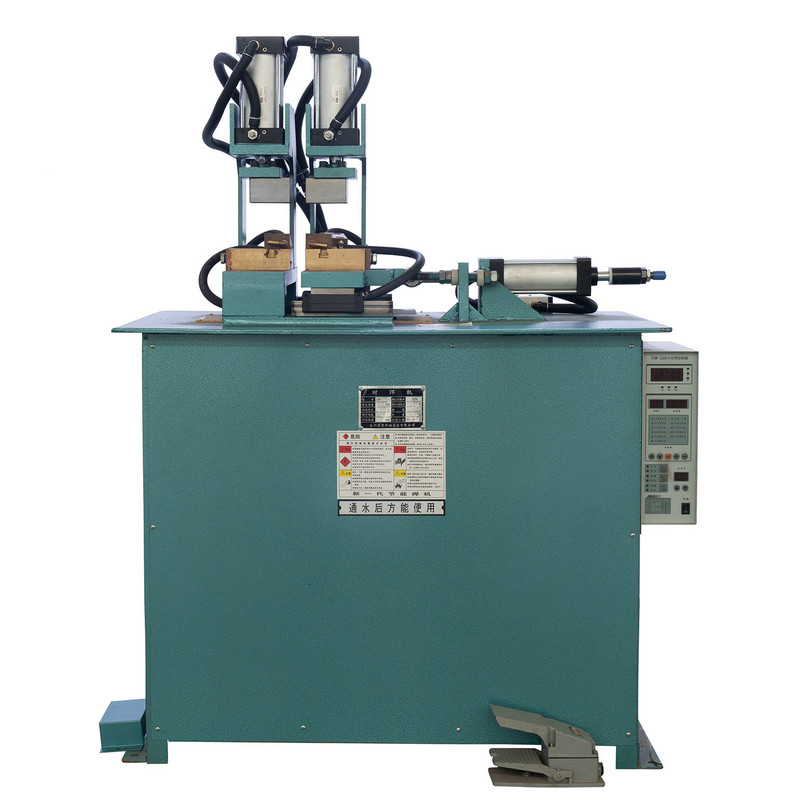
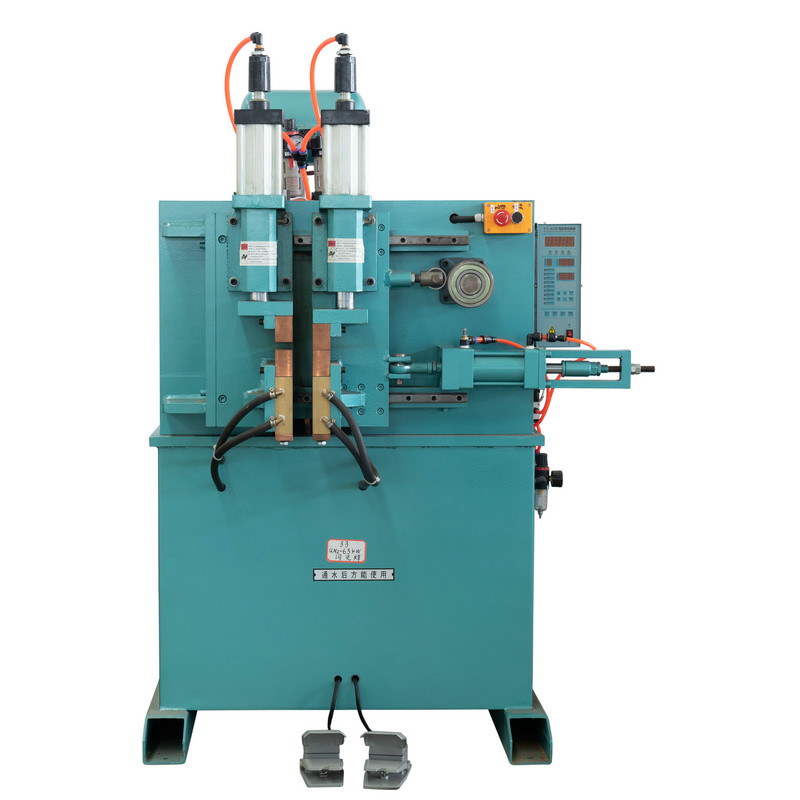
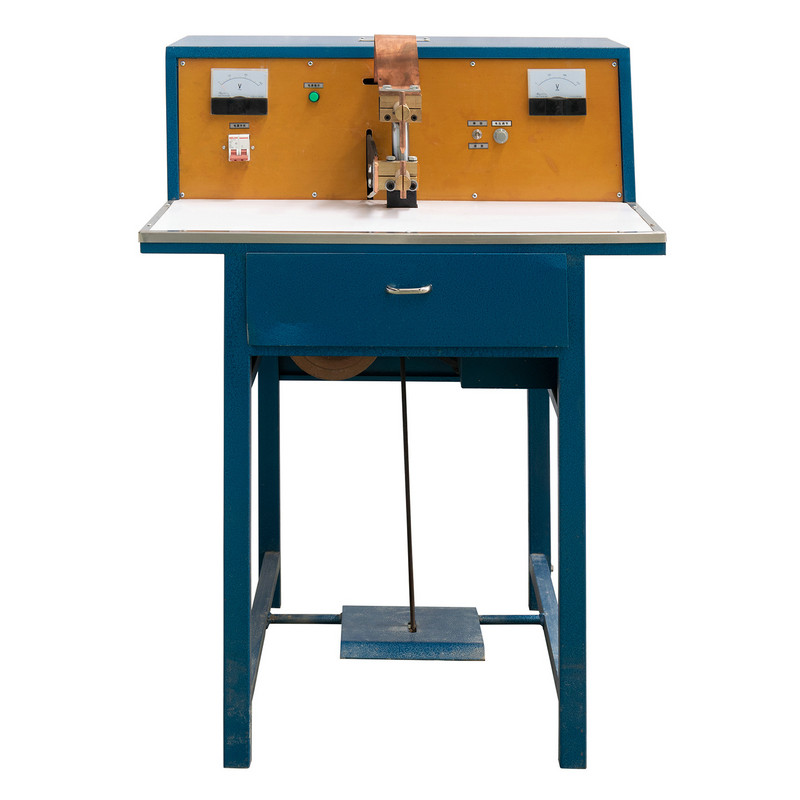
Resistance welders are quoted differently. Pedal and pneumatic machines are rated in kW: the DN series covers 16 kW, 25 kW and 35 kW, the DTN1 pneumatic range runs from 25 kW to 75 kW, and the DTN2 from 63 kW to 150 kW. Capacitor discharge machines are rated in stored energy instead, from 200 J to 3000 J in the DR series, while mid-frequency and variable frequency units are quoted by output current and frequency.
If you are comparing arc equipment first, our electrical welding machine selection guide covers types, power and buying tips in more detail.
 DN Series Pedal Spot Welding MachinesCompare 16–40 kW AC resistance spot welders with manual, gear, or pneumatic pedal actuation, adjustable timing, and 220V/380V options for repeatable metal joining.View Product →
Consumables are the parts that actually carry the current, and they wear on a schedule you can plan for instead of reacting to a stopped line.
Stick electrodes in 2.5 to 4.0 mm for general and low-hydrogen work, solid MIG wire in 0.8 to 1.2 mm with matching contact tips, nozzles and liners, TIG tungsten in 1.6 and 2.4 mm with collets and a gas lens, and a regulated gas supply for whichever process needs it.
Copper electrode tips in 8, 13, 16 and 20 mm, electrode grip rods in 16, 18, 20 and 25 mm, copper rods, welding controllers, and all-copper welding transformers sized to the machine. A dressed tip keeps the contact area and current density stable; letting tips go concave is the fastest way to burn through thin sheet.
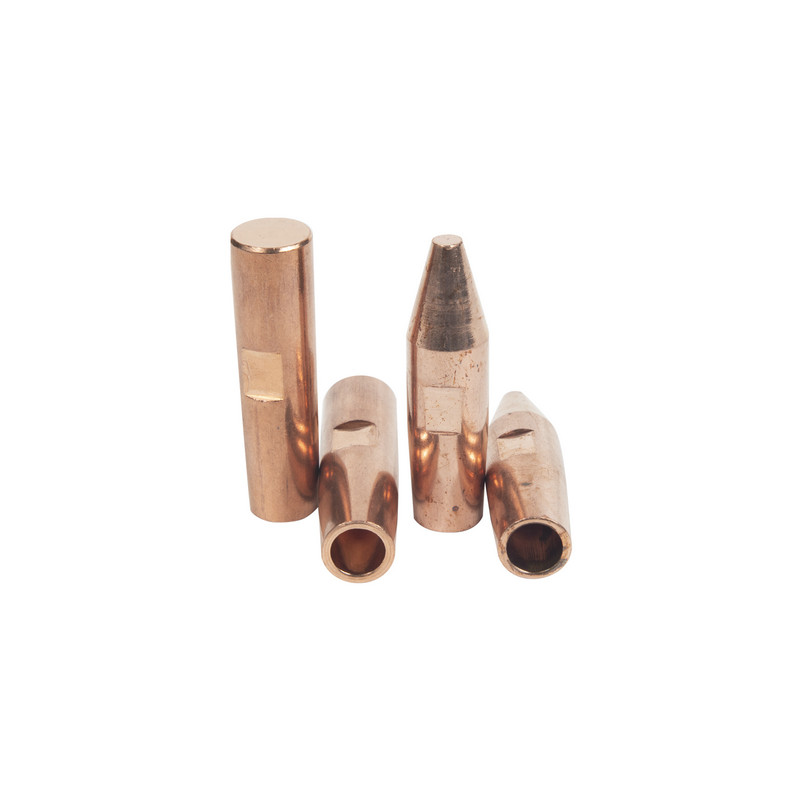 Chrome Zirconium Copper Welding Electrode TipsBrowse 8, 13, 16 and 20 mm chrome zirconium copper electrode tips; keeping contact area and current density stable helps avoid burning thin sheet.View Product →
Fume, spatter, arc radiation and hot metal are all part of the job, so the gear below is equipment rather than an accessory list.
Joint quality is usually decided before the arc starts, and these items appear in almost every practical setup.
Power is the constraint people underestimate. A small MIG or inverter stick set runs from a 230 V socket, but a 100 kW three-phase resistance welder needs a dedicated supply, a correctly sized breaker and cable rated for the actual current. Extension reels and multi-socket adapters are a common cause of nuisance tripping and undervoltage in a busy shop.
Heat is the other constraint. Water-cooled torches need a circulation unit, and resistance welding heats the copper electrodes, the grip rods and the transformer itself. An industrial chiller supplying cooled water holds the tips at a stable temperature and protects the transformer, which matters most where the machine runs at high duty cycle. Air-cooled and water-cooled configurations differ in price, floor space and maintenance load.
 Industrial Water Circulation Welding ChillerChoose 1–10 HP industrial chillers with 3–30 kW cooling, built-in fan, digital gauges and 5–35°C range to stabilize tips and protect transformers.View Product →
An arc or MIG set, a helmet, gloves, flame-resistant clothing, a grinder, clamps and ventilation. If you choose MIG, add a gas cylinder, regulator and wire. A 230 V supply is enough for most machines up to roughly 200 A.
No. Stick electrodes and flux-cored wire carry their own shielding inside the flux, and resistance spot welding, stud welding and most capacitor discharge processes use no shielding gas at all.
It depends on the process. A small inverter stick set with basic protection is the lowest entry point, while MIG adds the gas bottle, wire and contact tips. Industrial resistance welding machines are quoted per project, because output, tooling and cooling are configured around the part.
Below about 4 mm, resistance spot welding is usually faster and cleaner because no filler or gas is involved. If the requirement is a continuous visible seam rather than a spot, low-current TIG or MIG is the normal choice.
Choosing a machine by amp rating while ignoring duty cycle, input supply and consumable availability. The second is under-sizing cooling and ventilation, which shortens electrode life and transformer life together.
Start with the process, match the machine to thickness and duty cycle, then add the consumables, protection and preparation tooling that fit. That order keeps the budget pointed at the parts that actually change the weld.
As a welding equipment manufacturer, we build pedal, pneumatic, mid-frequency, energy storage, seam, butt and stud machines, together with the electrodes, transformers and chillers that keep them running, for single benches and full production lines alike.
Recommended Products

Product
Contact Info.
+86-152-5712-5882
Fax: +86-563-2269966
No. 21 Guangping Road, Guangde Economic Development Zone, Guangde City, Anhui Province
QR Code